
Golf has one of the strangest rulebooks in sports. Some rules make perfect sense once you hear the logic. Others sound completely made up.
The weirdest part? Many golfers have been playing for decades while accidentally breaking rules they never knew existed.
From dead snakes to alligators to playing shots from inside buildings, here are the strangest rules hidden inside the game — all verified against the actual USGA rulebook, with the relevant rule numbers tucked in so you can argue with confidence the next time it comes up at the 19th hole.
1. You Can Hit A Moving Ball In Water

Normally, swinging at a moving ball is a penalty. Water is the weird exception.
If your ball is floating, drifting, or wobbling around in a penalty area, you can swing at it while it’s still in motion. Technically, you could sprint along a creek bank and slap it before it disappears underwater forever.
Golf briefly turns into a fishing expedition.
This is covered by Rule 10.1d Exception 3. The same Exception adds an important catch: you cannot deliberately delay your shot to let the current move the ball to a better position.
Fact Check:
True per Rule 10.1d Exception 3. Splash-and-swing is legal. Strategic river-reading, like you’re kayaking the Colorado, is not.
2. You Play a Shot from Up a Tree

If your ball wedges in a tree branch ten feet off the ground, you are allowed to climb up and attempt the shot.
Golf does not care how ridiculous you look. The rules basically say: if you genuinely believe you can hit this while hanging from a branch like a raccoon, go ahead.
The catch is that you cannot break branches or alter conditions on the way up. That’s where most tree-climbing attempts technically fall apart — usually because something has to break for you to swing.
Rule 9.1a requires playing the ball as it lies, and Rule 8.1a forbids improving conditions.
Fact Check:
True. Falling out of the tree is your own problem, and golf shows zero sympathy for orthopedic consequences arising from your own creative decision-making.
3. You Can Move a Dead Snake but Not a Live Snake

Somewhere in golf’s long history, enough golfers asked about dead snakes that rule-makers had to formally address them.
The verdict: a dead snake is a loose impediment, just like a leaf, a pinecone, or an acorn. You can pick it up and move it before your shot, no penalty.
The strange part is that the ruling changes entirely depending on whether the snake is alive or dead — which feels less like sports law and more like a philosophy exam administered at the edge of the fairway.
Rule 15.1 governs loose impediments, and the official Definition specifically lists “dead animals” among them.
Fact Check:
True. But under Rule 15.1b, if removing the dead snake accidentally causes your ball to move, you incur a one-stroke penalty and must replace the ball.
4. Live Dangerous Animals Get You Free Relief

Sure, you are not allowed to move a live snake. But you will get free relief.
If a rattlesnake is coiled near your ball, you do not have to play the shot.
This is one of the few moments where golf openly acknowledges that some situations are bigger than golf. Venomous snakes, stinging bees, alligators, fire ants, bears — all qualify for free relief under what the USGA calls a “dangerous animal condition.”
Somewhere in the rulebook is a sentence that basically translates to: “Please do not duel the rattlesnake.”
This is covered by Rule 16.2, which lets you drop a ball at the nearest point of complete relief that isn’t dangerous, anywhere except within a penalty area.
Fact Check:
True per Rule 16.2. Important caveat the USGA has explicitly addressed: a cactus by itself does NOT qualify. The danger has to be a live animal, not a sharp plant.
5. You Can Play From Inside A Clubhouse
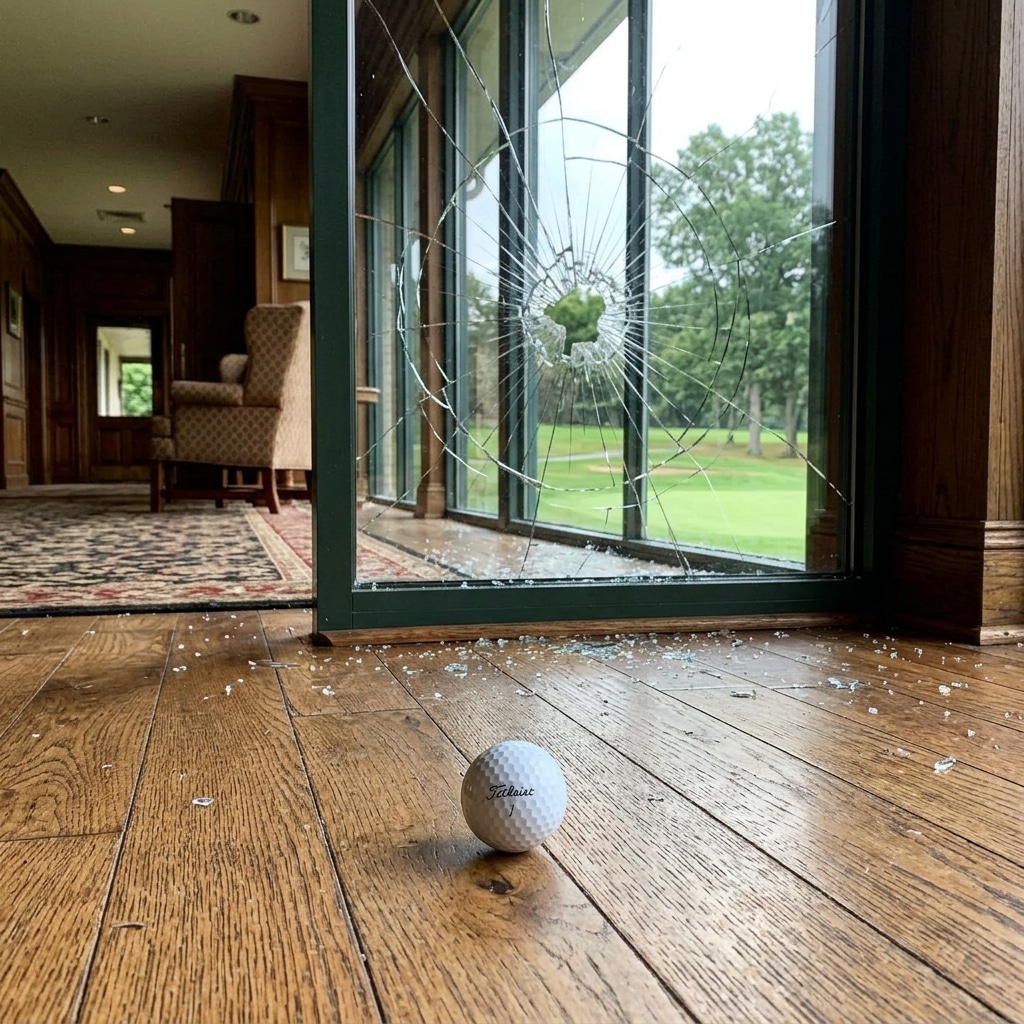
If your ball somehow rolls through an open door and onto the dining room carpet, the rules might genuinely require you to play it from there.
Most golfers assume the clubhouse automatically counts as out of bounds. Not always. If the Committee hasn’t specifically marked the building OB, the ball is in play. Open doors, terrified members, confused servers — all become temporary obstacles.
You’re allowed to ask staff to open another door or window so you can punch a low iron back toward the fairway. The rules don’t care how absurd this looks.
Course boundaries are set by the Committee under Rule 2.1, and a ball in play must be played as it lies under Rule 9.1a.
Fact Check:
True. Most courses mark clubhouses OB specifically to prevent dining-room recovery shots, but the default rule is in-play.
6. You Can Play From Under A Parked Car
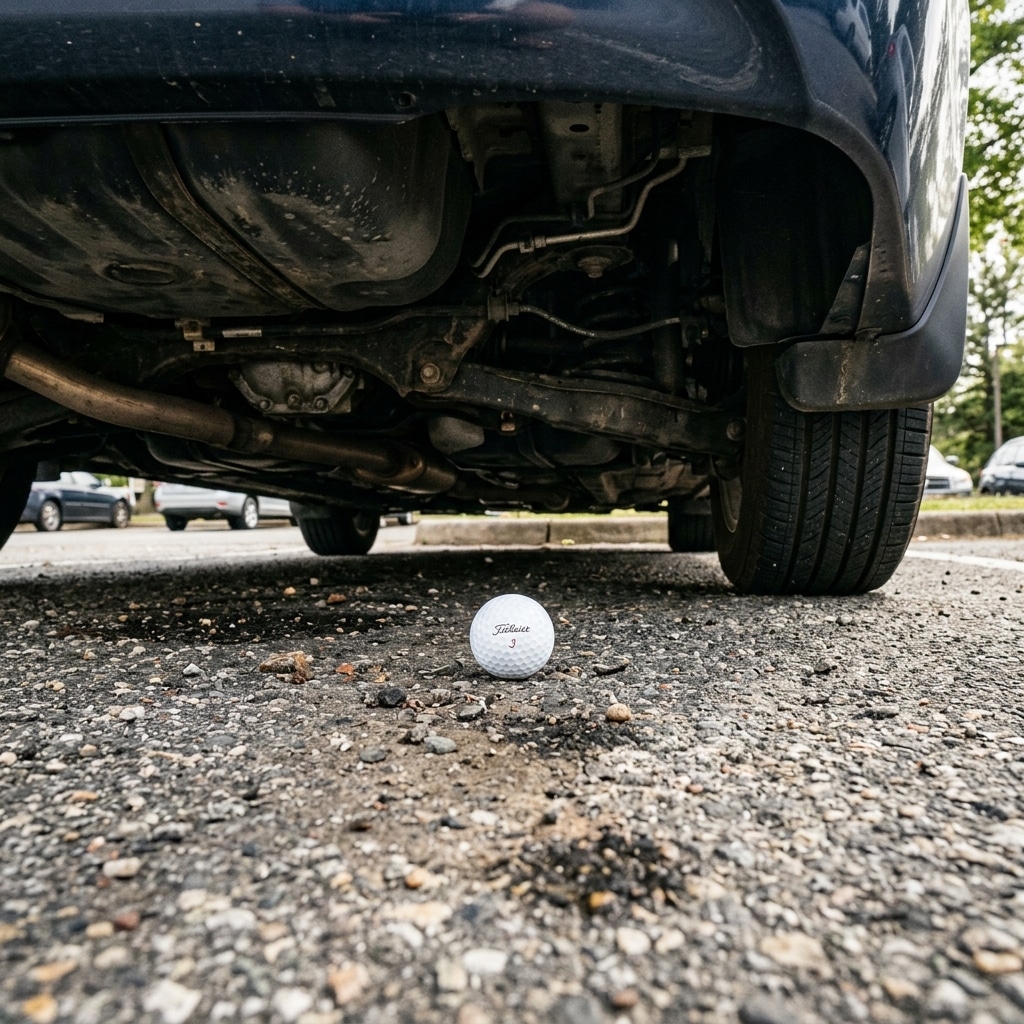
If your ball rolls under a parked car, your options depend entirely on whether someone can move the car.
A movable car is treated as a movable obstruction — you can have it rolled out of the way without penalty. An immovable car (locked, abandoned, no key in sight) is treated as an immovable obstruction, and you get free relief by dropping within one club-length of the nearest point of complete relief.
Somewhere inside the rulebook is a passage that turns golf into temporary parking-lot litigation.
Rules 15.2 and 16.1 cover the two categories. Your shot ruling literally depends on whether someone can find the car’s keys.
Fact Check:
True. The movable-vs-immovable distinction is real and consequential.
7. If A Bird Carries Away Your Ball, The Ball Gets Replaced

Golf has rules for wildlife theft.
If a crow grabs your ball and flies away, the ball is replaced without penalty because the bird counts as an “outside influence.” Somewhere in golf history, enough birds stole enough balls that officials decided this required formal legal clarification.
Imagine explaining to someone from another sport that golf has procedures for airborne animal robbery.
The same logic applies to squirrels, foxes, raccoons, and dogs that grab a ball at rest. Rule 9.6 says when an outside influence moves your ball, there is no penalty and the ball must be replaced on its original spot.
Fact Check:
True per Rule 9.6 and the Definition of “Outside Influence.” Crows in particular are notorious — there are documented PGA Tour incidents.
8. You Can Drape A Towel Over A Cactus (False)

This is one of the most repeated “weird golf rules” on the internet, and it’s flat wrong.
The myth goes like this: if your ball lands beside a cactus, you can wrap a towel around the spines to protect yourself while you swing. It sounds reasonable. It feels like the kind of folksy carve-out the rulebook would actually contain.
Except the USGA has specifically addressed this and ruled against it. Placing a towel or other object on a bush or cactus to protect your body while making a stroke is illegal stance-building under Rule 8.1a, per USGA Interpretation 8.1a/5.
You can wear long sleeves. You can wear gloves. You cannot landscape the cactus.
Fact Check:
False, despite being everywhere online. Two strokes in stroke play, loss of hole in match play.
9. You Only Get 3 Minutes To Search For A Lost Ball

Most weekend golfers still think they get five minutes. They are wrong, and have been since 2019.
You now get three minutes. Even if somebody finds the ball ten seconds after the clock expires, perfectly sitting up in the rough, completely playable — it doesn’t count. The ball is officially lost.
The rule was changed because golf rounds were turning into outdoor scavenger hunts that destroyed pace of play for everyone behind you.
The Definition of “Lost” and Rule 18.2a(1) both set the limit at three minutes, starting when search begins.
Fact Check:
True. Many golfers still accidentally follow the old five-minute rule because they learned the game decades ago and never got the memo about the timer being cut.
10. Most Golfers Count Out-of-Bounds Penalties Incorrectly

Out-of-bounds penalties confuse enormous numbers of golfers.
If your tee shot goes OB, the math is brutal: original shot counts as one, penalty stroke counts as two, re-teed ball becomes your third stroke. So the NEXT shot after re-teeing is your fourth.
That’s the math most weekend golfers quietly refuse to acknowledge. Scorecards routinely come back with sixes that should have been eights.
This is stroke-and-distance relief, required by Rule 18.2b. Many courses now adopt Model Local Rule E-5, a two-stroke alternative drop, to speed up pace of play — but in formal competition, stroke-and-distance is mandatory.
Fact Check:
True per Rule 18.2b. Probably the single most mis-scored rule in amateur golf, responsible for countless scorecards that look suspiciously better than reality.
11. You Cannot Carry More Than 14 Clubs

Fifteen clubs is one of the dumbest ways to ruin a round, and golfers do it constantly.
Many casual players accidentally break this rule because old clubs quietly accumulate in bags over years, like forgotten junk in a garage. That extra hybrid you bought five years ago and never took out? Still in there. Still illegal.
Professional golfers count their clubs obsessively before tournaments because nobody wants to be the person whose entire week is ruined by a forgotten 4-iron.
Rule 4.1b(1) sets the 14-club limit. The penalty is two strokes per hole where the breach happened, capped at four total in stroke play. In match play, it’s a match adjustment of one hole per breach, capped at two.
Fact Check:
True per Rule 4.1b. The cap exists because penalties were stacking hole after hole until somebody noticed.
12. You Must Clearly Announce A Provisional Ball

Picture this: your tee shot sails toward the woods and you’re not sure if it’s lost. So, you hit a second ball as a backup, just in case. If you find the first one, great, you play it. If not, you fall back on the backup. This backup ball is called a “provisional ball,” and it saves you from walking all the way back to the tee later.
Here’s the trap. You have to actually say the word “provisional” out loud. If you just mumble “I’ll hit another one” and tee up the second ball, the rules treat that second ball as your new ball in play — meaning your original ball is now officially abandoned, even if you find it sitting in plain view ten yards into the fairway.
One missing word turns a smart precaution into a one-stroke penalty plus a lost ball. The rule isn’t trying to be cruel; it’s trying to prevent players from hitting a “see what happens” second ball and then picking whichever one ends up better.
Fact Check:
True per Rule 18.3b(2). “I’ll hit another” is NOT enough. Tournament officials have enforced this strictly enough that pros now over-announce just to be safe.
13. You Cannot Hit A Provisional For A Penalty Area

This rule confuses golfers constantly because it feels completely backwards.
If your ball might be lost in the woods, you can hit a provisional. If your ball might be in a water hazard or penalty area, you usually cannot.
The logic is technical but real. Officials don’t want players watching the result of a second shot before deciding whether to attempt the original from inside the hazard. Even gaining “too much information” is considered unfair in golf.
Rule 18.3a spells out the restriction. Penalty area relief follows Rule 17 instead, with its own specific options.
Fact Check:
True per Rule 18.3a. The narrow exception: if a ball might be lost OR in a penalty area, a provisional is technically allowed under the lost-ball half of the situation.
14. You Can Declare A Ball Unplayable Almost Anywhere

Golf gives players the right to admit defeat.
Under bushes, against rocks, tangled in roots — you can declare your ball unplayable and take relief for one penalty stroke. No questions asked. No justification required. You don’t even need to prove the ball is actually unplayable.
This creates the amusing reality that golfers can look at a terrible lie and officially announce, “Nope. I refuse.” Golf quietly built surrender into the rulebook.
Rule 19.1 gives the player — and only the player — sole authority to make this call. Three relief options follow under Rule 19.2: stroke-and-distance, back-on-the-line, or lateral within two club-lengths.
Fact Check:
True per Rules 19.1 and 19.2. Strangely, this option does NOT apply inside penalty areas — there, your relief is governed entirely by Rule 17.
15. You Do NOT Get Free Relief From Fairway Divots
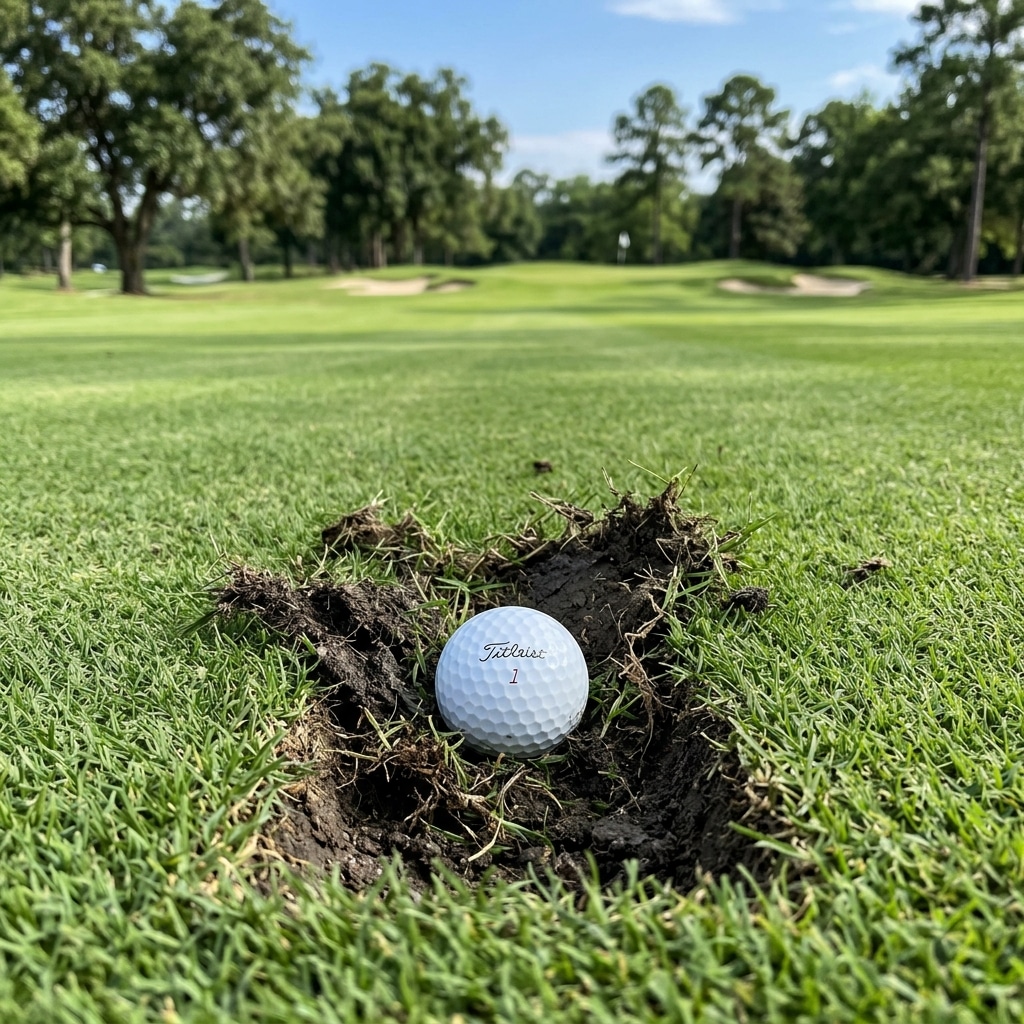
This is one of the most hated rules in golf, and it’s not going anywhere.
You can hit a perfect drive directly down the middle of the fairway and still end up sitting inside somebody else’s unrepaired divot. The reward for accuracy is sometimes punishment. Golf officials have considered changing it for decades and always declined.
The reason is more practical than cruel: defining what officially counts as a “divot” quickly becomes a nightmare. So instead, golfers are simply told to suffer.
A divot hole in the general area is not an abnormal course condition under Rule 16.1, so Rule 9.1a applies — play the ball as it lies.
Fact Check:
True. Golfers argue about this endlessly because being punished for hitting the fairway feels fundamentally unjust on every possible level.
16. If Your Ball Hangs Over The Hole, You Get 10 Seconds

Golf literally has an official suspense timer built into the rulebook.
If your ball stops hanging on the lip of the cup, you get a reasonable time to walk up to the hole plus ten more seconds to see if gravity finishes the job.
Watching golfers stare silently at a motionless ball has produced some of the weirdest tension in sports — half meditation, half psychological torture.
There’s a catch, though. If the ball drops after the ten-second window expires, the putt still counts AND a penalty stroke gets added.
Rule 13.3a governs the timer.
Fact Check:
True per Rule 13.3a. Gravity arrives, but so does the bill.
17. If Your Ball Breaks In Half, You Replay The Shot

Golf balls occasionally crack or split during impact, especially older or already-damaged ones.
If the ball literally breaks into pieces during your swing, the stroke doesn’t count. You play another ball from where you struck the original, no penalty.
Imagine smashing a drive so violently that the ball essentially explodes, and the rules respond by calmly saying, “Try again.” It’s one of the rare moments where golf briefly feels like a cartoon.
Rule 4.2b covers this. The important limit comes from Rule 4.2c(2): scratches, scuff marks, or damaged paint don’t qualify. The ball has to be genuinely cut, cracked, or separated into pieces.
Fact Check:
True per Rule 4.2b. Cosmetic damage gets you nothing.
18. Asking “What Club Did You Hit?” Can Be A Penalty

In competition golf, ordinary conversation can technically become a rules violation.
Simply asking another player what club they used counts as asking for advice. Even stranger, answering the question also creates a penalty. Both people get punished for an exchange that happens on every weekend course in the world.
Weekend golfers ignore this constantly because it sounds absurd. Professionals take it seriously because the rules treat strategic information as part of the competition itself.
Rule 10.2a prohibits asking anyone other than your caddie for advice. The Definition of “Advice” specifically includes club selection. The penalty is the general penalty — two strokes in stroke play, loss of hole in match play.
Fact Check:
True per Rule 10.2a. Nobody enforces this outside serious competition unless somebody is being painfully strict and clearly looking to start an argument.
19. You Can Use Smoke or Grass To Test Wind But Not a Wind Measuring Device

Golfers are allowed to toss grass into the air or watch smoke drift to judge wind direction.
The sport fully accepts old-man meteorology as legal strategy. But the moment you pull out a dedicated wind-measuring device, golf decides technology has gone too far.
Reading the wind with tobacco smoke is noble tradition. Reading it with electronics is dangerous modern corruption. Golf is occasionally a very strange sport.
Rule 4.3a(2) spells out the distinction. Weather forecasts and temperature/humidity measurements are fine. What’s not allowed: “using an artificial object to get other wind-related information (such as using powder, a handkerchief or a ribbon to assess wind direction)” or measuring wind speed at the course.
Fact Check:
True per Rule 4.3a(2). Your grandfather’s cigar is fine. A purpose-bought wind streamer is a violation.
20. You Cannot Intentionally Warm Your Golf Ball

Warm golf balls travel farther than cold ones, which is exactly why this rule exists.
Keeping the ball in your pocket between holes is fine. Using hand warmers, heating devices, or any external equipment to artificially warm it crosses the line.
Golf officials apparently realized golfers would absolutely start carrying tiny portable science labs onto the course if the rules allowed it — heat lamps in the cart, miniature ovens in the bag, the works.
Rule 4.2a(2) explicitly names heating as a prohibited form of ball alteration, in the same sentence as scuffing and applying substances. The penalty is the harshest in the rulebook: disqualification.
Fact Check:
True per Rule 4.2a(2). Yes, disqualification — golf treats deliberate ball alteration as roughly equivalent to high treason.
21. You Can Play A Shot While Standing Out Of Bounds

Golfers are often surprised to learn that only the BALL has to stay in bounds.
You, the player, can stand anywhere you like. Half on the course, half on the neighbor’s lawn, both feet completely on the wrong side of the fence — perfectly fine, as long as the ball itself remains in play.
Golf apparently has no issue with players half-falling over walls and fences as long as the ball obeys the boundary lines like a good citizen.
This comes from the Definition of “Out of Bounds,” which describes the position of the BALL relative to the boundary edge. The location of the player’s feet is irrelevant under Rule 18.2a.
Fact Check:
True. The ball alone carries the legal status. You are merely the delivery system.
22. You Can Legally Play A Shot While Kneeling

Golf’s rules do not care how ridiculous your stance looks.
Kneeling sideways beside a bush, lying down, bending backwards like you’re limboing — all legal, as long as you can fairly strike the ball with the head of the club. Golf occasionally turns grown adults into human pretzels, and the rulebook quietly approves.
The only catch is that you cannot improve the conditions affecting the stroke while contorting yourself into position. Breaking branches to make room is illegal. Hitting your shoulder on the way down is just embarrassing.
Rule 10.1a sets the minimum requirement (fairly striking with the head of the club), and Rule 8.1a governs conditions.
Fact Check:
True. Dignity is optional. Lie-improvement is not.
23. You Can Take Off Your Shoes To Play A Shot

If your ball ends up in shallow water or mud near a hazard, the Rules of Golf themselves have no opinion on whether you take your shoes off.
You can pull off your shoes and socks, wade in, swing, climb back out, dry off, and continue. It’s one of the few moments where stuffy, traditional golf briefly resembles a vacation activity.
The catch comes from elsewhere. Many courses enforce footwear policies through dress codes and Codes of Conduct, so the rulebook permits what the membership committee absolutely will not.
Rule 4.3 governs equipment use, and shoes are nowhere mentioned. Local enforcement happens through Rule 1.2b Codes of Conduct.
Fact Check:
True under the Rules of Golf. Bring a towel. Pretend to look apologetic.
24. You Can Play All 18 Holes Barefoot Under The Rules Of Golf

The Rules of Golf nowhere require footwear of any kind.
Technically, you could play an entire round barefoot if you wanted to. The rulebook is silent on the subject, presumably because nobody during the original drafting imagined anyone would actually try it.
Of course, many courses require shoes for the obvious reason that stepping on broken tees, rocks, and mystery puddles barefoot sounds like a terrible life decision.
Still, it is funny that golf has hundreds of detailed rules about everything from snake removal to wind testing — and never formally stopped people from wandering around barefoot like beach tourists.
Rule 4.3 covers equipment use without ever requiring shoes.
Fact Check:
True. Local course dress codes can absolutely ban barefoot play, and probably will the moment you try it.
25. Match Play Concessions Are Binding

In match play, if your opponent concedes you a putt, that’s it. Done. Final. Holed.
They cannot change their mind afterward. Even if you immediately knock the conceded putt off the green just for fun, the concession stands.
This creates real psychological games where players concede short putts early in the match to prevent opponents from gaining confidence by actually seeing the ball drop into the hole. Pros do this on purpose.
Rule 3.2b(1) states that “a concession is final and cannot be declined or withdrawn.” The ball can be removed by anyone.
Fact Check:
True per Rule 3.2b. Many golfers incorrectly believe a conceded putt still needs to be physically tapped in. It does not. The concession is the holing.
26. Your Opponent Can Make You Replay A Shot In Match Play

Order matters far more in match play than in casual golf.
If you play before your opponent when it was their turn, they can force you to replay the shot. This occasionally produces wonderfully petty situations where an opponent watches a fantastic shot land perfectly before calmly saying, “Do it again.”
Match play sometimes feels less like sport and more like a polite, slow-motion knife fight conducted in collared shirts.
Rule 6.4a(2) authorizes the cancellation, which must be done promptly and before either player makes another stroke. This is specific to match play — Rule 6.4b explicitly allows “ready golf” in stroke play with no equivalent cancellation power.
Fact Check:
True per Rule 6.4a(2). The cancellation power is unique to match play.
27. You Can Practice-Putt After A Conceded Putt In Match Play

Once your opponent concedes your putt, the hole is officially over for you. That means the next putt becomes practice — and practice is allowed.
Many golfers incorrectly believe conceded putts must immediately be picked up and pocketed. But players are actually allowed to putt afterward for practice purposes, as long as they don’t unreasonably delay play.
Golf somehow found a way to turn “that one’s good” into a legal warm-up opportunity.
Rule 5.5a clarifies that strokes made by a player in playing out a hole whose result has been decided are not practice strokes. The hole is decided the moment the concession happens.
Fact Check:
True per Rule 5.5a. Specific to match play, where concessions exist. In stroke play, every putt counts.
28. You Can Lose A Hole For Giving Advice In Match Play

Golf treats strategic advice surprisingly seriously during competition.
Asking about clubs, strategy, or swing decisions can create penalties. In match play, the consequence is loss of the entire hole over a single helpful comment.
Trying to be a nice playing partner can technically become an expensive personality trait. The friendlier you are, the worse you score.
Rule 10.2a prohibits giving advice during a round. The penalty is the general penalty, which in match play is loss of hole.
Fact Check:
True per Rule 10.2a. In ordinary casual golf, players ignore this constantly because the rule feels absurdly strict. Outside formal competition, golf etiquette quietly tolerates exactly what the rulebook treats as borderline cheating.
29. You Can Practice Between Holes In Match Play

Golf’s rules treat match play and stroke play like two entirely different legal universes.
A quick chip shot near the next tee? Allowed in both formats. But the broader rules around practice during a round flex more easily in match play, where players have more latitude to agree on what’s reasonable between themselves.
Stroke play, with its broader competitive field, is policed more tightly. The two formats look identical from outside but operate under wildly different laws.
Rule 5.5b allows practice putting or chipping on or near the green just completed and the next teeing area. Committees can restrict this further in stroke play tournaments through Model Local Rule I-2.
Fact Check:
Partially true. Both formats allow Rule 5.5b practice, but stroke play tournaments often add restrictions via Local Rule I-2 that match play doesn’t bother with.
30. You Cannot Borrow Clubs During A Round

Even if your friend has the perfect club for the shot, you cannot borrow it during a competitive round.
Golfers can share carts, snacks, drinks, gloves, sunscreen, and unsolicited life advice. Sharing a six-iron is suddenly a shocking ethical violation worthy of formal penalty.
The rules want players competing only with the clubs they personally chose to carry at the start of the round.
Rule 4.1b(2) prohibits making a stroke with a club being used by anyone else on the course. One narrow exception exists in Foursomes and Four-Ball, where partners may share clubs if they have 14 or fewer between them.
Fact Check:
True per Rule 4.1b(2). In casual rounds, everyone ignores this. In formal competition, the penalty is real.
31. You Can’t Replace A Club You Broke In Anger

Golf has officially codified “anger consequences” into the sport.
If a club breaks naturally during play, you can sometimes continue using it or replace it. If the club breaks because you smashed it in frustration, the rules become much less sympathetic.
Snap your putter over your knee, and you must finish the round with whatever putting alternative you can improvise — including, in some cases, a wedge. Golf is not interested in subsidizing your temper.
Rule 4.1a(2) was updated in 2023 to allow replacement of a damaged club, but specifically excludes damage caused by abuse. The “except in cases of abuse” language was added precisely to keep angry golfers from getting fresh equipment as a reward for losing their tempers.
Fact Check:
True per Rule 4.1a(2) as amended in 2023.
32. You Can Keep Playing With A Broken Club

Oddly, the rules will sometimes let you keep using a damaged club after it breaks during normal play.
This creates the hilarious possibility of someone using a half-destroyed club for the remaining fourteen holes because golf refuses to show mercy on equipment failure.
Shaft cracked? Keep swinging. Clubhead loose? Good luck. Grip falling off mid-round? That sounds like a personal problem.
Rule 4.1a(2) allows this: “no matter what the nature or cause of the damage, the damaged club is treated as conforming for the rest of the round.” You can repair it, replace it, or keep playing with it. The only thing you cannot do is play with a club whose performance characteristics you deliberately altered.
Fact Check:
True per Rule 4.1a(2). The rulebook is strangely indifferent to whether your equipment looks like it survived a car accident.
33. One-Ball Rule Exists In Some Elite Tournaments

Professional tournaments sometimes require players to use the exact same brand and model of golf ball throughout the entire round.
Casual golfers would absolutely fail this rule instantly. Most weekend bags contain a random collection of found balls from at least six different companies and three different decades, including at least one ball with a corporate logo nobody recognizes from a tournament that may not have happened.
The Rules of Golf themselves do not require this. Rule 4.2a(1) allows any conforming ball. The restriction kicks in only when Model Local Rule G-4 (“One Ball Rule”) is adopted — which major championships and elite tour events do, but ordinary recreational rounds don’t.
Fact Check:
True. The one-ball restriction is real but optional, and almost exclusively used at the elite competitive level.
34. You Can Accidentally Hit The Wrong Ball And Create Chaos

Few things in golf create panic faster than confidently walking toward your ball, hitting a beautiful shot, and hearing somebody quietly say, “Uh… that’s mine.”
Playing the wrong ball is a real penalty, even when the mistake is completely innocent. Golf treats ball identification as your personal responsibility, full stop. Two players using identical Pro V1s with no markings is not the rulebook’s problem — it’s yours.
Rule 6.3c(1) prohibits making a stroke at a wrong ball. In stroke play, the penalty is the general penalty (two strokes), and the wrong-ball stroke plus any subsequent strokes don’t count toward your score. In match play, it’s loss of hole. Failing to correct before the next tee triggers disqualification.
Fact Check:
True per Rule 6.3c(1). Mark your golf balls obsessively. The rulebook offers zero forgiveness for honest confusion.
35. You Can’t Change Your Mind After Declaring A Ball Lost
Once a ball is officially lost under the rules, finding it afterward changes nothing.
Even if somebody discovers it sitting perfectly in the rough ten seconds later, fully visible, completely playable — the original ball is dead. The decision is final. The clock has spoken.
This creates some of the most painful moments in golf, when a ball magically appears immediately after the three-minute search clock expires. There is no appeal. There is no exception. There is only the slow walk back to the spot of the previous stroke.
Rule 18.2a(1) ends the ball’s life at the three-minute mark. Rule 18.2b then requires stroke-and-distance relief.
Fact Check:
True per Rules 18.2a and 18.2b. Time, in golf, is absolutely merciless.
36. Internal Out Of Bounds Can Exist On Some Courses

Some courses create out-of-bounds areas INSIDE the property itself.
This usually happens to protect golfers on nearby holes from incoming tee shots. Hole 4 might be out of bounds for players on hole 7, even though both holes belong to the same course.
Nothing feels more insulting than discovering your ball is technically out of bounds despite still being physically located on the golf course. The course punishes you for being on the course — a uniquely golf experience.
Rule 2.1 allows the Committee to set boundaries however they choose, and Model Local Rule A-4 specifically authorizes internal OB.
Fact Check:
True per Rule 2.1 and Model Local Rule A-4. Always check the scorecard before assuming a shot that landed on a fairway is in bounds.
37. You Must Take COMPLETE Relief From Cart Paths

If a cart path interferes with your shot, stance, or swing, you usually get free relief. But the rules require COMPLETE relief, not partial.
Many golfers incorrectly drop the ball where the path still slightly touches their stance, because it conveniently gives them a better angle to the green. The rulebook is not impressed.
Golf insists that if you’re taking free relief, you must fully commit to it — not creatively game the situation for personal benefit.
Rule 16.1b requires the relief area to provide complete relief from all interference by the immovable obstruction.
Fact Check:
True per Rule 16.1b. Incorrect cart-path drops are among the most common rules mistakes in amateur golf, because the temptation is huge and the supervision is zero.
38. You Can Get Relief From Immovable Obstructions But Not Boundary Objects

Golf draws a strange line between man-made objects that get free relief and man-made objects that don’t.
Cart paths, sprinkler heads, signs, and benches qualify for relief. Boundary fences and stakes do not. Both are clearly artificial. Both are clearly inconvenient. One offers sympathy; the other offers nothing but the suggestion that you should have aimed better.
The reasoning is more logical than it first appears — you can’t let players relocate the edge of the course, since that would let them effectively redefine where their ball is.
Rule 16.1 provides relief from immovable obstructions, but the Definition of “Boundary Object” explicitly excludes them: “from which free relief is not allowed.”
Fact Check:
True per Rule 16.1 and the Definition of “Boundary Object.” Logical, but it still feels emotionally unjust in the moment.
39. You Can’t Move Boundary Fences For Relief
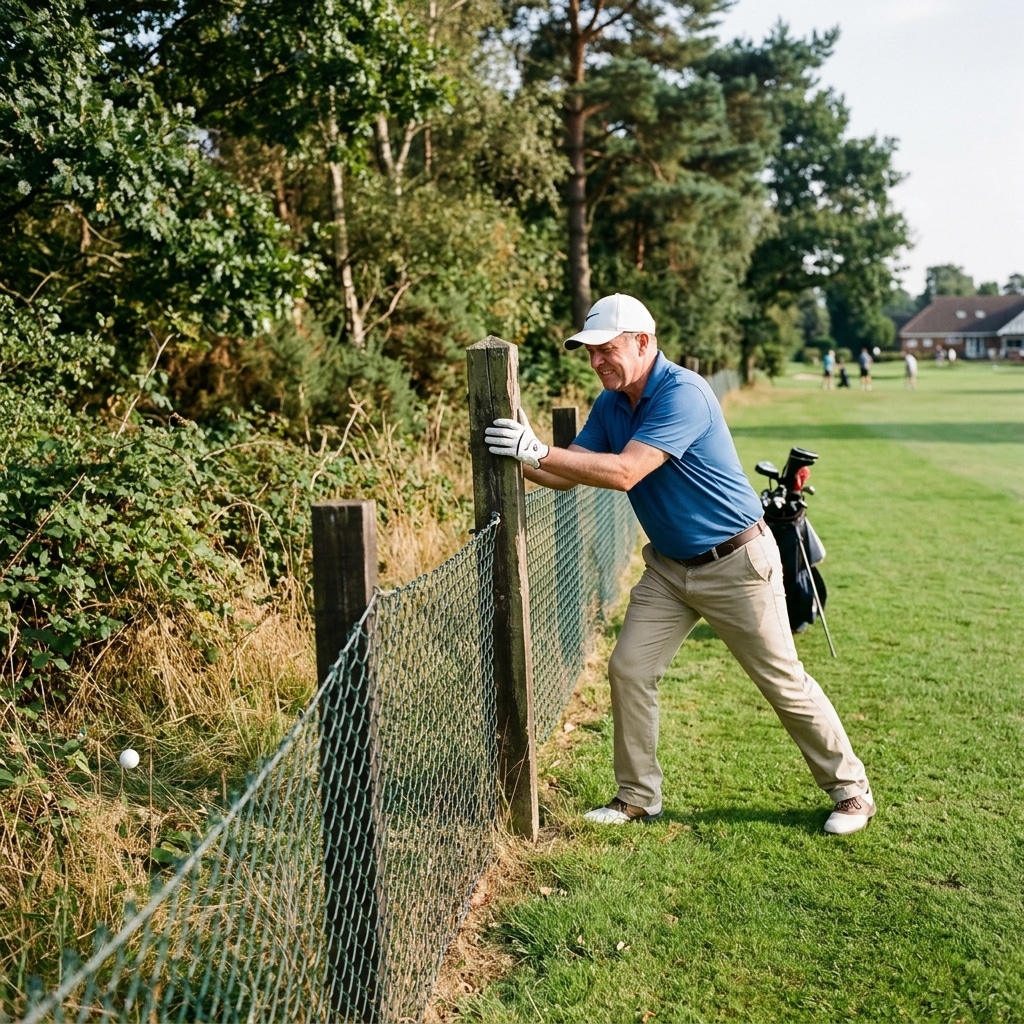
This confuses many golfers because fences are obviously man-made objects.
Normally, golfers get relief from artificial obstructions. Boundary fences are different. Anything defining the edge of the course gets its own special, less-generous category, even if it’s a single white stake you could pull out with two fingers.
Move one and you’ve technically breached the rules — the general penalty applies, unless you put it back before your next stroke.
The Definition of “Boundary Object” is explicit: they’re treated as immovable even if movable. Rule 8.1a governs the breach. The good news is Rule 8.1c, which lets you avoid the penalty by restoring the original conditions before playing.
Fact Check:
True. Restoration is your escape hatch — put the stake back exactly where it was, and the penalty disappears.
40. Embedded Ball Relief Is Real
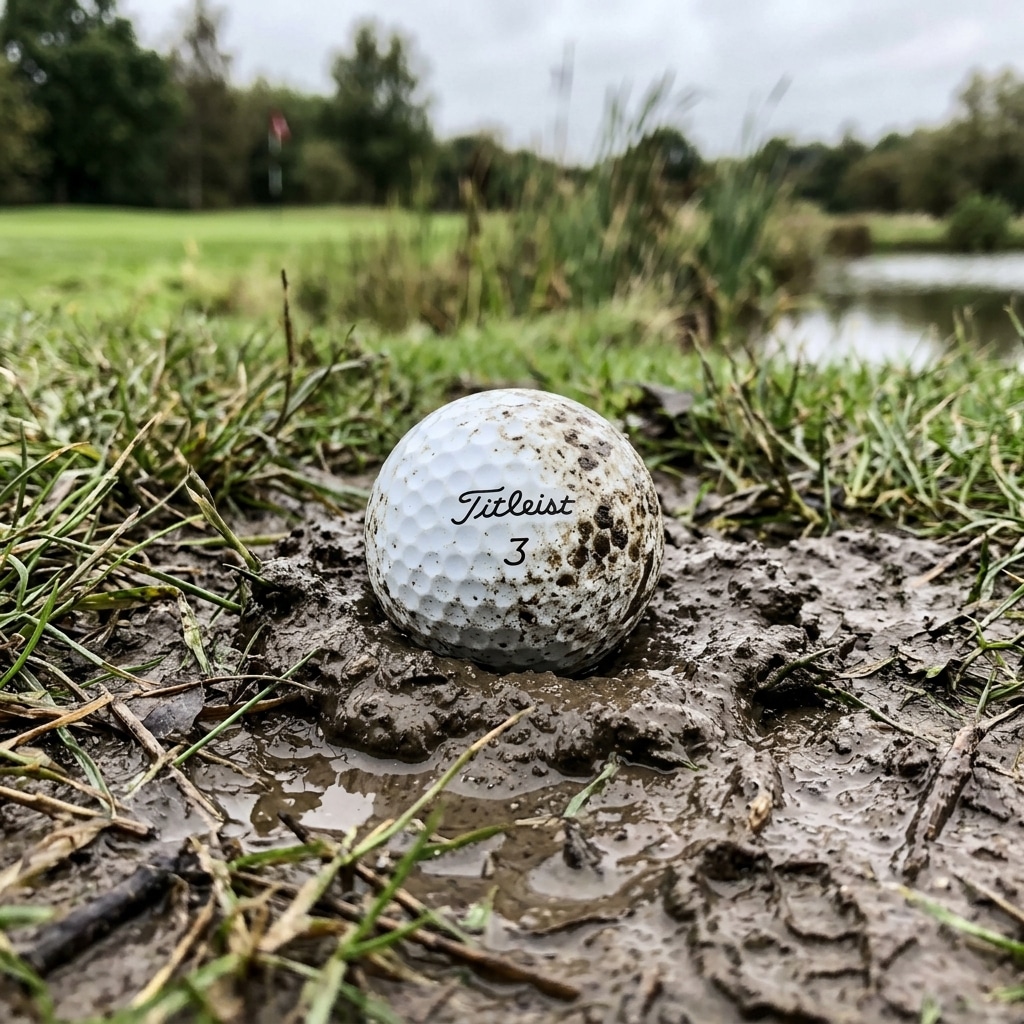
If your golf ball plugs directly into soft ground and creates its own little crater, the rules often allow free relief.
You can lift the ball, clean it, and drop it nearby without penalty. Golf officials eventually decided that smashing a perfect drive directly into mud should not feel like punishment.
It’s one of the few rules in the rulebook that actually feels compassionate toward normal human frustration and bad luck.
Rule 16.3 allows relief when a ball is embedded in its own pitch-mark in the general area — meaning part of the ball is below ground level. Relief is one club-length from a reference point right behind the ball, no nearer the hole.
Fact Check:
True per Rule 16.3. Relief applies only in the general area — not in bunkers, penalty areas, or on the putting green.
41. You Can Remove Stones From Bunkers Now

Older golfers still get this wrong constantly, and the trauma is understandable.
For years, removing stones or loose objects from bunkers could earn a penalty. The rules changed in 2019, and golfers are now finally allowed to remove loose impediments from bunkers without consequence.
This was widely celebrated by anyone tired of pretending that smashing a wedge directly into a rock was somehow an important lesson about integrity, courage, and personal character development.
Rule 12.2a now allows the removal of loose impediments and movable obstructions from bunkers before playing the shot, including any reasonable touching of sand that happens in the process.
Fact Check:
True per Rule 12.2a. Many longtime golfers still instinctively avoid touching anything in bunkers because the old rules were strict for so long that the muscle memory persists.
42. You Can Search For Your Ball By Moving Sand In A Bunker

If your ball is buried under sand in a bunker, the rules actually allow you to move sand around to search for it.
Golf officials eventually realized that forcing golfers to locate invisible buried objects without touching the sand was probably unreasonable. A small concession to physics and common sense.
Once you find it, though, you must carefully recreate the original lie before hitting. Excavating the whole ball for a clean lie is firmly illegal.
Rule 7.1a allows reasonable search actions including moving sand, and Rule 7.1b requires re-creating the original lie — though you may leave a small part of the ball visible.
Fact Check:
True per Rules 7.1a and 7.1b. You can find the ball, but you can’t improve your situation in the process.
43. You Can Get Relief From Temporary Water — Even In Bunkers

If standing water appears on the course after rain, you usually get free relief. Even bunkers qualify.
But bunker relief procedures are much more annoying than relief in other areas. Golf apparently believes wet sand should still ruin your day a little, even if it grants you the option to escape the puddle.
You can take free relief by dropping in another part of the bunker, or you can take penalty relief (one stroke) by dropping outside the bunker. Mercy comes with strings attached.
Rule 16.1c governs bunker relief from abnormal course conditions, including temporary water.
Fact Check:
True per Rule 16.1c. Bunker relief is more restrictive than relief in the general area, but more generous than the rules used to be.
44. You Can Putt With The Flagstick Left In

For decades, golfers had to remove the flagstick before putting from the green.
That rule changed in 2019. Players can now leave the flagstick in, and many actually prefer it because they feel it improves depth perception and gives a clearer visual target.
Traditional golfers hated the change at first, mostly because golfers tend to treat any modernization like a personal attack on the very concept of civilization. Watching them argue about a thin metal pole became one of golf’s strangest culture-war debates.
Rule 13.2a(1) allows the flagstick to stay in. Hitting it carries no penalty — a complete reversal of the pre-2019 rule, which made it an automatic two-stroke penalty.
Fact Check:
True per Rule 13.2a. Many golfers still instinctively pull the flag because decades of muscle memory are hard to erase.
45. You Can Remove The Flagstick While A Ball Is Moving

Players are allowed to tend or remove the flagstick even while a putt is rolling toward the hole.
Golf somehow created official choreography rules for people sprinting toward holes while balls slowly creep across greens. The entire sequence often looks like a slow-motion comedy sketch — somebody jogging to the pin while everybody else holds their breath.
Timing matters, though. Mishandling the flagstick during this delicate operation can still create penalties.
Rule 13.2b covers flagstick attendance. Rule 11.3 adds an important restriction: you cannot deliberately move the flagstick to affect where the ball might come to rest, which means no yanking it out at the last second to stop a ball.
Fact Check:
True per Rules 13.2b and 11.3. Ordinary attended-flagstick removal is fine. Strategic flagstick interference is the general penalty.
46. Accidentally Moving Your Ball On The Green Carries No Penalty Now

Golf once punished players harshly for accidentally nudging their ball on the green.
Modern rules are much more forgiving. If you accidentally move the ball while marking, adjusting, or replacing it, you usually just replace it without penalty.
This change happened partly because televised slow-motion replays were catching microscopic ball movements no human could possibly notice in real time, which started making the entire sport look ridiculous to anyone watching at home.
Rule 13.1d(1) is now explicit: “There is no penalty if the player, opponent or another player in stroke play accidentally moves the player’s ball or ball-marker on the putting green.”
Fact Check:
True per Rule 13.1d(1). This became one of the most controversial rule issues during the slow-motion replay era before officials finally relaxed it in 2019.
47. If Your Ball Hits You Or Your Equipment, There Is Usually No Penalty Now

Golf once punished players for accidentally ricocheting the ball into themselves or their own equipment.
Modern rules removed many of these penalties because they were producing ridiculous outcomes that looked more like slapstick comedy than professional sport. The rulebook finally accepted that physics sometimes has a sense of humor at golfers’ expense.
Players can now accidentally bounce chip shots off their own bags, feet, or shins without instantly triggering punishment. Embarrassment remains. The stroke does not.
Rule 11.1a removes the penalty for accidental contact: “If a player’s ball in motion accidentally hits any person (including the player) or outside influence, there is no penalty to any player.”
Fact Check:
True per Rule 11.1a. One exception: in stroke play, a ball played from the green that hits another ball at rest on the green still triggers the general penalty.
48. You Can Stand In A Penalty Area To Hit A Shot

Many golfers still believe touching anything inside a penalty area is illegal. Modern rules are far more relaxed.
Golfers can now stand in penalty areas, ground the club, and even remove certain loose impediments in many situations. The old fear-based bunker-meets-water-hazard mythology has largely disappeared from the official rulebook — although not from golfers’ instincts.
Rule 17.1b allows playing a ball in a penalty area essentially as you would anywhere else, with no restriction on touching the ground. Loose impediments can be removed under Rule 15.1.
Fact Check:
True per Rule 17.1b. Older golfers often still follow outdated pre-2019 rules without realizing the rules changed. They tiptoe around penalty areas like they’re crossing a minefield from a previous war.
49. “Music Is Illegal” (False)

Many golfers still believe music is completely banned during rounds. Modern rules are more nuanced.
Ordinary music — background tunes from a cart speaker, news on your phone — is generally fine unless competition rules specifically prohibit it. What’s NOT allowed is using audio to eliminate distractions or help with swing tempo.
So blasting classic rock from a speaker is acceptable. Using a specific beat to time your backswing is a violation. Golf somehow created a situation where Spotify is fine but a metronome is illegal.
Rule 4.3a(4) draws the line. Model Local Rule G-8 lets Committees ban all audio if they choose.
Fact Check:
Mostly false as a blanket ban. The USGA has confirmed it does NOT adopt Model Local Rule G-8 at USGA championships.
50. You Cannot Deliberately Improve Your Lie By Bending Grass

Players are not allowed to press down grass behind the ball or improve the swing path before hitting.
Even tiny improvements can technically count as penalties in competition. This creates moments where golfers look like bomb-disposal experts trying to carefully enter thick rough without flattening a single blade of grass.
Golf’s obsession with “playing the course as you find it” becomes surprisingly intense in situations like this. The rulebook treats your lie as a piece of natural history that exists independent of your preferences.
Rule 8.1a(1) prohibits moving, bending, or breaking any growing or attached natural object if it improves conditions affecting the stroke.
Fact Check:
True per Rule 8.1a(1). Accidental contact during a fair search or while taking a stance fairly is treated differently — intent is everything, and the rulebook expects officials to read minds.
51. You Can Get Penalized For Building A Stance

Golf does not allow players to physically improve their stance area before hitting.
Breaking branches, flattening bushes, kicking debris aside, or building little footholds can all create penalties. Golfers are expected to adapt to terrible positions instead of landscaping the course into something more convenient for their swing.
The course shapes you, not the other way around.
Rule 8.1a covers breaking natural objects and moving loose impediments into position to build a stance. Rule 8.1b does allow “firmly placing the feet” and “fairly taking a stance” — but you must use the least intrusive course of action.
Fact Check:
True per Rule 8.1a. This is one of the rules amateur golfers accidentally break all the time around trees and bushes, usually by snapping a “small” branch that was actually load-bearing for the entire stance.
52. Wind Moving Your Ball Is Usually Just Bad Luck

If a gust of wind moves your ball after it lands, the rules usually treat that as part of the game. You simply play it from its new position.
No do-overs. No relief. No appeal to a higher authority.
This creates brutal moments on windy greens where a perfectly lined-up putt suddenly rolls three feet away before the player even strikes it. Golf’s basic philosophy is surprisingly cold-hearted: nature is unfair, and sometimes you accept it.
Rule 9.3 states that natural forces moving a ball at rest carry no penalty. Two exceptions exist: balls on the green already lifted and replaced, and (new in 2023) balls that move to another area of the course or out of bounds after being dropped or placed.
Fact Check:
True per Rule 9.3. The 2023 amendment specifically added the “different area” exception.
53. If Your Ball Falls Off The Tee, It’s Not Always A Stroke

If the ball accidentally falls from the tee before the stroke begins, it usually doesn’t count as a shot.
Intent matters heavily in golf rules. Accidentally nudging the ball is treated very differently from actually attempting to swing at it. This is why golfers occasionally stand frozen after a ball tumbles off the tee, eyes wide, desperately hoping nobody in the group says the word “one” out loud.
You re-tee. You move on. Nobody mentions it.
Rule 6.2b(5) allows re-teeing without penalty if the ball falls off before a stroke is made. But once you’ve actually attempted to strike the ball — even halfheartedly — the ruling changes dramatically.
Fact Check:
True per Rule 6.2b(5). The line between “oops” and “stroke” is the moment you actually meant it.
54. You Can Mark Your Ball With Almost Anything

Most golfers use coins or poker chips, but the rules are surprisingly flexible about ball markers.
Tees, bottle caps, tiny tokens, lucky pebbles, vintage subway tokens — all technically legal as long as they properly mark the spot. Somewhere out there is probably a golfer using a 1987 arcade token while feeling extremely proud of themselves for the personal branding.
The catch is that markers shouldn’t be so unusual or large that they distract other players. That’s where tournament etiquette tightens what the Rules leave loose.
The Definition of “Ball-Marker” allows “an artificial object … such as a tee, a coin, an object made to be a ball-marker or another small piece of equipment.”
Fact Check:
True per the Definition. Tournaments may discourage unusually large or distracting markers, but the base rule is generously broad.
55. You Can Take Relief From Sprinkler Heads Near Greens On Some Courses

Many courses use local rules allowing relief from sprinkler heads near greens when they interfere with the line of play.
Golfers love this rule because sprinkler heads somehow always appear exactly where golfers want to land approach shots, as if the irrigation system is personally targeting their game plan.
But it’s not a universal rule. Without it in effect, a sprinkler head that doesn’t physically interfere with stance or swing offers no relief, even if it’s directly on your putting line.
Model Local Rule F-5 authorizes this relief — applying when the ball is within two club-lengths of the green and the sprinkler is on the line of play within two club-lengths of the ball.
Fact Check:
True only when Model Local Rule F-5 is in effect. Always check the scorecard before assuming sprinkler relief is available.
56. You Can Get Relief From Burrowing Animals — But Not Most Other Non-Dangerous Animals
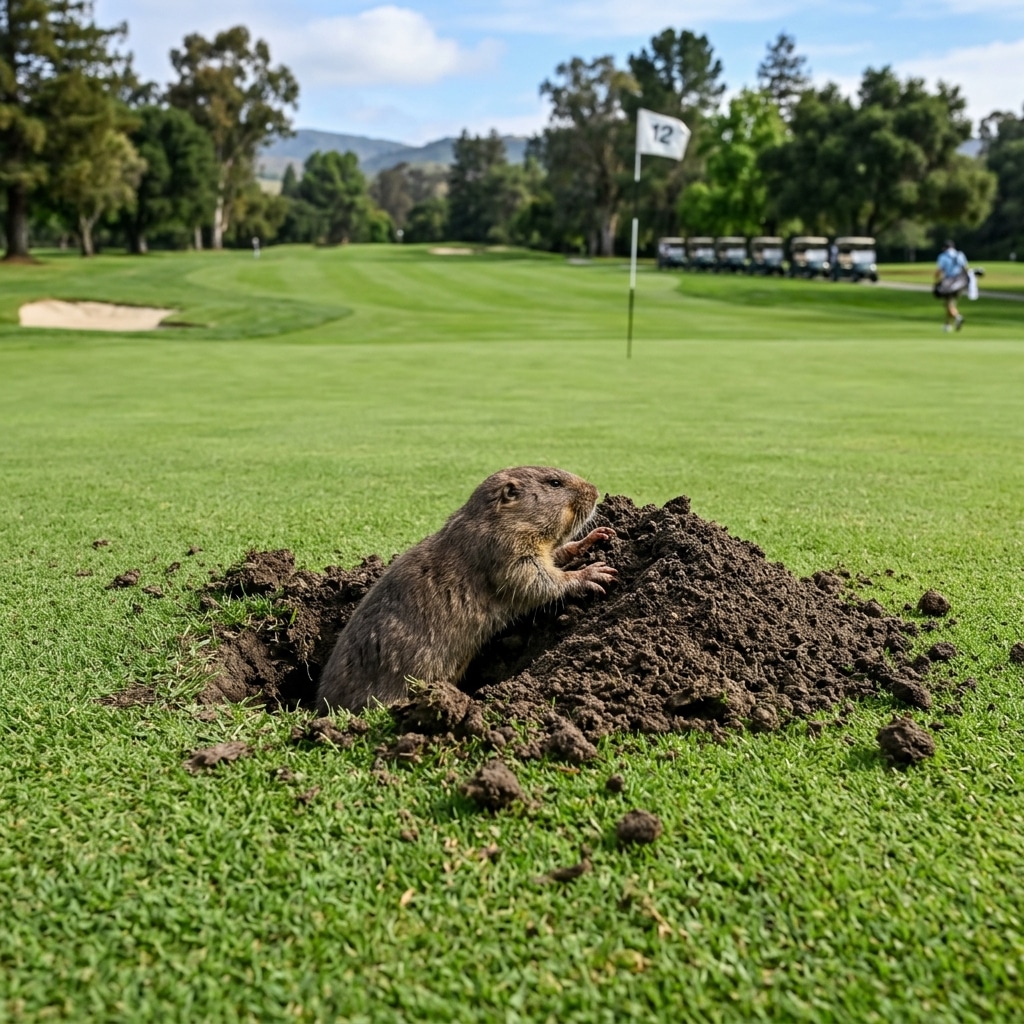
Golf provides relief from damage caused by burrowing animals like gophers, rabbits, and moles.
Damage caused by many other animals does not automatically qualify. Apparently golf created a strange legal hierarchy ranking which animals deserve official sympathy. Gophers, yes. Cows, deer, geese, raccoons — usually no.
The rulebook somehow developed strong opinions about which species count as inconveniences worth accommodating and which species are just things the course has to deal with.
Rule 16.1 covers “abnormal course conditions,” which includes “animal holes” per the Definitions. The Definition of “Animal Hole” specifies a hole dug by an animal — excluding holes dug by animals that are themselves loose impediments (worms, insects).
Fact Check:
True per the Definition and Rule 16.1. Hoof marks, animal tracks, and general wildlife destruction often do NOT qualify for free relief.
57. “Your Shadow Cannot Help Another Player Line Up” Is Partly Real

Golf has surprisingly specific rules about alignment assistance.
Intentionally helping another player line up using positioning, body language, or shadows can create problems under the advice and alignment rules. Internet versions of this rule often become wildly exaggerated into theories about shadow placement and sun angles, but there’s a real underlying principle buried in all the viral nonsense.
The actual rule is narrower and more sensible than the social-media folklore suggests.
Rule 10.2b prohibits deliberately positioning a person or object to eliminate distractions, protect from elements, or help with aiming during the stroke. A deliberately positioned shadow blocking the sun would qualify.
Fact Check:
Mostly true in spirit per Rule 10.2b. The viral “shadow lineup” version oversimplifies. The real rule is about deliberate positioning during the stroke, not metaphysics.
58. You Can’t Just Replace A Muddy Ball Whenever You Want
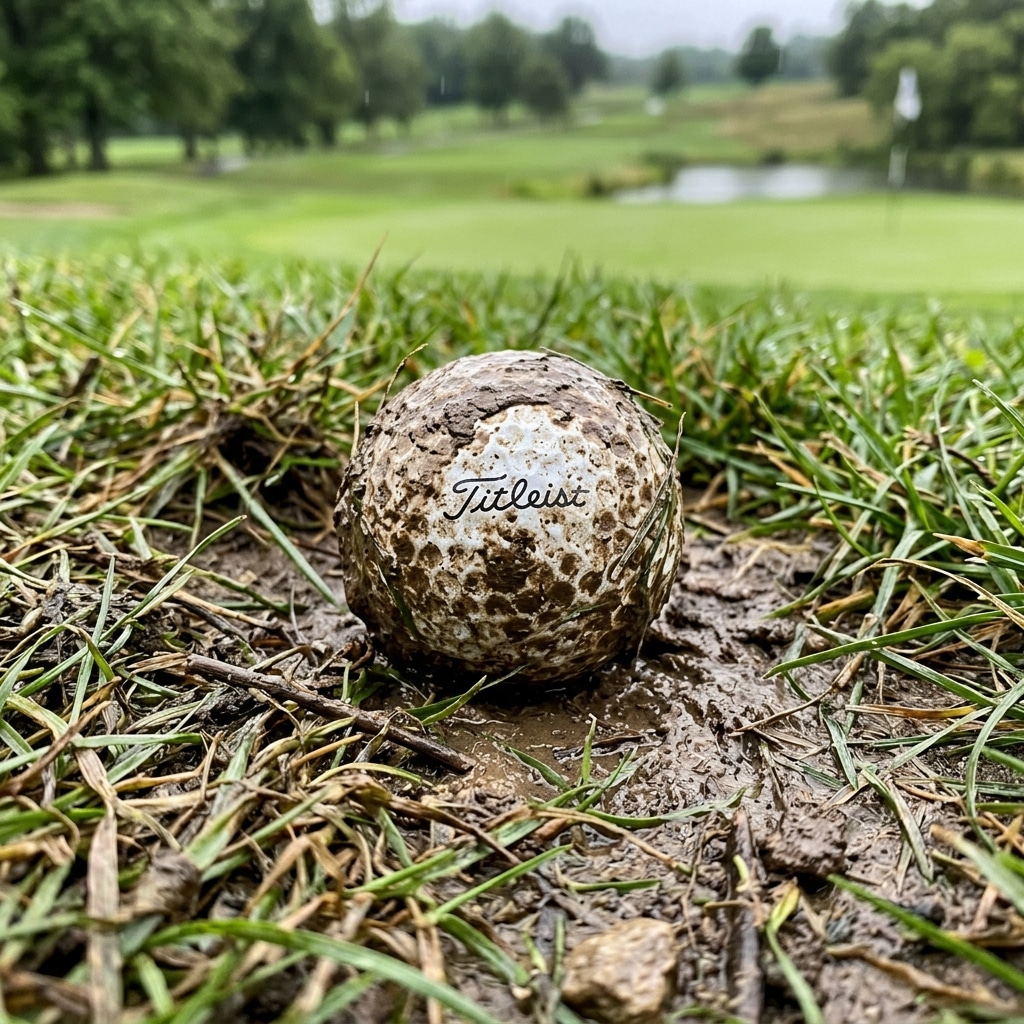
Many golfers assume they can freely clean or replace muddy balls anytime they want. The rules are much stricter than that.
Unless specific relief situations apply, players often must continue playing the dirty ball exactly as it sits — caked mud, grass clippings, mystery substances and all. Golf has firm opinions about hygiene, and most of them lean toward “deal with it.”
The cleaning rules vary depending on why the ball was lifted, which catches casual players who assume “I picked it up, I can clean it” is universal.
Rule 14.1c allows cleaning after most lifts, but NOT when lifted to identify the ball, check for damage, or because it interferes with play.
Fact Check:
True per Rule 14.1c. Model Local Rule E-3 (preferred lies / winter rules) can temporarily relax this when the Committee adopts it.
59. You Can Get Penalized For Slow Play

Golf has formal pace-of-play rules, even though recreational golfers sometimes act like searching for balls is a full-day wilderness excursion.
Players can absolutely receive penalties for unreasonable delays. The penalty structure escalates aggressively. Tournament officials are increasingly willing to use it.
Rule 5.6a prohibits unreasonable delay: one stroke for the first breach, the general penalty for the second, disqualification for the third. Rule 5.6b recommends — but doesn’t require — that players make a stroke within 40 seconds after they’re able to play without interference.
Fact Check:
True per Rule 5.6. Penalties are enforced far more aggressively in professional and tournament golf than in casual weekend rounds, where the only real penalty is the four-hour wait behind the group ahead of you.

I’m Chris and I run this website – a resource about symbolism, metaphors, idioms, and a whole lot more! Thanks for dropping by.