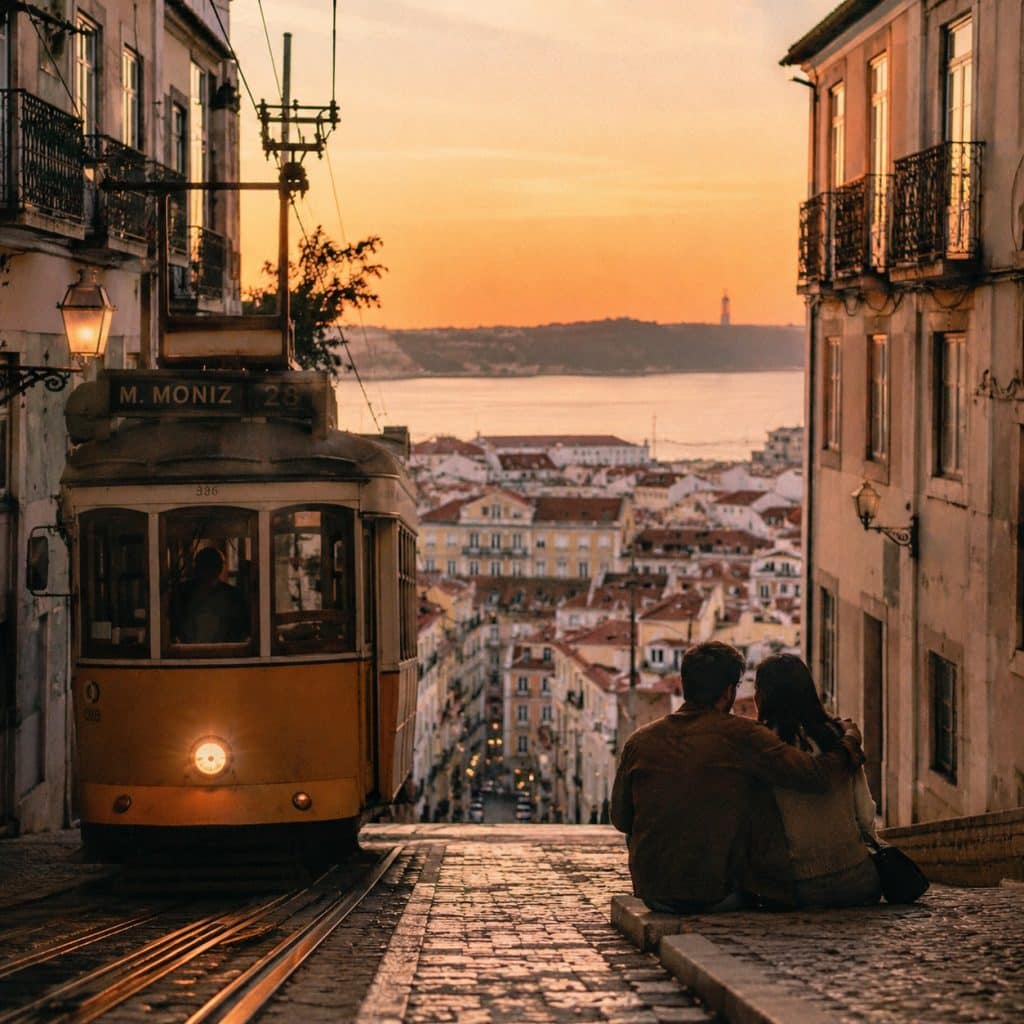
In the prevailing logic of the twenty-first century, speed is equated with vitality. We measure the success of a metropolis by its “pulse”—the friction-less velocity of its commuters, the digital hum of its financial districts, and the frantic, neon-lit rush toward the next moment. Yet, Lisbon remains a defiant, beautiful anomaly. To enter the Portuguese capital is to step into a geography that possesses a distinct, physical weight—a heaviness born not of burden, but of an enduring, unhurried presence.
The Topography of Resistance
Lisbon’s slowness is first dictated by its bones. The city is a vertical labyrinth of seven hills, where the limestone calçada (cobblestone) underfoot demands a constant, mindful negotiation. You cannot sprint through the Alfama or Mouraria; the tilt of the earth and the polished, bone-white sheen of the stones force a rhythmic deceleration.
This is the first layer of Lisbon’s “weight”: the physical exertion of the climb. Unlike the flat, efficient grids of Berlin or Chicago, Lisbon’s topography tethers the pedestrian to the ground. Every errand requires a reckoning with gravity. This somatic experience turns the simple act of movement into a meditation, ensuring that the city is never merely a backdrop to be bypassed, but a protagonist you must physically grapple with.
The Golden Stasis: Light and Stone
There is a specific quality to the Luz de Lisboa (the Light of Lisbon) that contributes to its gravitational pull. Filtered through the salt-heavy air of the Tagus River, the light here feels thick, almost tactile. It does not merely illuminate the city; it coats it in a liquid, amber stillness that seems to slow the passage of seconds.
The architecture reinforces this sense of anchored time. Lisbon’s beauty is found in its imperfection:
- The Azulejos: The ceramic tiles that skin the buildings are often chipped or faded, bearing the cracks of seismic history and Atlantic salt. They represent a beauty that has stayed put, refusing the hollow sheen of “newness.”
- The Ruins: From the skeletal arches of the Carmo Convent to the sagging clotheslines of the Graça district, the city wears its history like a heavy, velvet cloak.
In a world obsessed with the “disposable,” Lisbon is uncomfortably—and wonderfully—permanent.
The Soundtrack of Saudade
One cannot discuss the weight of this city without the haunting resonance of Fado. If speed is the music of the future, Fado is the music of the long, slow gaze backward. It is the sonic manifestation of saudade—that untranslatable Portuguese ache for a presence that is absent, or a future that might have been.
Fado is not a genre of the sprint; it is a music of the anchor. It pulls the listener downward into the soul of the community, demanding that they sit, drink, and feel the gravity of human experience. When the voice of a fadista echoes through a darkened tavern, the frenetic concerns of the outside world lose their velocity. The city teaches you that some things—grief, love, and memory—cannot be hurried.
The Philosophy of the Wait
In Lisbon, the “wait” is a structural necessity rather than an inconvenience. The iconic yellow Remodelado trams do not rush; they creak, groan, and pause for neighbors chatting in the tracks or for the slow boarding of the elderly. The service in a traditional tasca follows the rhythm of the kitchen, not the anxiety of the customer.
This systemic slowness creates a profound psychological weight. In faster cities, we use velocity to outrun ourselves. In Lisbon, the pace forces an internal reckoning. When the external world slows down, the internal world becomes louder. You are forced to notice the smell of roasting sardines, the texture of the wind off the Atlantic, and the faces of those passing by.
Conclusion: The Grace of Gravity
Ultimately, the weight of Lisbon is the weight of authenticity. It is a city that has refused to be streamlined for the sake of efficiency. It is heavy with the salt of the sea, the dust of the hills, and the ghosts of explorers who once watched these same horizons.
In its steep climbs and its lingering sunsets, Lisbon reminds us that there is a specific kind of grace found only in resistance. It is not a city of the future, nor entirely of the past; it is a city of the now, captured in the slow, deliberate gravity of a place that knows that the most important things in life—much like the city itself—cannot be rushed.

I’m Chris and I run this website – a resource about symbolism, metaphors, idioms, and a whole lot more! Thanks for dropping by.