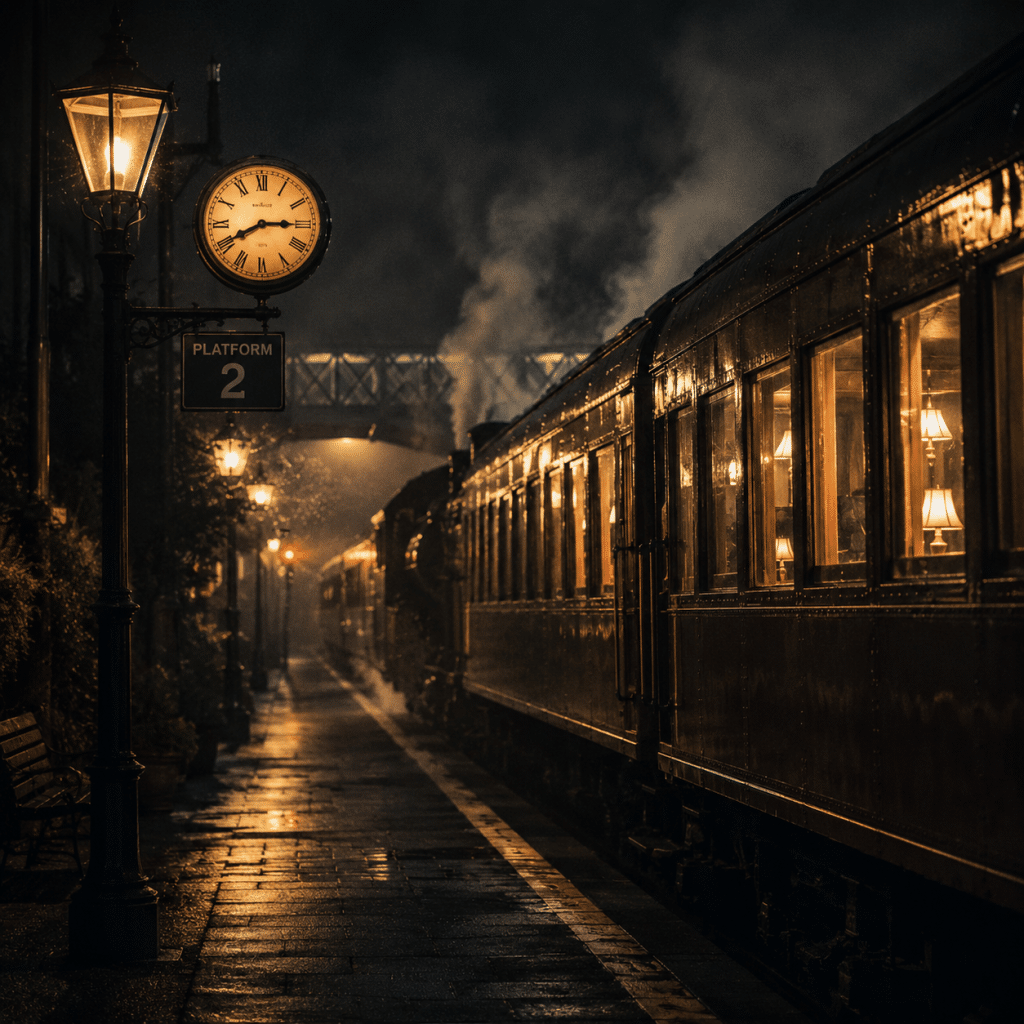
In an era defined by the “frictionless” travel of low-cost airlines—where the goal is to disappear in one city and blink into existence in another—the night train is a stubborn vestige of a more tactile world. To board a sleeper carriage is to reject the sterile efficiency of the flight path in favor of the iron vein. While the world outside obsesses over the shortest distance between two points, the night train suggests that the distance itself is the point.
The enduring relevance of the night train lies not in its speed, but in its ability to restore the romance of transition and the sanctity of the threshold.
The Architecture of the In-Between
The night train is a “non-place” that feels profoundly like a “place.” Unlike an airplane cabin, which is a pressurized tube designed to suspend human experience until landing, a train carriage is a kinetic home. There is a specific, industrial domesticity to it: the heavy wool blankets, the communal clink of glassware in the dining car, and the ingenious geometry of the berths.
- The Rhythms of the Rail: The sound of the night train—the rhythmic click-clack of wheels over rail joints—acts as a metronome for the subconscious. It is a mechanical lullaby that anchors the traveler to the earth even as they hurtle across it.
- The View from the Bunk: There is no sight in travel quite like the blue-black silhouette of a foreign mountain range or the lonely glow of a distant signal box passing by your window at 3:00 AM. It is a private cinema of the landscape, viewed from the safety of a cocoon.
The Moral Weight of the Journey
In the context of the modern climate crisis, the night train has taken on a new, urgent significance. It has shifted from a nostalgic luxury to a symbol of intentionality.
Choosing the rail over the runway is a physical manifestation of “slow travel.” It is an admission that our presence in a new place should cost us something—time, patience, and a bit of effort. By crossing borders while we sleep, we honor the geography of the planet. We feel the vastness of the continent in the hours it takes to traverse it, rather than mocking that vastness with a two-hour flight. The night train makes the world feel big again, and in doing so, it makes the world feel worth saving.
The Threshold of the Dream
Perhaps the most literary appeal of the night train is its relationship to sleep. To fall asleep in Paris and wake up in Vienna is a form of secular magic. The train serves as a literal vessel for the “liminal space”—the threshold between who you were in the city of departure and who you will become in the city of arrival.
“The sleeper car is a laboratory of the soul, where the movement of the earth and the movement of the dream-state become indistinguishable.”
When you wake to the smell of coffee and the sight of a new sunrise over a different horizon, the transition is earned. You haven’t just arrived; you have traveled. You have been carried through the dark by a machine that breathes with the landscape.
Conclusion: The Return to the Rails
We return to the night train because we are tired of being “processed” by airports. We crave the weight of the steel, the dignity of the compartment, and the poetic slow-burn of a journey that takes its time. The night train remains meaningful because it treats the traveler not as cargo, but as a witness to the world’s enduring scale. It proves that the most profound way to reach a destination is to surrender to the night and let the rails do the work.

I’m Chris and I run this website – a resource about symbolism, metaphors, idioms, and a whole lot more! Thanks for dropping by.