Hobbies are essential to a good retirement — they give you purpose, social connection, and a reason to get out of bed.
But the same hobby that saves one person’s retirement can wreck another’s. The difference isn’t the activity — it’s the intensity.
What follows isn’t a list of things to avoid. It’s a list of things to watch yourself on. Every entry here is enjoyed, healthily, by millions of retirees.
The cautionary tales are about what happens at the extreme end. Read it as a list of warning signs, not prohibitions.
36. Golf Obsession

Why:
Cost compounds quickly when one hobby fills five days a week, and a non-playing spouse can spend years feeling like an afterthought.
Golf is the quintessential retirement hobby — fresh air, friends, gentle exercise. The trouble starts when it becomes the *only* thing.
Five rounds a week at $80 a round is $20,000 a year before you’ve bought a single ball. Add a club membership and tournament travel and you’re well into territory that quietly reshapes a household budget.
Repetitive swing injuries — lower back, elbows, shoulders — are also brutal in your 70s. And unlike a job, nobody makes you stop.
The bigger cost is often relational: the non-golfing spouse who spends five days a week alone while the clubs come first.
35. Luxury RV Travel

Why:
A massive depreciating asset, cramped living conditions, and ongoing costs that don’t pause when the RV is parked.
The Class A motorhome you bought for $250,000 to “see America” depreciates faster than a new car, gets eight miles per gallon, and costs $80 to fill a propane tank. Storage when you’re not using it runs $200+ a month.
Couples report that the romance of the open road wears thin around month four of being in a 400-square-foot box together.
There’s a whole subreddit of people trying to offload barely-used rigs at 40% losses because the lifestyle wasn’t what they’d imagined.
34. Coupon Hoarding
Why:
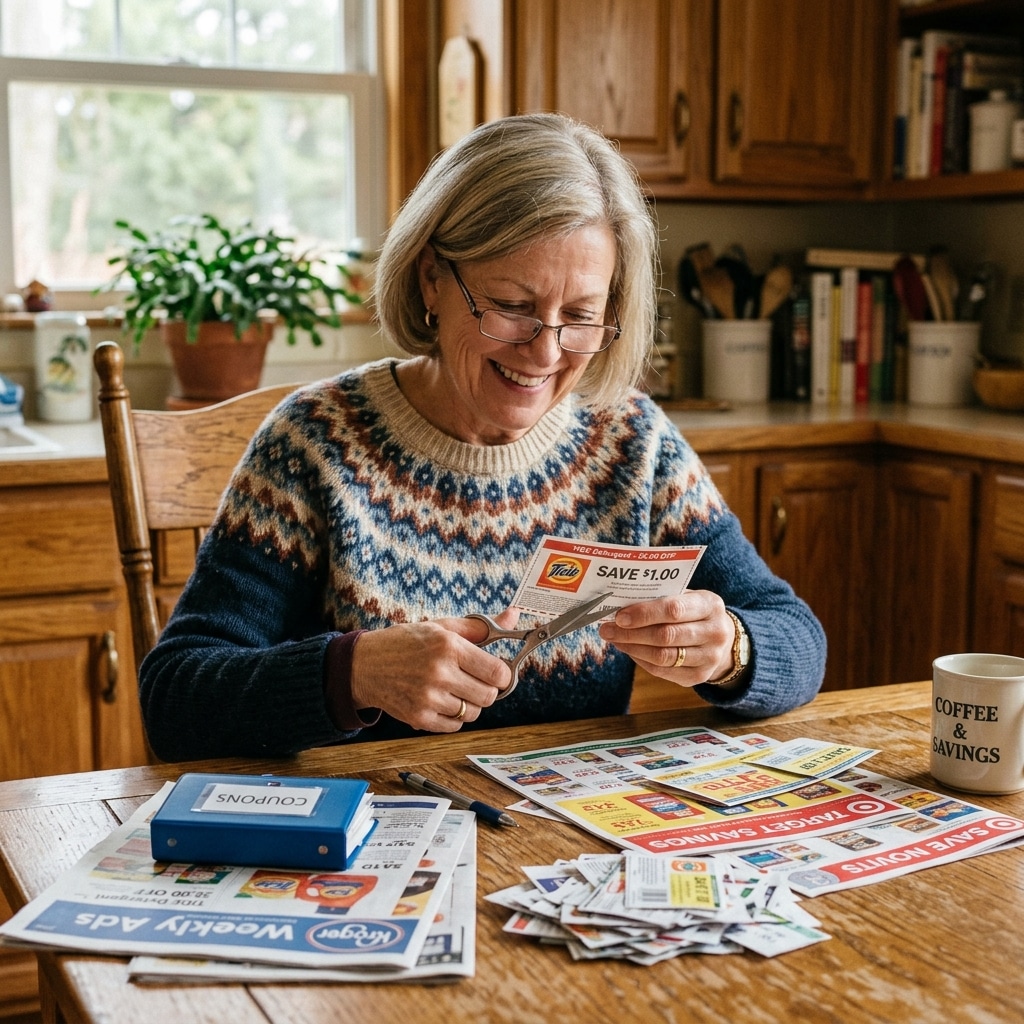
The thrill of the deal becomes its own compulsion, and it can quietly tip into hoarding disorder.
Extreme couponing sounds frugal until your spare bedroom has 400 bottles of mustard in it.
The hobby exploits a powerful dopamine loop — the “win” of the deal.
Retirees on fixed incomes have reported spending more in gas and time chasing coupons than they ever save, while their homes slowly become unlivable. Spouses describe it as watching a slow-motion descent into hoarding disorder.
33. Doomscrolling on Social Media

Why:
With no job to interrupt it, passive scrolling consumes hours a day and is linked to depression, anxiety, and worse sleep in older adults.
Social media without a job to interrupt it eats hours at a time. Retirement removes the natural circuit-breaker of having to put the phone down.
Studies consistently link heavy passive social-media use in older adults to depression, anxiety, and sleep disruption.
One widow described losing two years to Facebook after her husband died — not connecting with anyone, just scrolling, comparing, and feeling worse.
The phone is happy to fill any void you give it.
32. Watching Cable News All Day
Why:
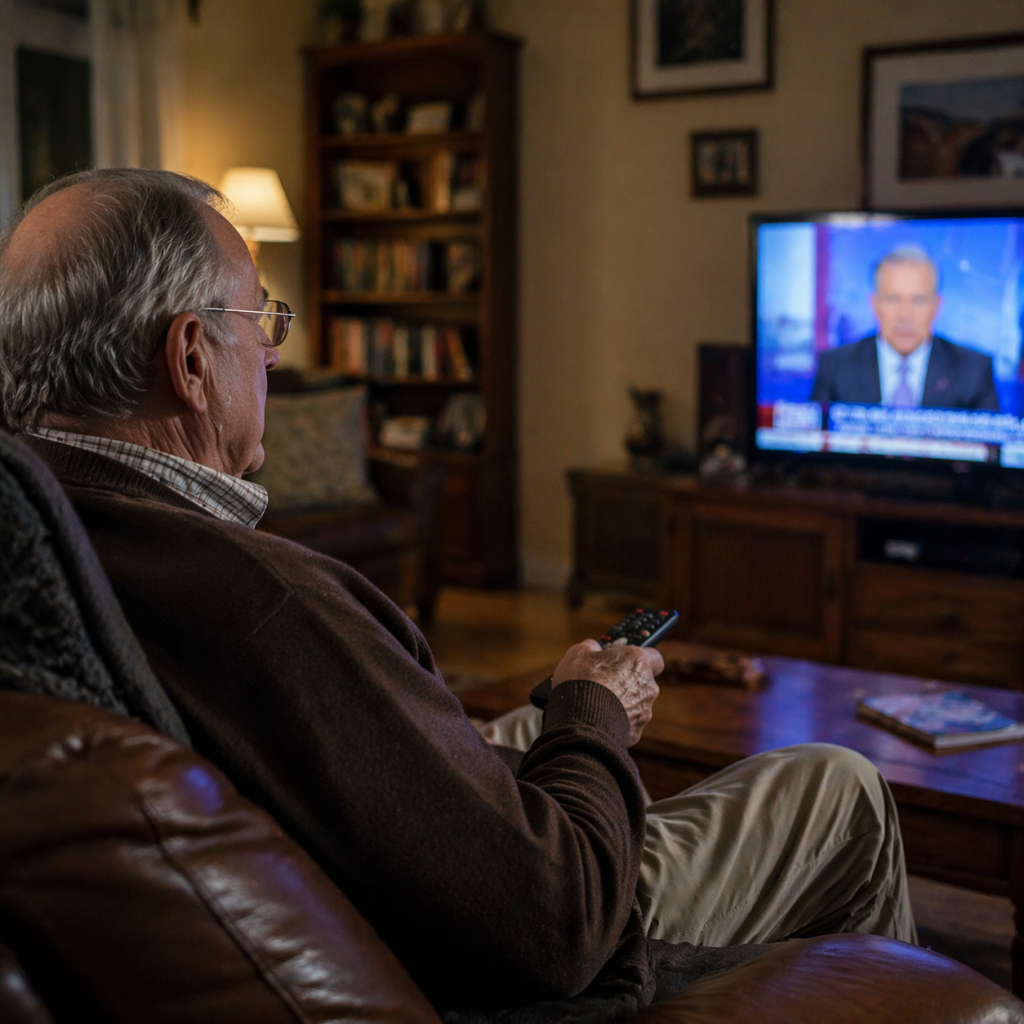
An outrage-engineered feed running in the background measurably raises stress hormones and leaves viewers more fearful and isolated over time.
A two-hour-a-day news habit becomes an eight-hour one when you have nothing scheduled.
The 24-hour news cycle is engineered for outrage and alarm, and a steady diet of it measurably raises cortisol, blood pressure, and anxiety.
Geriatric psychiatrists report a clear pattern: retirees who become more fearful, more isolated, and more politically rigid the longer they sit with cable news on in the background.
31. Collecting Junk “For Resale Someday”

Why:
The “investment” is really acquisition in disguise, and your kids will be the ones who discover none of it is worth what you thought.
The estate-sale industry exists largely because of this hobby.
The Beanie Babies, the Hummel figurines, the “vintage” tools, the boxes of National Geographics from 1973 — almost none of it is worth what people think.
Adult children are left with garages full of stuff their parent was certain would fund the grandkids’ college. Meanwhile the living room becomes a maze.
The hobby is really about acquisition, not investment, and admitting that is the hard part.
30. Obsessive Genealogy Research

Why:
It can swallow your weeks and unearth family secrets — affairs, hidden siblings, DNA surprises — that you can’t put back in the box.
Genealogy is a wonderful hobby in moderation, and a strange one at the extreme.
People spend 60 hours a week on it, neglect their living family for the dead one, and occasionally uncover things that genuinely shouldn’t have been uncovered — affairs, unknown siblings, unexpected ancestry results that detonate family relationships.
DNA testing has produced a small but real epidemic of late-life family ruptures. The past has teeth.
29. Conspiracy Theory Forums

Why:
These communities target lonely, intelligent retirees with belonging and significance, and the typical endpoint is estrangement from family.
Of everything on this list, conspiracy communities may be the most genuinely dangerous.
Retired people with time, intelligence, and a need for meaning are the ideal target market — these forums provide instant belonging and the flattering sense of seeing what others can’t.
Families across the political spectrum describe the same arc: a parent gets curious, then absorbed, then unrecognizable. Estrangement is common.
The hobby looks like “research”; functionally it’s radicalization.
28. Overcommitting to Volunteering

Why:
Nonprofits will happily take everything you offer, and you can’t quit guilt-free the way you could a paying job.
Volunteering is one of the few hobbies you can absolutely overdo without anyone telling you to stop.
The retired teacher who ends up running the food bank, the library board, the church committee, and her grandkids’ school fundraiser is heading for burnout — and unlike a paying job, you can’t quit without guilt.
Nonprofits know retirees are reliable and will keep asking.
The result is the same exhaustion you retired to escape, just with worse boundaries and no paycheck.
27. Flipping Houses

Why:
A single bad project can consume your retirement fund, and doing physical work at 67 has its own price in herniated discs and falls.
House-flipping looks easy on TV, and HGTV has a lot to answer for.
The math looks great until you discover the foundation problem, the contractor walks off the job, the market softens, and your “six-month flip” is now an 18-month money pit consuming the retirement fund.
Doing the work yourself at 67 is how people end up with herniated discs and bad falls off ladders.
The success stories on TV are heavily edited and frequently subsidized; the failure stories happen on your nickel.
26. Competitive Pickleball (Without Recovery Time)

Why:
The social pull keeps people on the courts six days a week, and aging joints don’t get the rest they need until they’re forced to.
Pickleball is the fastest-growing sport among retirees, and orthopedic surgeons are correspondingly busy.
Achilles tears, rotator cuff injuries, and ankle sprains are now so common they’re called “pickleball injuries” in the medical literature.
The problem isn’t playing — it’s playing four hours a day, six days a week, with no warm-up and no rest days, because you’re addicted to the social scene at the courts.
Sixty-eight-year-old bodies need recovery time. They will get it one way or another.
25. Hobby Farming

Why:
Animals don’t take days off, vet bills compound, and the dream becomes a daily obligation you can’t easily walk away from.
The hobby-farm dream is a few chickens, a goat, a vegetable garden, idyllic mornings.
The reality: animals need feeding at 6 a.m. every day forever, vet bills are eye-watering, predators eat the chickens, the goat eats everything else, and you can’t go on vacation without paying someone to do all of it.
Many hobby farms quietly become prisons. The land doesn’t care that you’re 72 today and your hip hurts.
24. Cruise Obsession

Why:
Weight gain, social shrinkage, and unchecked spending all creep in when “just one more cruise” becomes a lifestyle.
Some retirees do back-to-back cruises essentially as a lifestyle, which sounds wonderful and is, for a while.
The downsides accumulate: weight gain (the food is constant and excellent), a shrinking real-world social circle, and a curious erosion of life skills as everything gets done for you.
There’s also financial drift — “just one more cruise” adds up to a major expenditure most retirees don’t budget honestly for.
23. Motorcycle Touring

Why:
Fatality rates climb steeply after 60, and a lifetime of safe riding doesn’t protect you from slower reflexes and changing vision.
Motorcycle fatality rates climb sharply after age 60. Reaction times slow, vision changes, balance shifts — and the bike doesn’t care.
A surprising number of riders who handled bikes safely for 40 years have their first serious crash in their 60s or 70s.
Touring magazines won’t tell you this; emergency rooms will.
The hobby itself isn’t the problem; refusing to acknowledge changing capability is.
22. Competitive Eating

Why:
An older digestive system isn’t built for the punishment, and the medical consequences can be severe and permanent.
Competitive eating sounds like a joke until you meet someone doing it seriously. Pushing your stomach to hold a gallon of chili at 68 is not the same as doing it at 28.
Documented consequences include esophageal damage, chronic acid reflux, gastroparesis, and in extreme cases stomach rupture.
The “fun community hobby” framing obscures real medical risk for an aging digestive system.
21. Treasure Hunting

Why:
Tiny intermittent rewards keep you spending on gear and trips while the big find stays one weekend away.
The metal-detector and gold-prospecting subculture has a reliable archetype: the retiree who’s certain the big find is one weekend away.
Equipment bills mount, trips get longer, the spouse stops coming along.
People have sunk six figures into prospecting claims that produced a few hundred dollars in gold.
The hobby is built on intermittent tiny rewards — just enough to keep you chasing.
20. Marathon Training

Why:
Older bodies need much longer recovery, and the running culture rewards ignoring exactly the warning signs you should heed.
Endurance running in your 60s and 70s is possible and admirable.
Training for it the way a 30-year-old does is how you end up with stress fractures, cardiac events, and joint replacements.
The body’s recovery curve flattens dramatically with age, and the mile-counting culture rewards pushing through warning signs.
Several high-profile cases of retirees collapsing mid-race trace back to ignoring symptoms they’d have heeded at any other point in life.
19. Becoming “the Family Babysitter”

Why:
An informal arrangement creeps into a full-time unpaid job, and loving the grandkids makes it nearly impossible to say no.
Full-time grandparent childcare isn’t a hobby you chose so much as one you fell into.
Grandparenting is one of the great joys of later life; full-time unpaid childcare for your adult children is a different thing entirely.
Resentment builds slowly. Your own plans get cancelled. The arrangement that started as “just Tuesdays” becomes five days a week, and saying no feels impossible because you love the kids.
Many grandparents describe feeling trapped but unable to name it.
18. Joining Community Committees
Why:
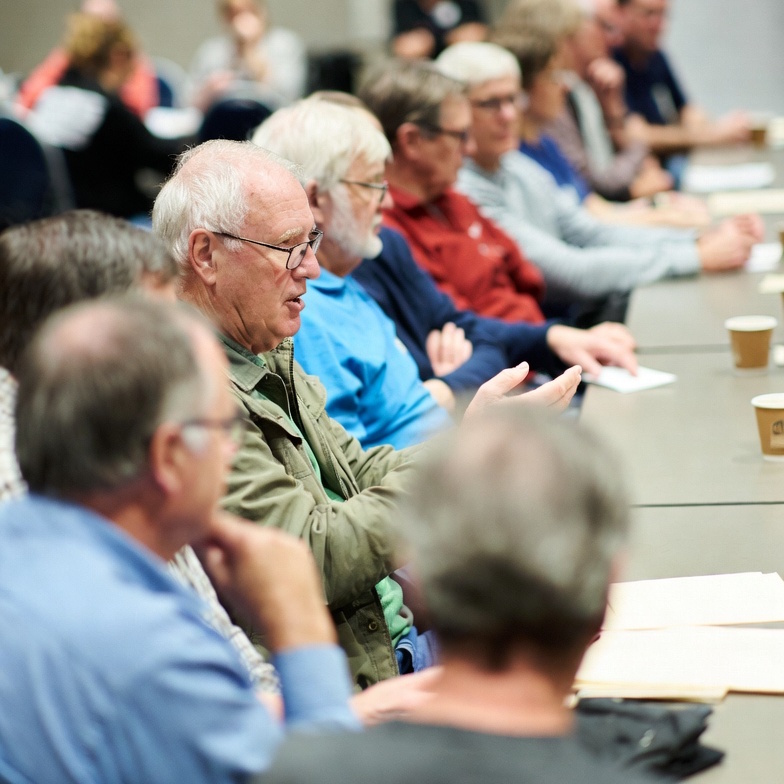
Low-stakes board politics are unusually vicious, and decades-long friendships can end over parking rules and landscaping decisions.
HOA boards, condo associations, neighborhood councils — they look like civic engagement and often become Lord of the Flies for retirees.
The interpersonal politics are vicious precisely because the stakes are low. People develop genuine high blood pressure over parking rules.
Friendships of 20 years end over landscaping decisions.
If you have a personality that takes things personally, this is a hobby that will find every nerve.
17. Keeping Exotic Pets

Why:
These animals routinely outlive their owners, and rescues are already full of birds and reptiles nobody planned to surrender.
The parrot you bought at 65 will likely outlive you. Macaws live 60+ years; large tortoises live 80+.
Exotic reptiles, large birds, and unusual mammals also require specialty vets ($$$), specific diets, and care most family members can’t or won’t take on.
Rescues are overflowing with exotics surrendered when owners died or could no longer manage them.
Loving the animal isn’t the same as being able to provide for it for its entire life.
16. Turning Hobbies Into Side Hustles

Why:
Adding customers, deadlines, and taxes is the fastest way to recreate the work life you just escaped — and to kill the thing you loved.
You loved woodworking until you started taking commissions — and now you have deadlines, customers, a tax filing, and a hobby that feels like a job.
This is one of the most common ways retirees accidentally re-create the work life they left.
The Etsy shop, the consulting practice, the weekend bakery — they begin as fun and end as obligation.
The line between “monetizing a passion” and “killing it” is thinner than it looks.
15. Politics

Why:
Letting partisan identity become your emotional center costs you sleep, peace of mind, and increasingly often, family members.
Getting involved in politics is healthy. Letting cable news, social media, and partisan identity become the center of your emotional life is not.
Therapists report a generation of retirees whose primary affect is now political rage or political despair, and whose relationships with family members who voted differently have collapsed.
Political engagement that costs you your equanimity and your relatives is not engagement — it’s a different kind of addiction.
14. Boating or Sailing

Why:
Slip fees, fuel, and maintenance bleed money continuously, and the resale market is brutal because every other owner is also trying to escape.
The old joke is that “boat” stands for Break Out Another Thousand, and it’s basically true.
Slip fees, fuel, winterization, hull cleaning, mechanical work, insurance — a modest sailboat runs $10,000+ a year before you’ve left the harbor.
Used boats are cheap because their owners are desperate.
The two best days are the day you buy it and the day you sell it; in between is a long stretch of writing checks.
13. Equestrian Sports
Why:
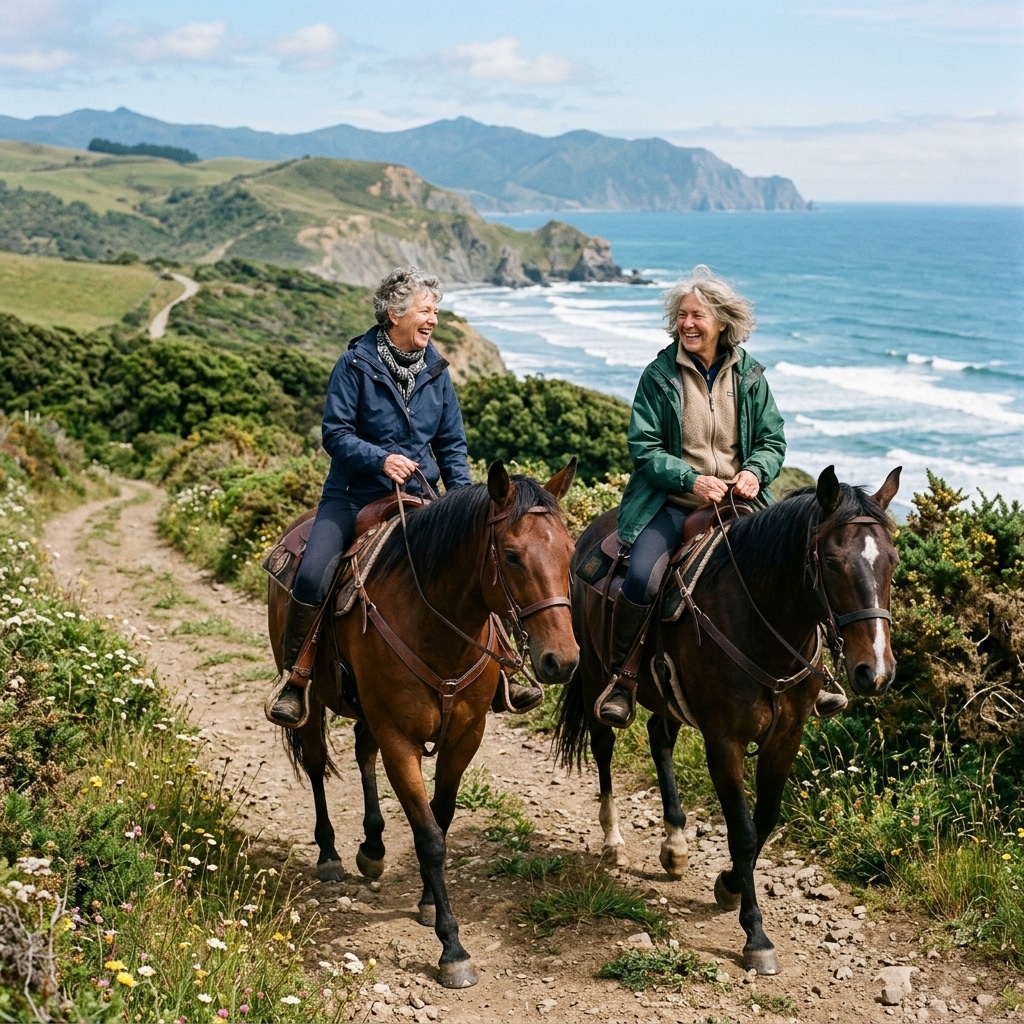
Five-figure annual costs are just the baseline, and a routine fall at 70 can mean a broken hip instead of a bruise.
Horses make boats look frugal.
Board, farrier, vet, feed, tack, lessons, trailer, truck to pull the trailer — a single horse comfortably costs $12,000–$25,000 a year, and that’s before a colic surgery wipes out $8,000 in a weekend.
Riding injuries in your 60s and 70s are also extremely serious; a fall that bruised you at 30 breaks a hip at 70.
The hobby is wonderful and brutal in roughly equal measure.
12. Video Gaming
Why:
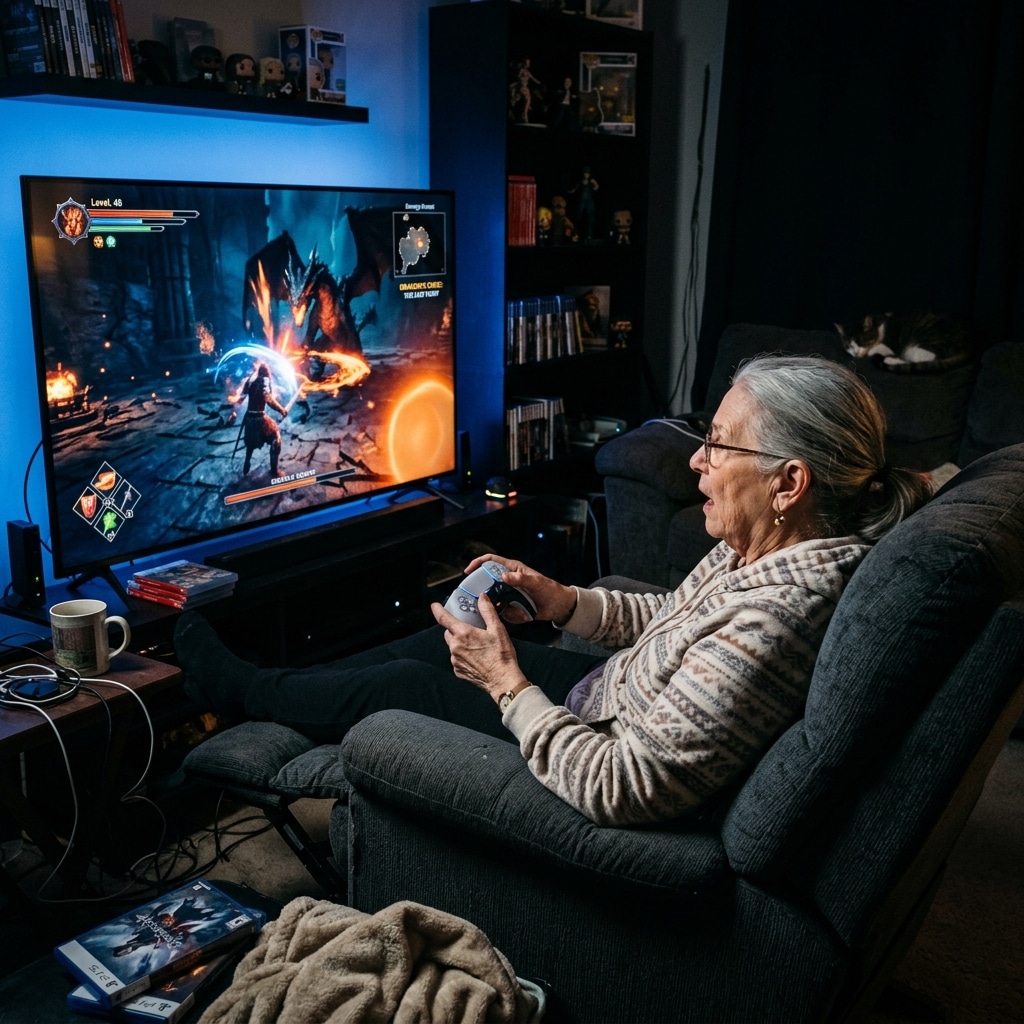
Modern games are engineered for maximum engagement, and unlimited free time is the worst possible match for that design.
The gentle stigma of “video games are for kids” obscures a real phenomenon: retired people, particularly men, who disappear into MMOs or strategy games for 10-hour days.
The games are designed by professionals to be maximally engaging.
Sleep schedules invert, spouses become strangers, physical health declines.
This isn’t a moral failing — it’s the predictable result of unlimited time meeting infinitely engaging software.
11. Getting a Pilot’s License

Why:
The costs are enormous, the medical bar rises every year past 60, and general aviation carries a sobering fatality rate.
The fantasy of learning to fly in retirement is potent.
The reality: lessons run $15,000–$20,000 minimum, ownership of even a small aircraft is $20,000+ a year, and the FAA medical requirements get stricter every birthday past 60.
General aviation also has a sobering fatality rate.
Many retirees get the license, fly for two years, and then can’t justify the costs — leaving them with an expensive credential and a sense of loss.
10. Taking a University Degree

Why:
The tuition is real, the stress is real, and the credential almost never opens the door people hope it will.
Lifelong learning is wonderful. Enrolling in a full degree program at 70 is a different proposition.
The financial outlay can be substantial (many seniors-audit programs are free, but full enrollment isn’t), the stress of grading and deadlines is real, and the credential rarely opens any door it was supposed to.
People who do it for the love of learning often thrive; people who do it to “prove something” or for a second career frequently end up disappointed and out of pocket.
9. Remodeling
Why:
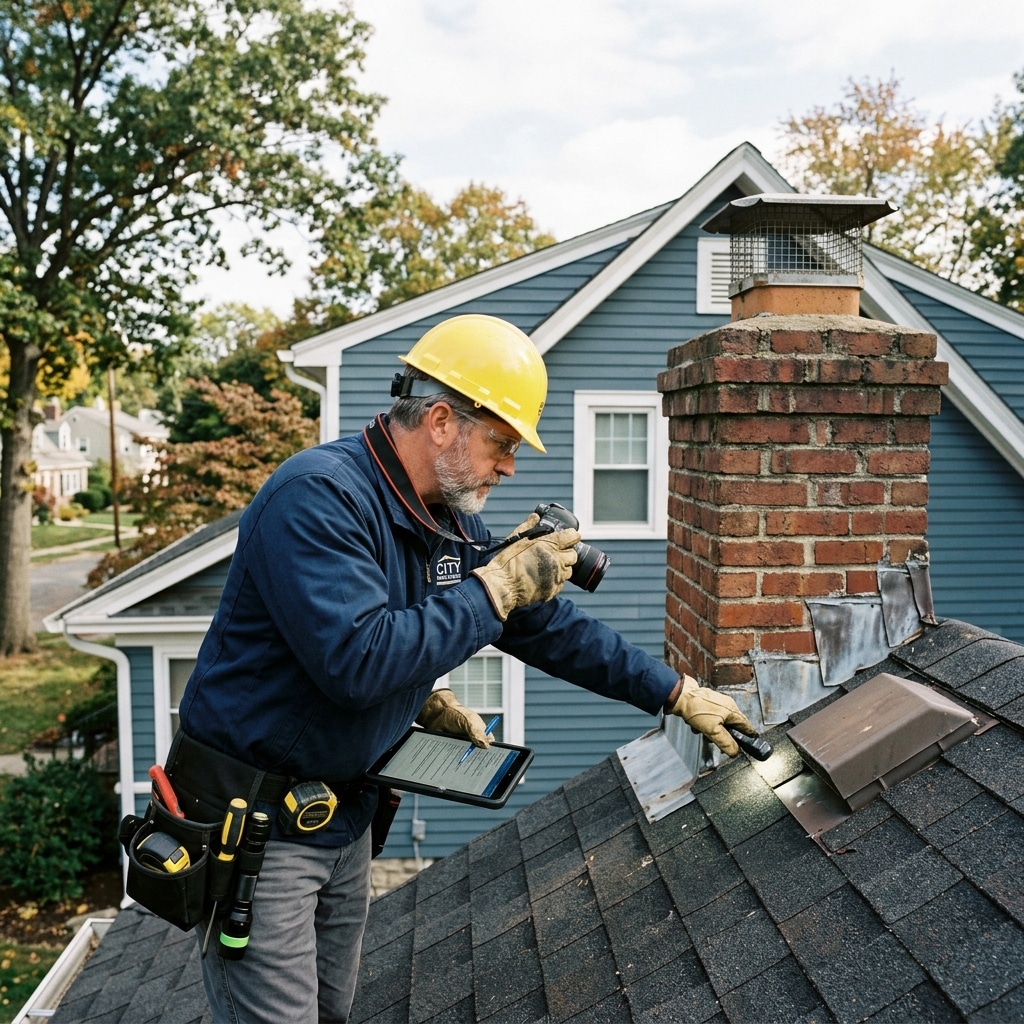
Every project leads to the next one, costs always exceed estimates, and you can pour savings into a home you may not live in much longer.
The endless renovation is a uniquely retiree affliction — finally the time and the money to fix everything.
The kitchen is done so now the bathroom needs doing. Then the deck. Then the basement.
Each project costs more and takes longer than projected. Couples bicker. Contractors disappear. The home is never quite finished.
Some retirees genuinely enjoy the process; others discover that they’ve spent their savings making a house they may not live in much longer marginally nicer.
8. Home Movie Theaters
Why:
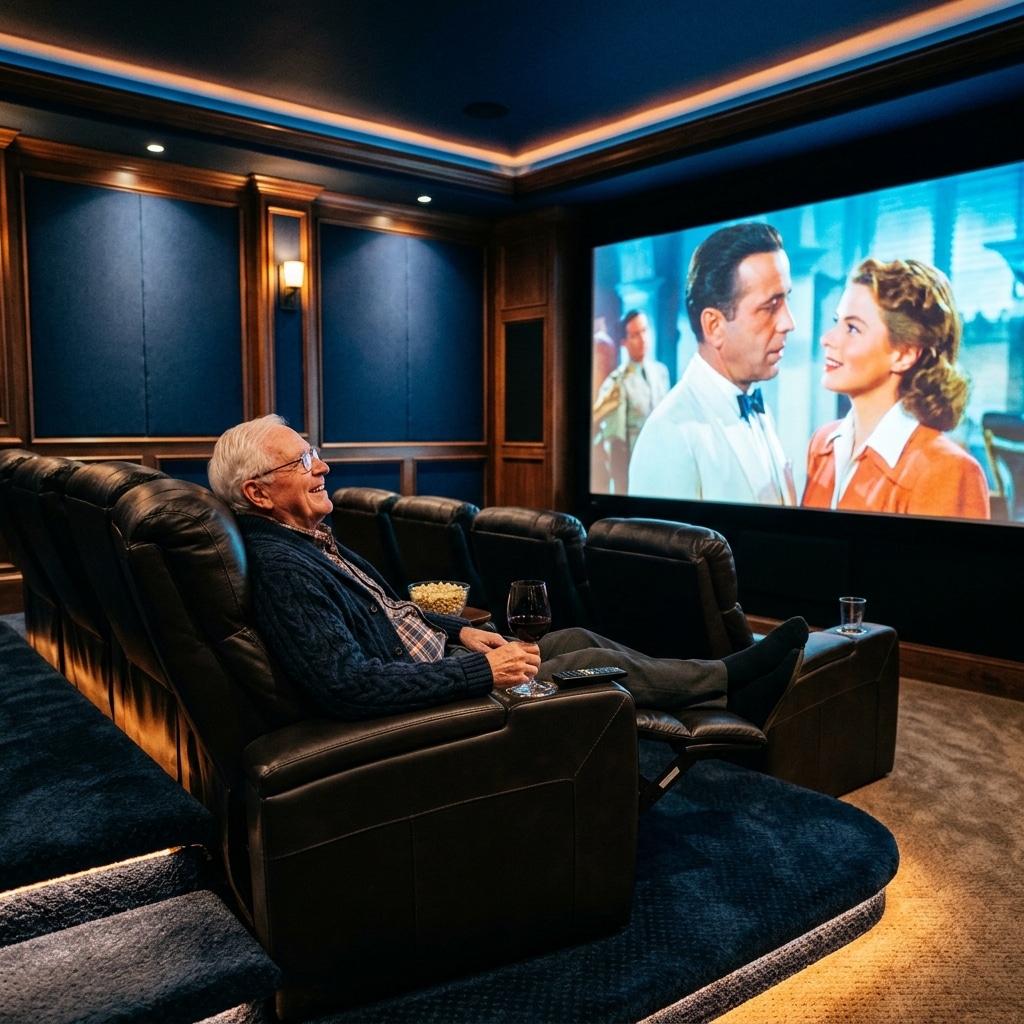
A six-figure buildout gets used a few times a year, returns nothing at resale, and quietly encourages you to stay home alone.
The dedicated theater room is one of those projects that looks great in magazines and underwhelms in practice.
$40,000–$100,000 buildouts get used a handful of times a year once the novelty wears off.
Resale value is minimal — most buyers convert the space back.
Worse, it can become a kind of cocoon: the retiree alone in the dark watching films instead of being out in the world.
7. Sports Memorabilia

Why:
Forgeries are everywhere, values swing wildly, and the “investment” usually sells at estate auction for a fraction of what you paid.
The sports memorabilia market is rife with forgeries, the values are wildly volatile, and “investment grade” pieces sell at auction for a fraction of insured value.
Retirees have spent $200,000+ on collections that yield $40,000 at estate sale.
The emotional attachment makes selling painful even when financially necessary.
If you collect for love it’s a fine hobby; if you collect “for the kids,” your kids would mostly rather have the cash.
6. Luxury Travel

Why:
Five-star travel done annually for a decade can quietly consume a quarter-million dollars — and you can’t unlearn the lounges.
Five-star travel is wonderful and ruinously expensive.
A two-week trip to Europe with business-class flights and good hotels easily clears $25,000 for a couple. Done annually for a decade, that’s $250,000 — a meaningful chunk of most retirement portfolios.
Adjusting back down is psychologically difficult once you’ve gotten used to the lounges and the upgrades.
Many retirees describe a slow realization that they’ve traveled themselves into a tighter retirement than they planned.
5. Country Club Memberships

Why:
Massive entry fees, ongoing dues, and minimum spends — plus social pressure that makes resigning feel like an indictment.
Country club initiation fees run from $25,000 into the hundreds of thousands, monthly dues stack on top, and you’re expected to spend a minimum in the dining room whether you eat there or not.
The social scene can be lovely; it can also be cliquish and exhausting.
Many members report quietly resenting the cost but feeling unable to resign because of the social fallout.
The exit is harder than the entrance.
4. Guitar Collecting

Why:
The “one more” instinct rarely stops, the guitars stop getting played, and your family discovers retail and resale are very different numbers.
Vintage instruments are a real market with real upside, but the collector mindset rarely stays rational.
The “one more” Telecaster, the unplayed Martin in the case, the boutique pedalboard that grows by a unit a month.
Players collect; collectors stop playing. Spouses describe walking past rooms full of guitars that haven’t been touched in years.
When the collector dies, the family discovers that retail and resale are wildly different numbers.
3. Classic Cars

Why:
Purchase price is just the beginning — storage, specialty mechanics, and parts sourcing eat money continuously while the car barely appreciates.
The 1967 Mustang of your youth costs $60,000 now, plus a heated garage, plus a mechanic who knows pre-computer engines, plus insurance, plus the parts that take months to source.
Storage, restoration, and transport eat money continuously.
The car appreciates slowly if at all and depreciates fast if the market turns. Drivers in their 70s also crash classic cars at rates that should give pause.
The hobby is romantic until it’s a leaking carburetor on a Tuesday afternoon.
2. Skiing

Why:
A single bad fall at 68 can be permanently disabling, and the recovery curve is nothing like what it was when you were 28.
Skiing in retirement is one of the great pleasures available to the well-conditioned.
It’s also where a meaningful number of retirees sustain catastrophic injuries — knee reconstructions, hip fractures, traumatic brain injuries.
Equipment, lift tickets, and travel run thousands per season.
Most seriously, the recovery from a bad fall at 68 is not the recovery from a bad fall at 28. Some retirees never walk normally again after one bad day on the mountain.
The hobby itself is fine; underestimating the changed risk profile is the trap.
1. Pet Adoption

Why:
A pet adopted at 70 may outlive your ability to care for it, and end-of-life vet costs or assisted-living moves can force heartbreaking surrenders.
Pet adoption tops this list because it’s the most universally well-intentioned and the most quietly devastating.
A puppy adopted at 70 will likely outlive its owner’s ability to walk it, lift it into the car, or afford its medical care.
End-of-life veterinary costs routinely run $5,000–$15,000.
Worse, retirees who outlive their own independence often have to surrender beloved animals to shelters when they move to assisted living — a heartbreak for everyone, animal included.
Adopt with eyes open about the next 15 years, not just the next 15 minutes at the shelter.
A Closing Thought
Notice the pattern across all 36 entries. The hobby is almost never the problem.
The problem is one of three things: it costs more than you budgeted, it takes more from your body than you have to give, or it crowds out the relationships and balance that make retirement actually good.
The retirees who do best aren’t the ones with no hobbies, or one all-consuming one. They’re the ones with three or four medium-sized interests, honest cost ceilings, and people in their lives who’ll tell them when they’ve gone overboard.
Pick your passions — just keep the receipts, the rest days, and the family dinners on the calendar too.