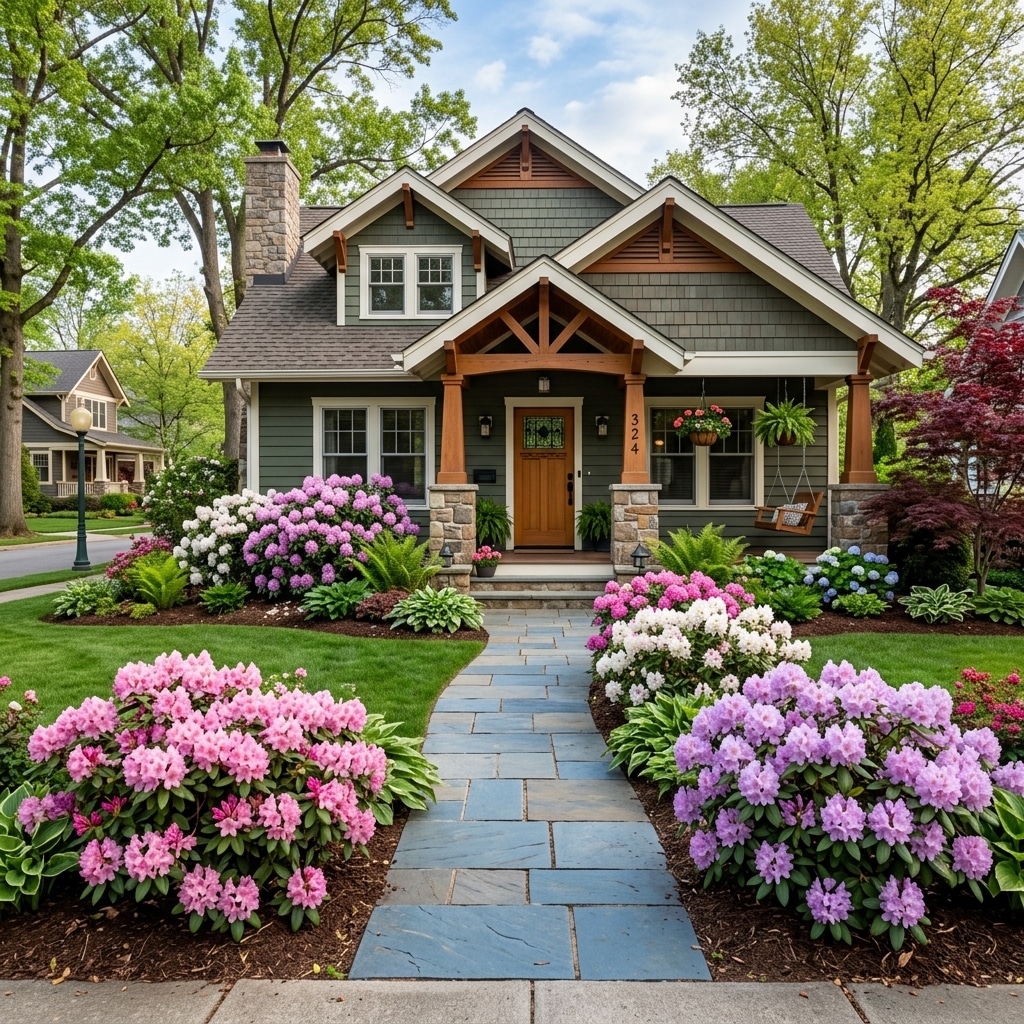
Landscaping is one of the few exterior investments buyers consistently respond to. A Virginia Tech review of the research found sophisticated landscaping increased perceived home value by 5–13% over homes with bare lawns — the most credible figure in the literature.
Trade groups often quote higher numbers. Treat anything over 15% with skepticism.
But the underlying point holds: the right plants, placed well, change what buyers will offer. We ranked 45 of them.
Scroll down to count from #45 to #1.
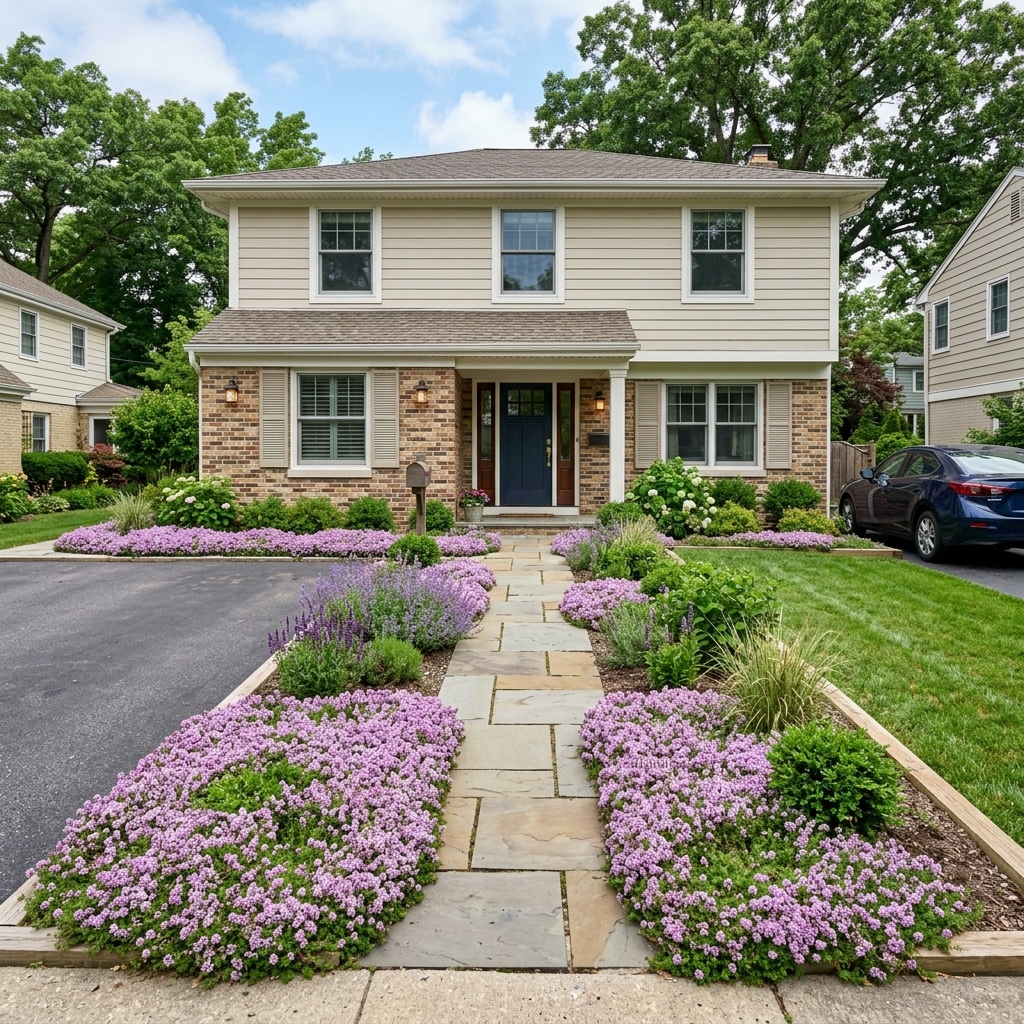
45. Creeping Thyme
Zones
4–9 · 2–4 in tall · Full sun · Pink/purple blooms in early summer
Most ground covers fall apart under foot. Creeping thyme is built for it.
It spreads between stepping stones and softens the edges of paths, releasing a faint herbal scent every time someone brushes past it.
Small pink or purple flowers cover it in early summer. Bees love them.
It won’t add thousands to your appraisal on its own. But it signals something subtle — that whoever designed this yard cared about the details most people ignore.
A small contribution. The list scales up fast from here.
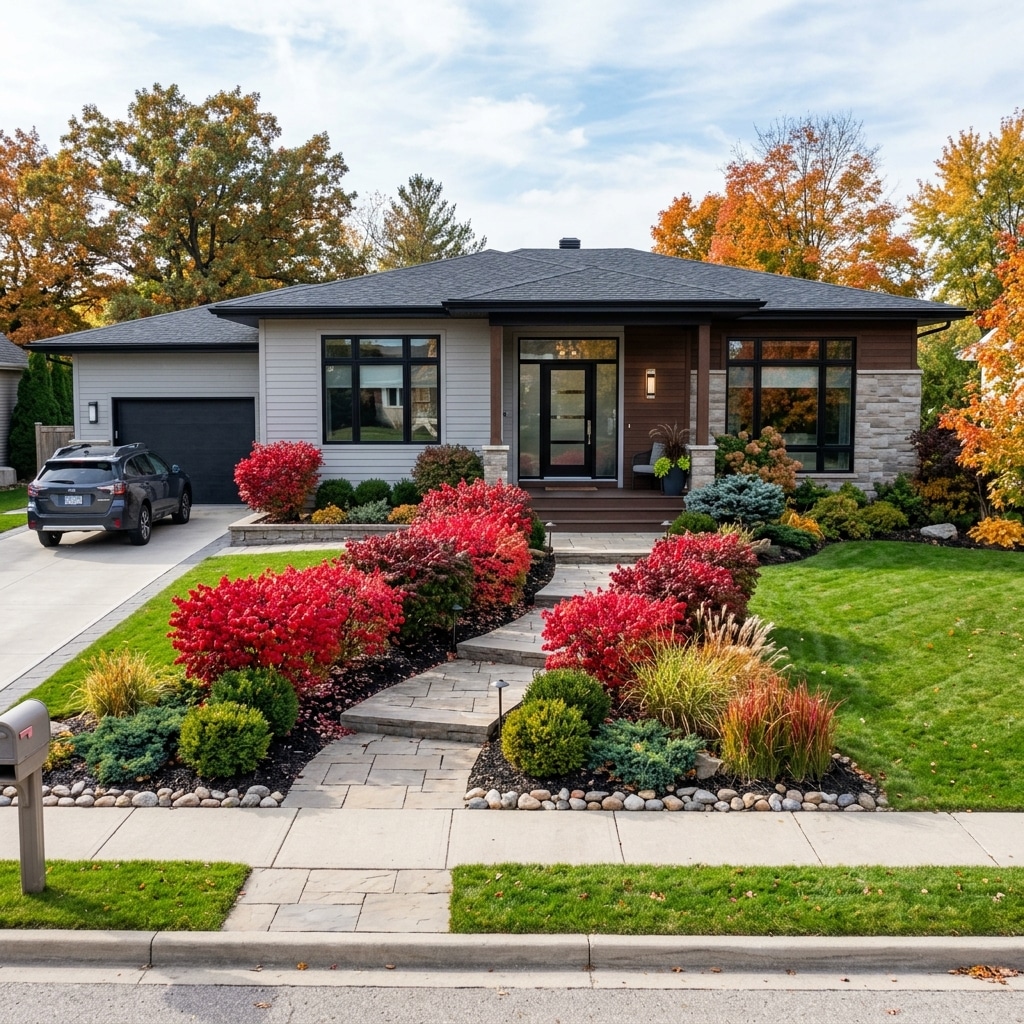
44. Burning Bush
Zones
4–8 · 6–10 ft · Full sun to part shade · Brilliant fall foliage
Burning bush practically glows in October.
It earns its name with foliage that turns the color of fresh fire — bright, almost theatrical red that stops traffic from across the street.
Here’s the catch: it’s invasive in much of the Northeast and Midwest. Many states now discourage planting it. Some ban its sale outright.
If you love the effect, look at Virginia sweetspire or fothergilla instead. Same showstopping fall color. None of the ecological baggage.
Worth knowing before you commit a corner of your yard to it.
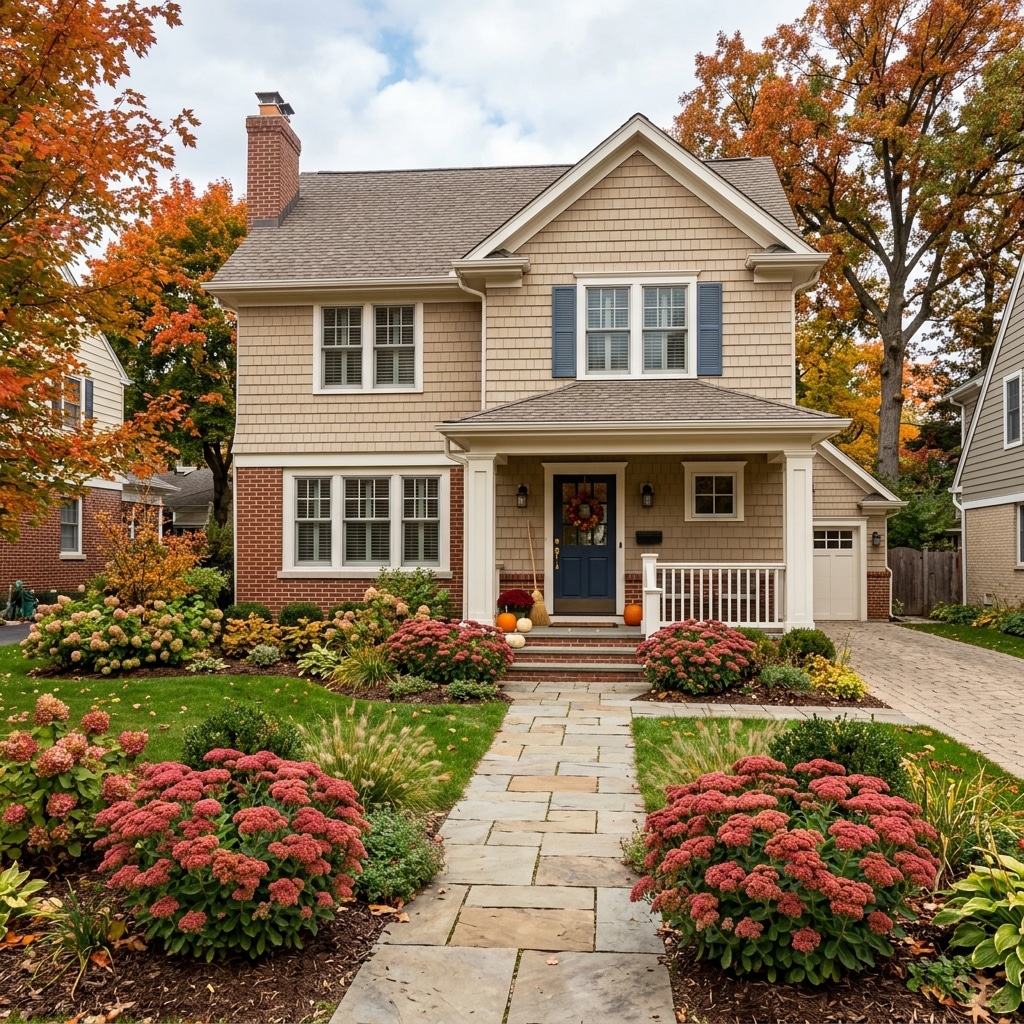
43. Sedum ‘Autumn Joy’
Zones
3–9 · 18–24 in · Full sun · Pink-to-copper blooms late summer through fall
If you’ve killed three plants in a row, this is your apology gift to yourself.
Sedum ‘Autumn Joy’ starts the year as tidy green rosettes. By late summer, broccoli-shaped flower clusters appear in soft pink.
Then comes the magic. Through fall, those clusters deepen to rust and copper, holding their shape well into winter.
It needs no water, no fertilizer, no fuss. Just sun and decent drainage.
Plant it along a front walk where it can do its slow color shift in plain sight. It earns its spot through reliability alone.
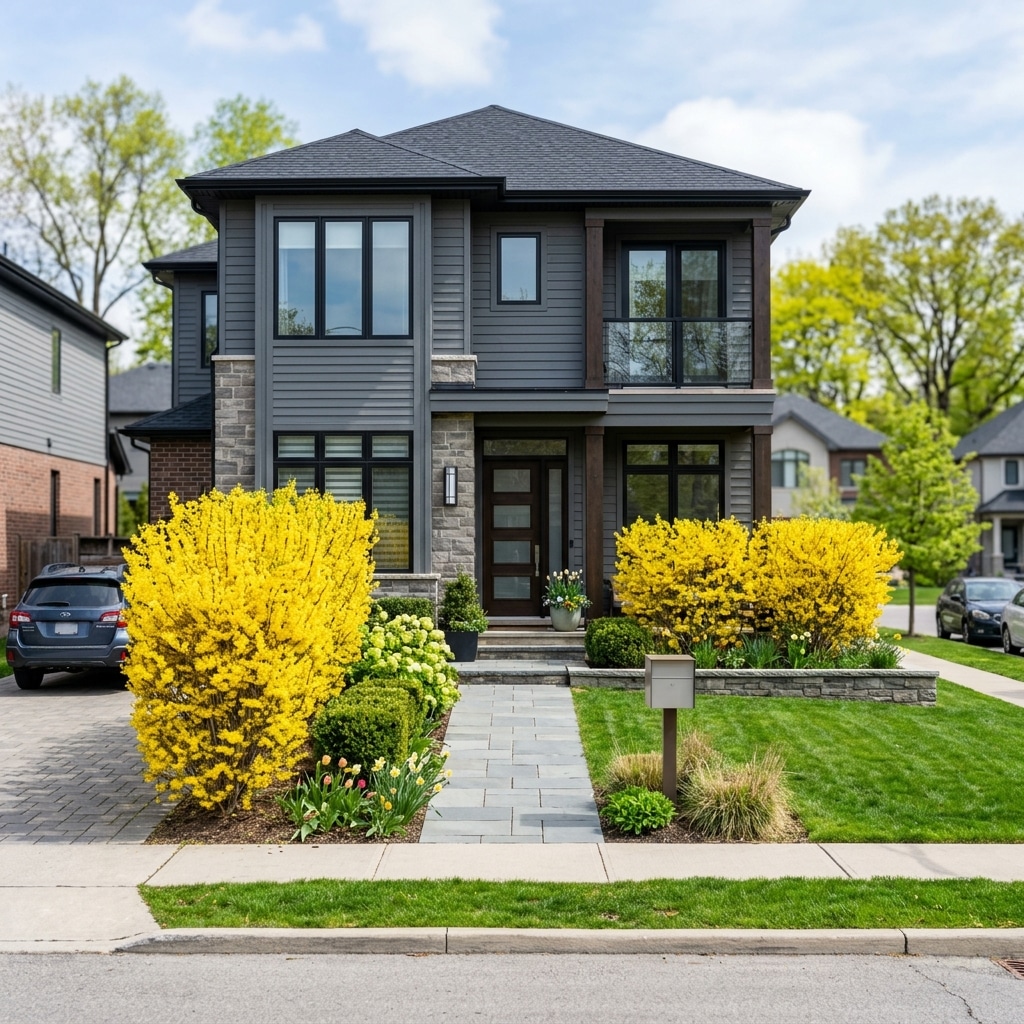
42. Forsythia
Zones
5–8 · 8–10 ft · Full sun · Bright yellow blooms in early spring
For about ten days every March, the forsythia hedge across the street is the most important thing in the neighborhood.
It explodes into electric yellow before the lawn has even greened up. Often before the daffodils. It’s one of the first real signs that winter is over.
The rest of the year, it’s just a leafy shrub. That’s its tradeoff.
But that brief, brilliant moment is worth it — especially for a corner of the yard that needs a wake-up call.
Prune right after flowering. Otherwise you’ll cut off next spring’s show.
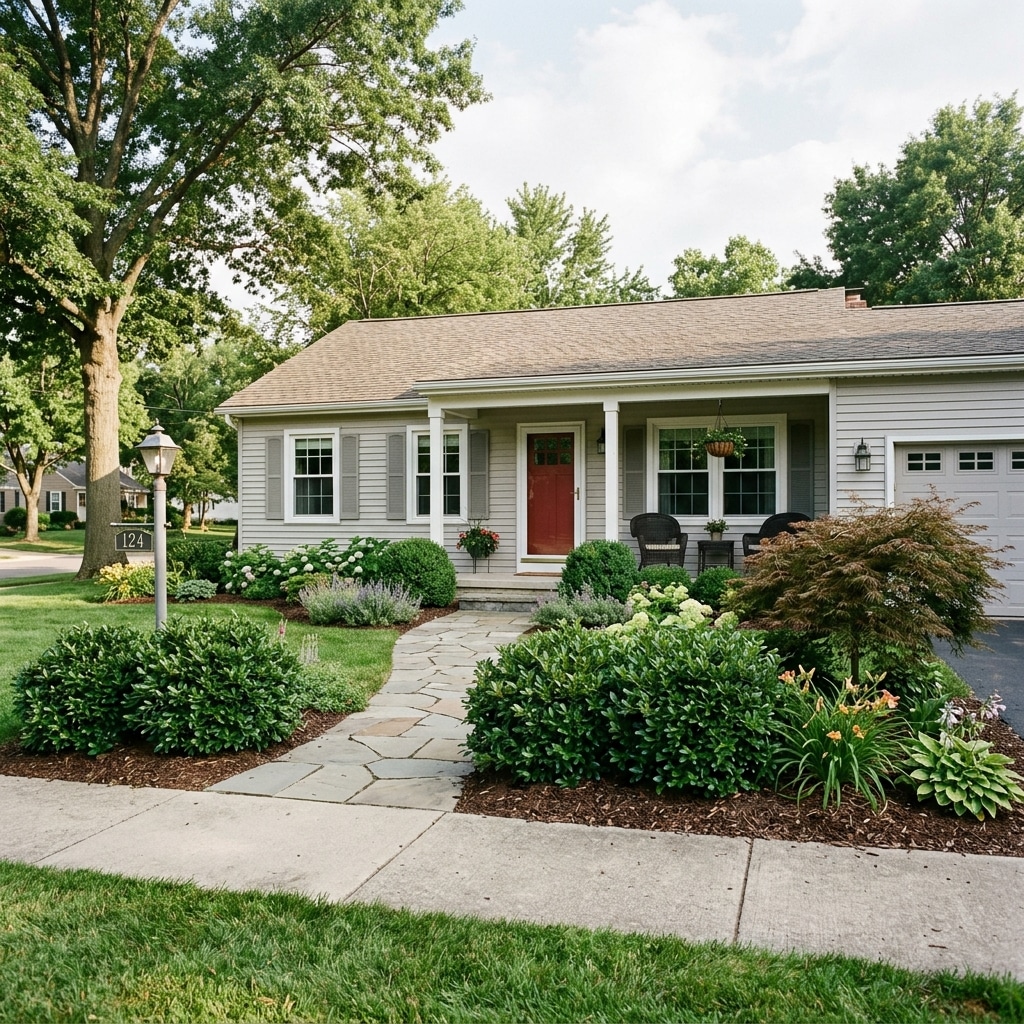
41. Inkberry Holly
Zones
4–9 · 5–8 ft · Full sun to part shade · Evergreen
Boxwoods are dying across America. Inkberry holly is what’s quietly replacing them.
A native, deer-resistant evergreen with the same tidy, rounded form, inkberry has quietly become the plant landscape designers reach for when they want the boxwood look without the boxwood problems.
It tolerates wet soils. It handles cold winters. And it doesn’t get hit by the blight that’s been wiping out boxwood across the country.
Use it the same way — foundation lines, low hedges, formal edging.
If your boxwoods are struggling, this is what to plant instead.
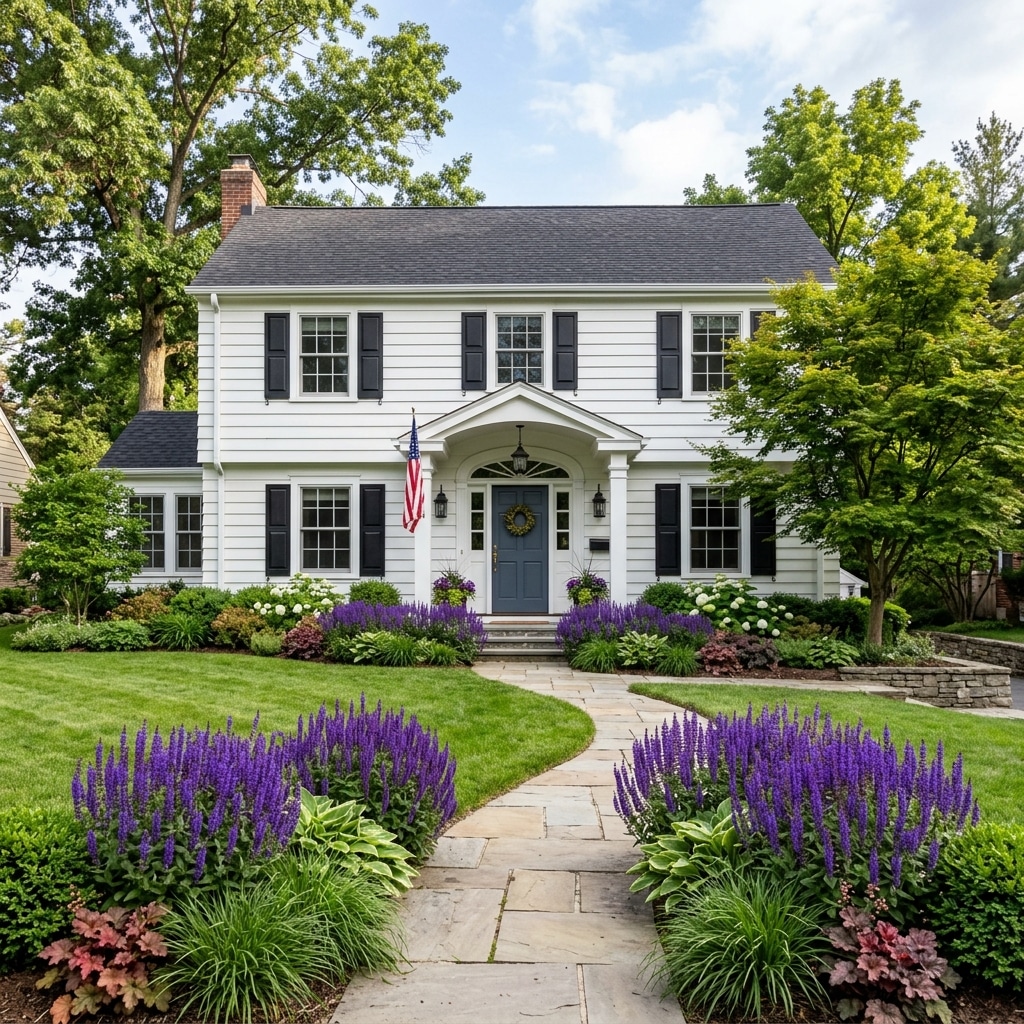
40. Salvia
Zones
4–9 · 1–3 ft · Full sun · Blue, purple, or red spikes from late spring through summer
Most perennials puddle and mound. Salvia stands up.
It sends up dense spikes of blue, purple, or red flowers that bloom for weeks. They draw bees and hummingbirds.
But the real trick is what salvia does for the plants around it. Plant it among hostas, daylilies, or coneflowers, and suddenly the bed has rhythm — vertical accents punctuating the horizontals.
It’s a small change that makes a casual garden look intentional. Designers use this trick constantly.
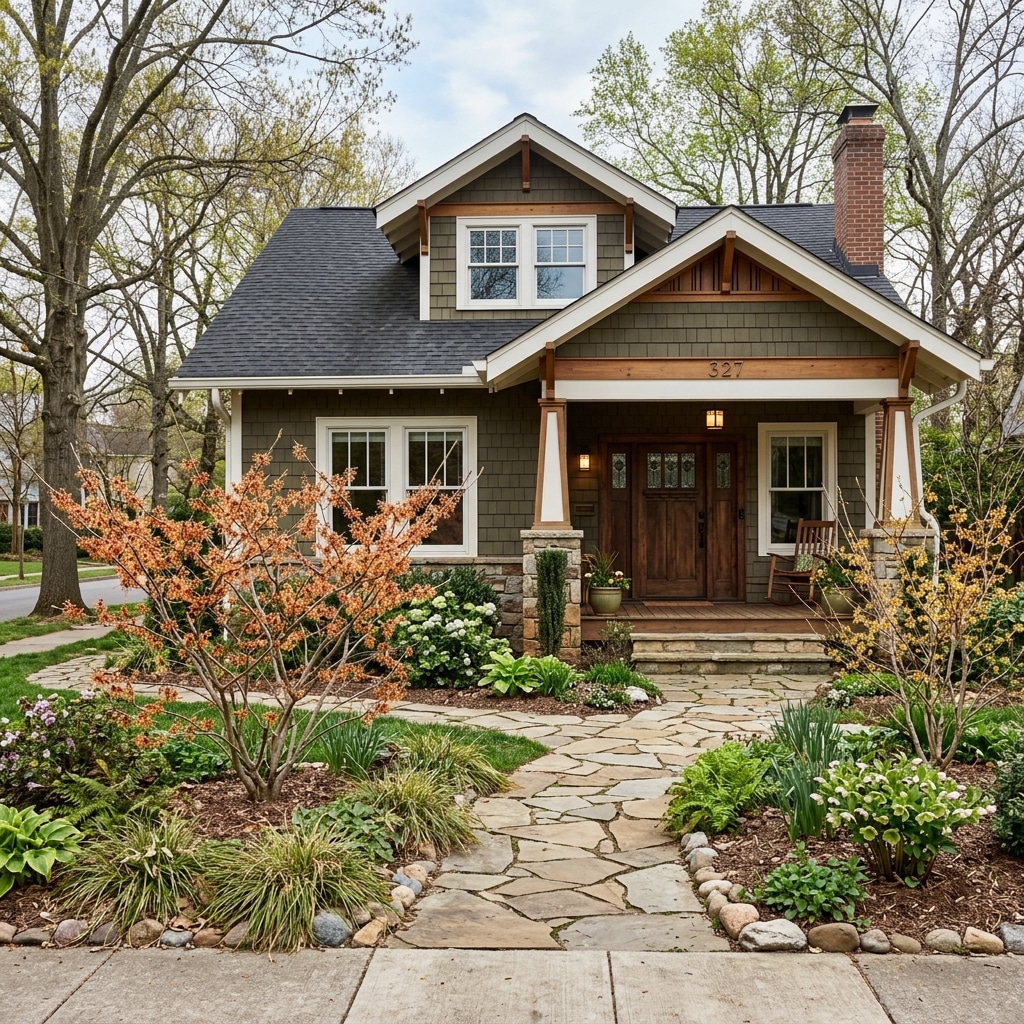
39. Witch Hazel
Zones
3–9 · 10–20 ft · Full sun to part shade · Yellow/orange blooms in late winter
Witch hazel blooms in February, when nothing else is alive.
It produces strange, spidery yellow or orange flowers on bare branches in the dead of winter. The scent — sweet, citrusy, almost clove-like — carries on cold air.
It’s not a plant for the front of the house. It’s a plant for the corner of the yard you see from the kitchen window in January.
That’s where it earns its place.
The kind of plant gardeners brag about. Buyers who notice it know they’re looking at a serious garden.
38. Juniper
Zones
3–9 · 6 in to 50 ft (varies) · Full sun · Evergreen
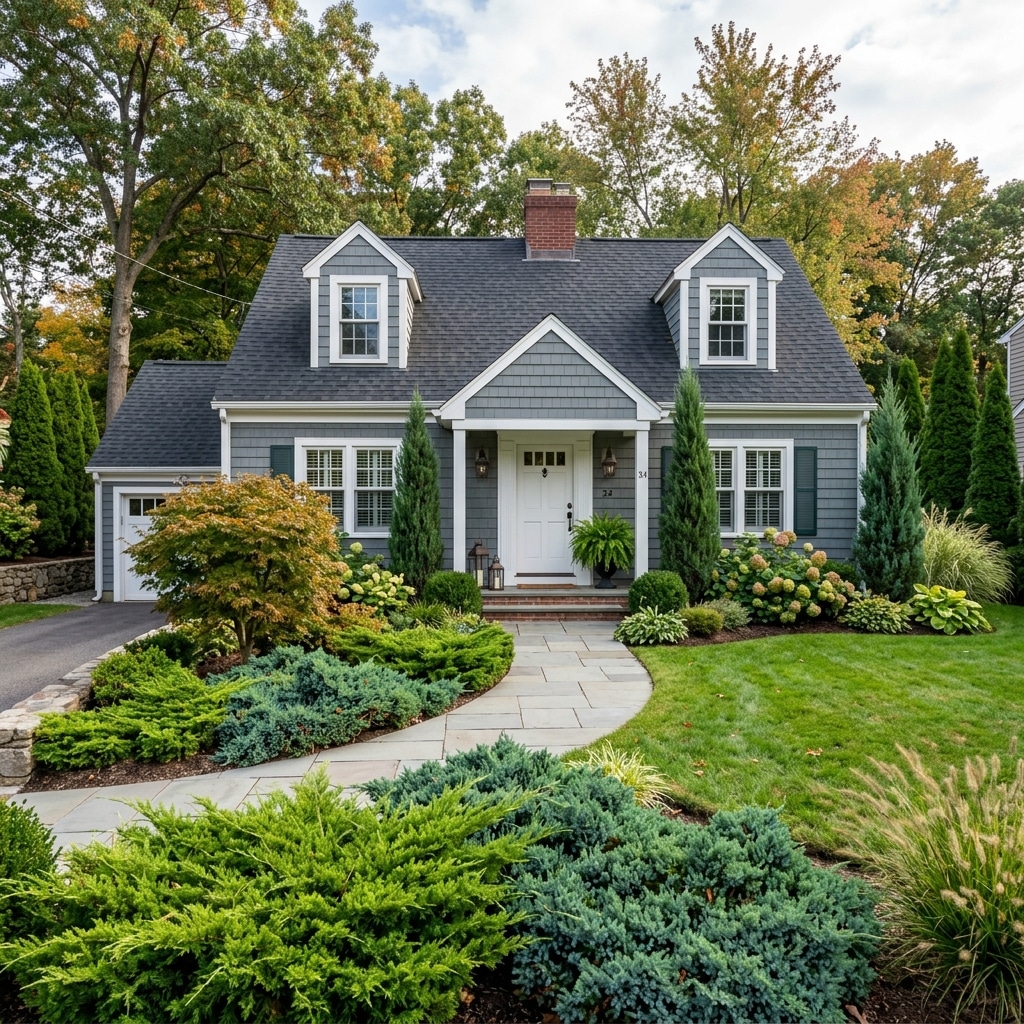
Need a shape — any shape — in evergreen? There’s a juniper for it.
Juniper is the Swiss Army knife of conifers. Ground covers that hug a slope. Tall narrow columns that flank a doorway. Sprawling, sculptural specimens that look like green driftwood.
It thrives in heat, poor soil, and salt spray. It doesn’t need babying.
The catch: most varieties have a slightly utilitarian look. They’re workhorses, not showpieces.
Use junipers where you need reliable green structure. Save the focal-point spots for plants with more drama.
37. Spirea
Zones
3–8 · 2–6 ft · Full sun · White or pink blooms in spring or summer
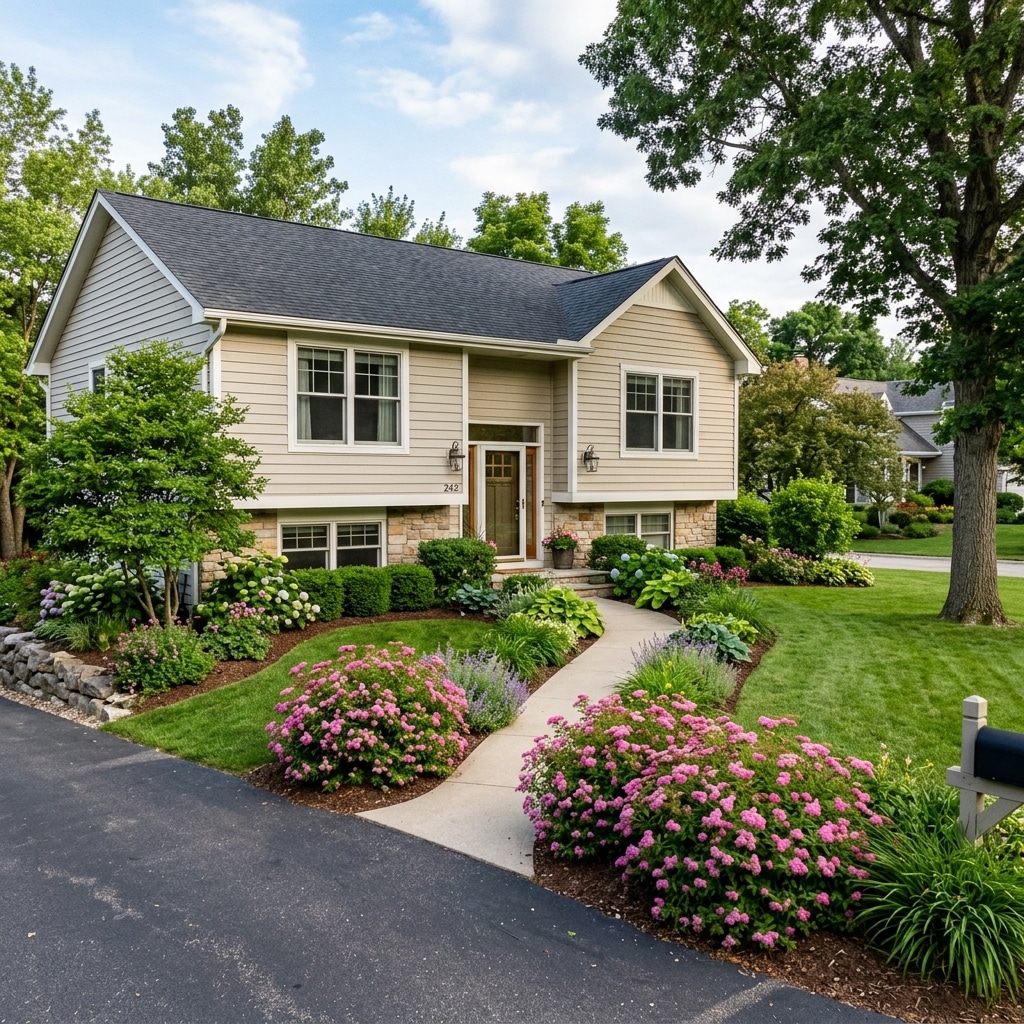
Spirea covers itself in foamy white or pink blooms for weeks each spring.
It’s the kind of shrub that looks expensive without being expensive. Compact varieties like ‘Little Princess’ or ‘Goldflame’ fit into tight spaces where a hydrangea would be too big.
Some varieties bloom in spring. Others in summer. A few do both.
The foliage stays neat all season — often with a hint of gold or red that adds quiet color when nothing is in flower.
A safe, reliable choice for foundation beds. Hard to mess up.
36. Yew
Zones
4–7 · 3–20 ft · Full sun to shade · Evergreen
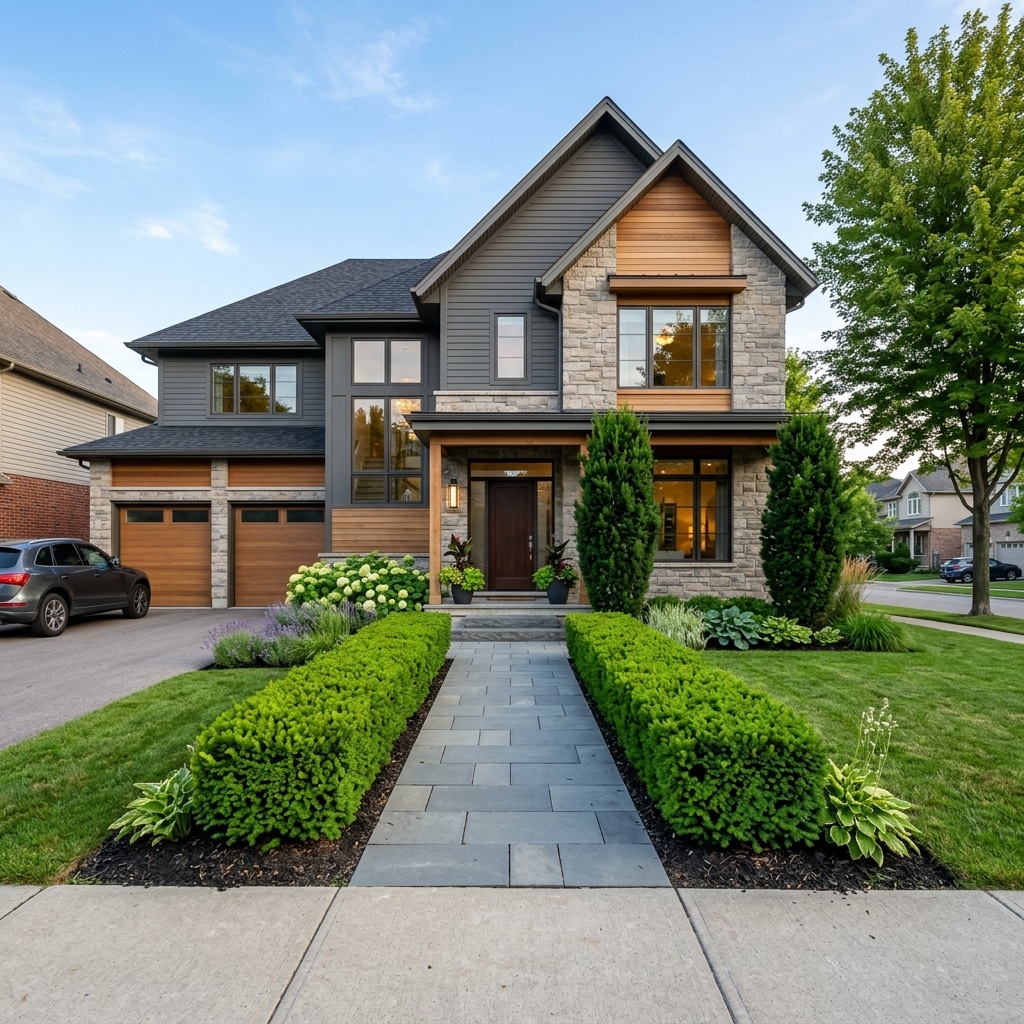
Yew lines the driveways of estate homes — and there’s a reason for that.
It’s the most shapeable evergreen in cultivation. Hedges, topiaries, cones, spirals — whatever you want a green shape to do, yew will do it.
It’s also slow. A mature yew hedge takes time, which is why it reads as wealth. You can’t buy that look quickly.
It tolerates shade better than most evergreens. It handles hard pruning.
Plant yews where you want formal structure that lasts decades. They’re an investment in the future shape of your yard.
35. Mountain Laurel
Zones
4–9 · 5–15 ft · Part shade · Pink/white blooms in late spring
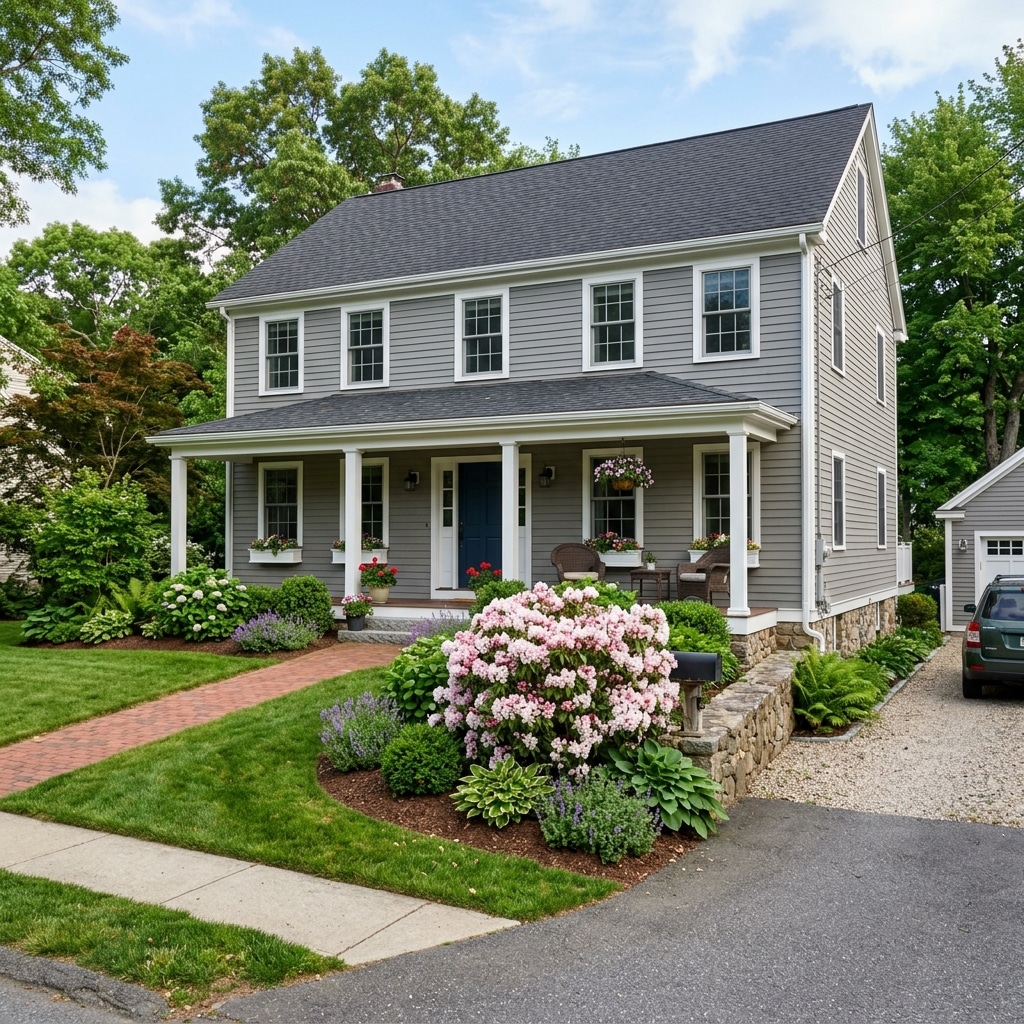
Look closely at a mountain laurel bud and it looks almost machine-made.
The buds open into intricate, pentagonal flowers in pink, white, or rose — a geometry no other native shrub matches.
It prefers part shade and acidic soil. Get those right and it lives for decades with almost no care.
This is the plant for the edge of a wooded lot, or a north-facing foundation bed where rhododendrons would also thrive.
Less common than azaleas, which is part of its appeal. Buyers notice plants they don’t see everywhere.
34. Tulip Poplar
Zones
4–9 · 70–90 ft · Full sun · Greenish-orange spring blooms high in canopy
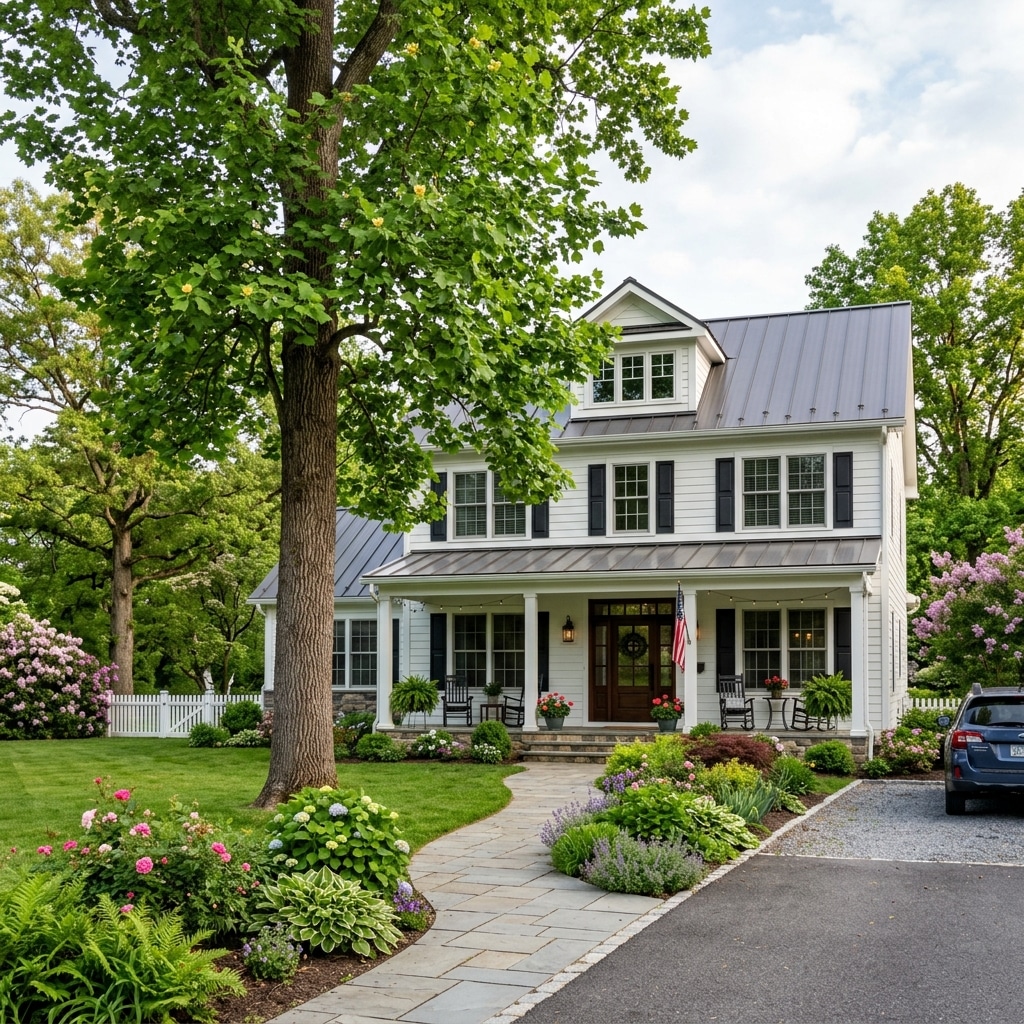
The tulip poplar isn’t actually a poplar — and the flowers really are tulip-shaped.
This fast-growing native shade tree produces greenish-orange flowers high in the canopy every spring. Most people miss them entirely until petals start falling on the lawn.
A mature tulip poplar gets enormous. Eighty feet, sometimes more. Plant it only on a larger lot where it has room to do its thing.
The trade-off is shade. Real, deep, summer-cooling shade that drops electric bills and makes a yard feel established.
For the right property, it’s a generational asset.
33. Black-Eyed Susan
Zones
3–9 · 2–3 ft · Full sun · Gold blooms midsummer through fall
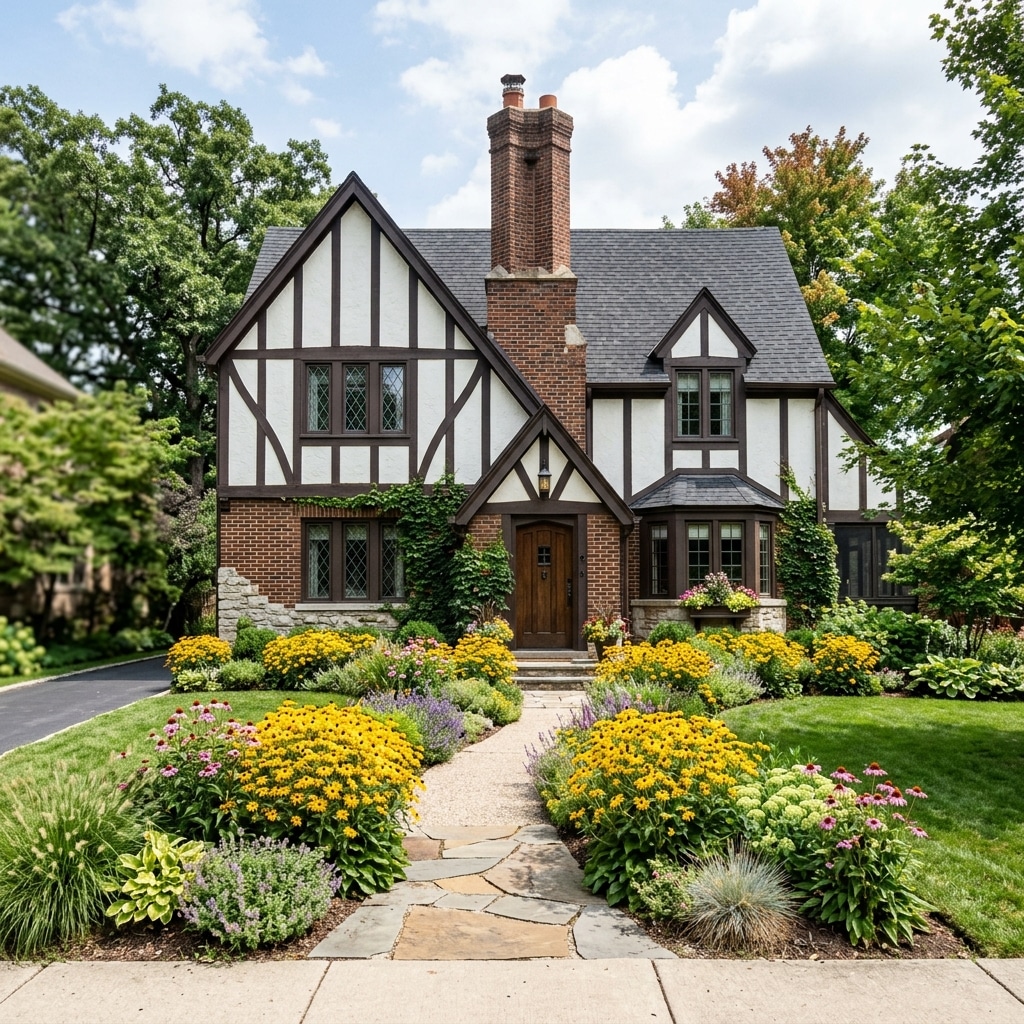
Plant black-eyed Susans by the dozen, never one at a time.
They look their best in masses — wide drifts of gold flowers with dark centers, all blooming together from midsummer well into fall.
They’re native. They handle heat, drought, and poor soil. Deer mostly leave them alone.
Single plants look scrawny. Three to five plants in a clump start to register. A whole bed of them looks like a meadow.
This is the kind of front-yard planting that signals “low maintenance” and “intentional” at the same time.
32. Coneflower (Echinacea)
Zones
3–9 · 2–4 ft · Full sun · Pink, purple, orange, or white blooms summer–fall
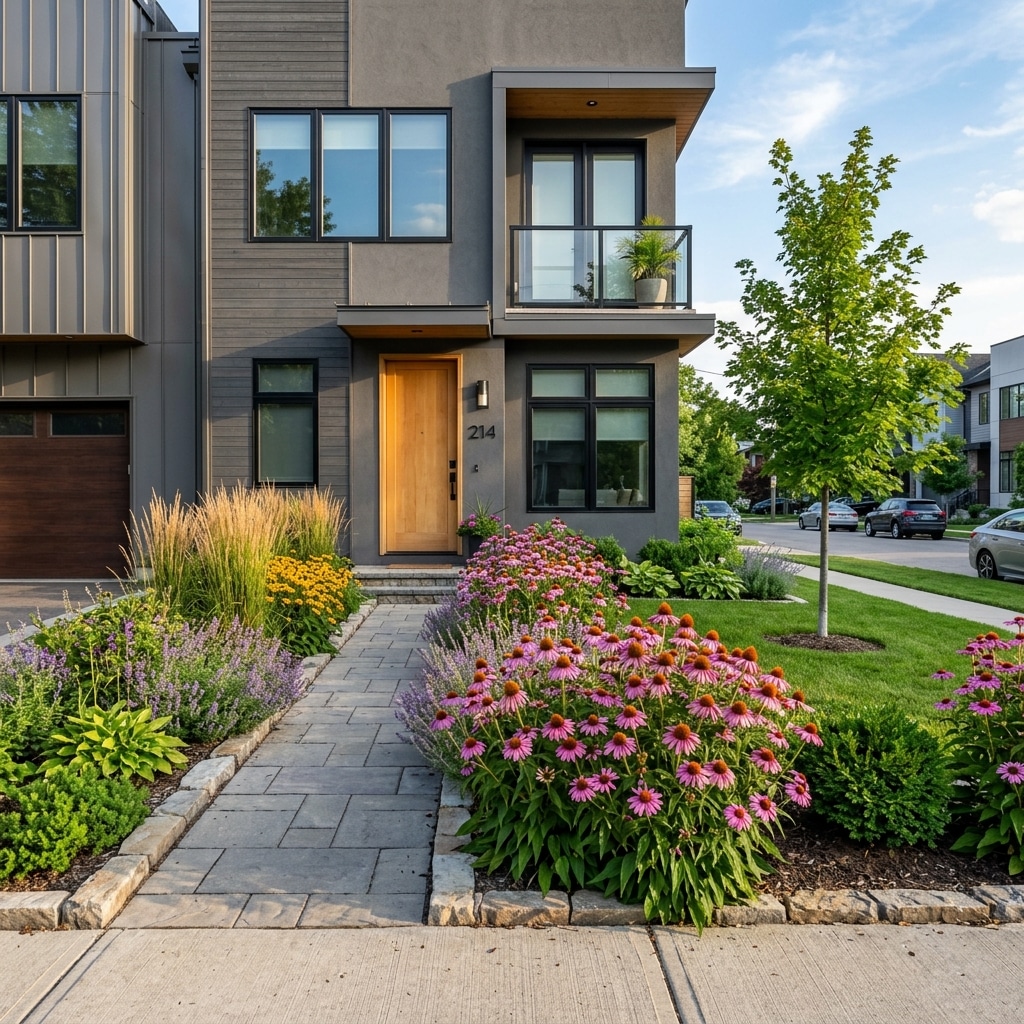
Every serious pollinator garden in America has coneflower at its center.
It sends up tall stems topped with daisy-like flowers — classic purple, plus modern cultivars in orange, pink, white, and even green. Bees and butterflies swarm them.
Leave the seed heads up in winter and goldfinches will visit to feed.
Native to the American prairie, it shrugs off heat and drought. It blooms for months with no deadheading required.
Plant it once. It comes back stronger every year.
That kind of return is rare.
31. Daylily
Zones
3–9 · 1–4 ft · Full sun to part shade · Yellow/orange/red/purple blooms in summer
A daylily flower blooms for one day, then another bud opens, then another.
A single plant can produce flowers for weeks at a time, with each individual bloom lasting just twenty-four hours. The name is literal.
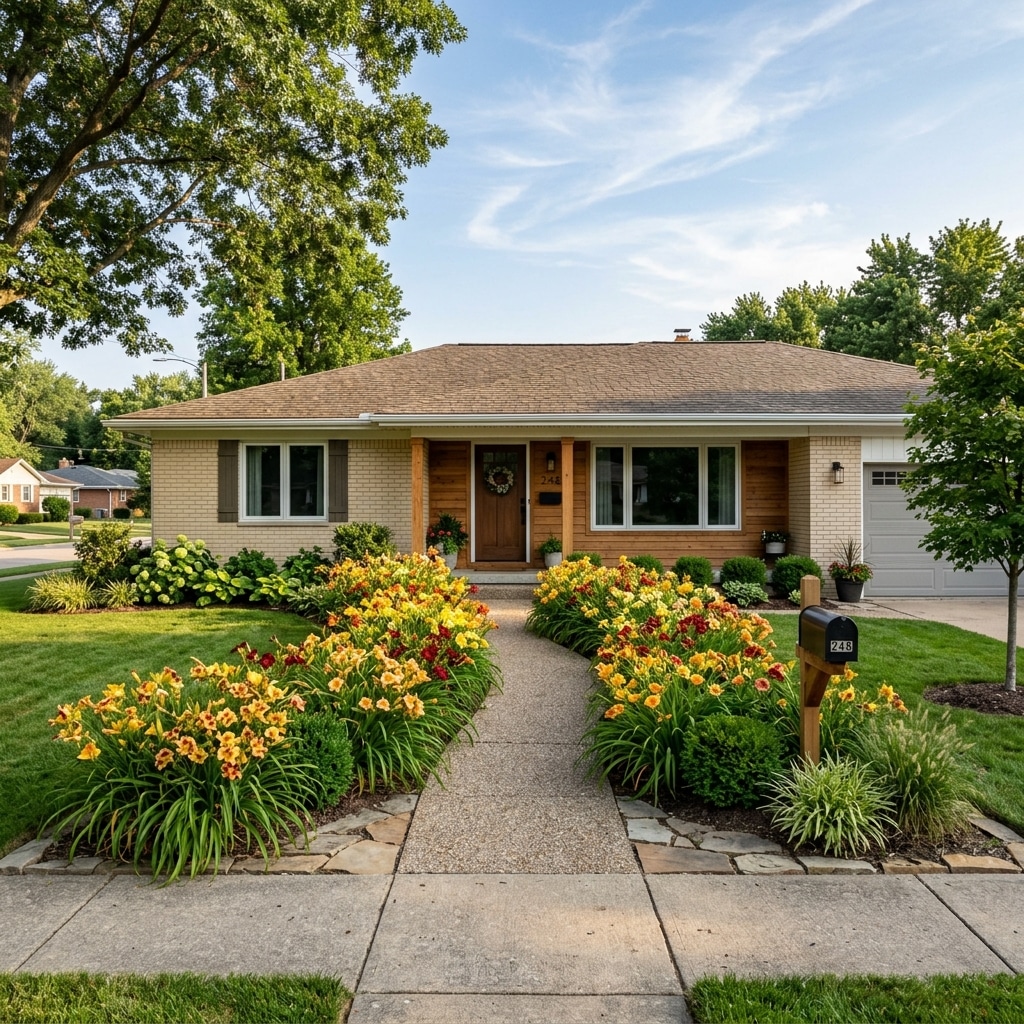
There are tens of thousands of named varieties — yellows, oranges, reds, purples, peaches, near-blacks.
They’re nearly indestructible. Hot, dry, clay soil, partial shade — daylilies don’t care. A clump can outlive everyone who’s ever owned the house.
Use them in mass plantings along driveways, or as foundation accents in sunny spots.
30. Viburnum
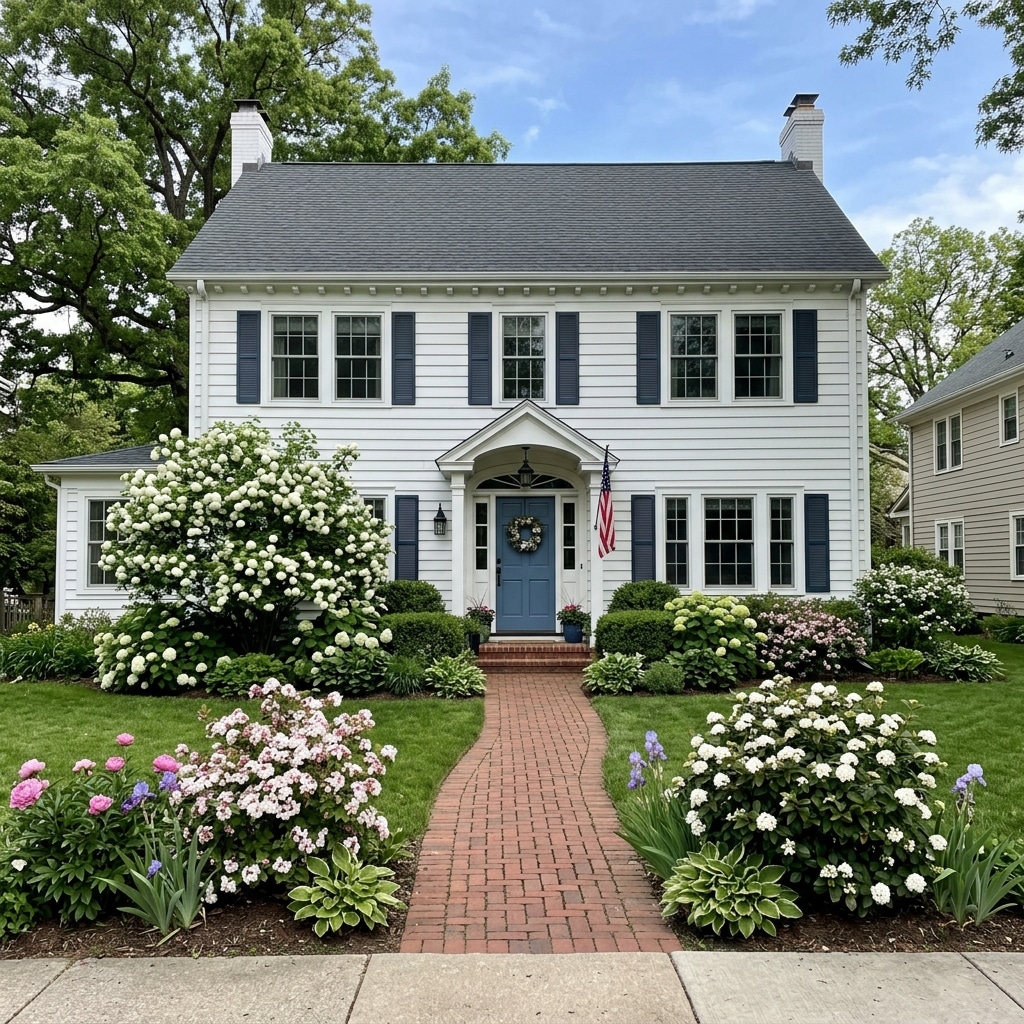
Zones
2–9 (varies) · 3–15 ft · Sun to part shade · Spring blooms, fall berries
Pick a season. Viburnum has a species that owns it.
Viburnums come in dozens of species, and each does something different. Some have spring flowers that smell like vanilla. Others produce berries that turn from red to blue-black. A few have spectacular fall color.
Pick the right viburnum for the right spot and you get a shrub that earns its space three or four seasons a year.
Designers reach for viburnum when they need a workhorse that doesn’t look like a workhorse.
Worth getting to know the varieties.
29. Coral Bells (Heuchera)
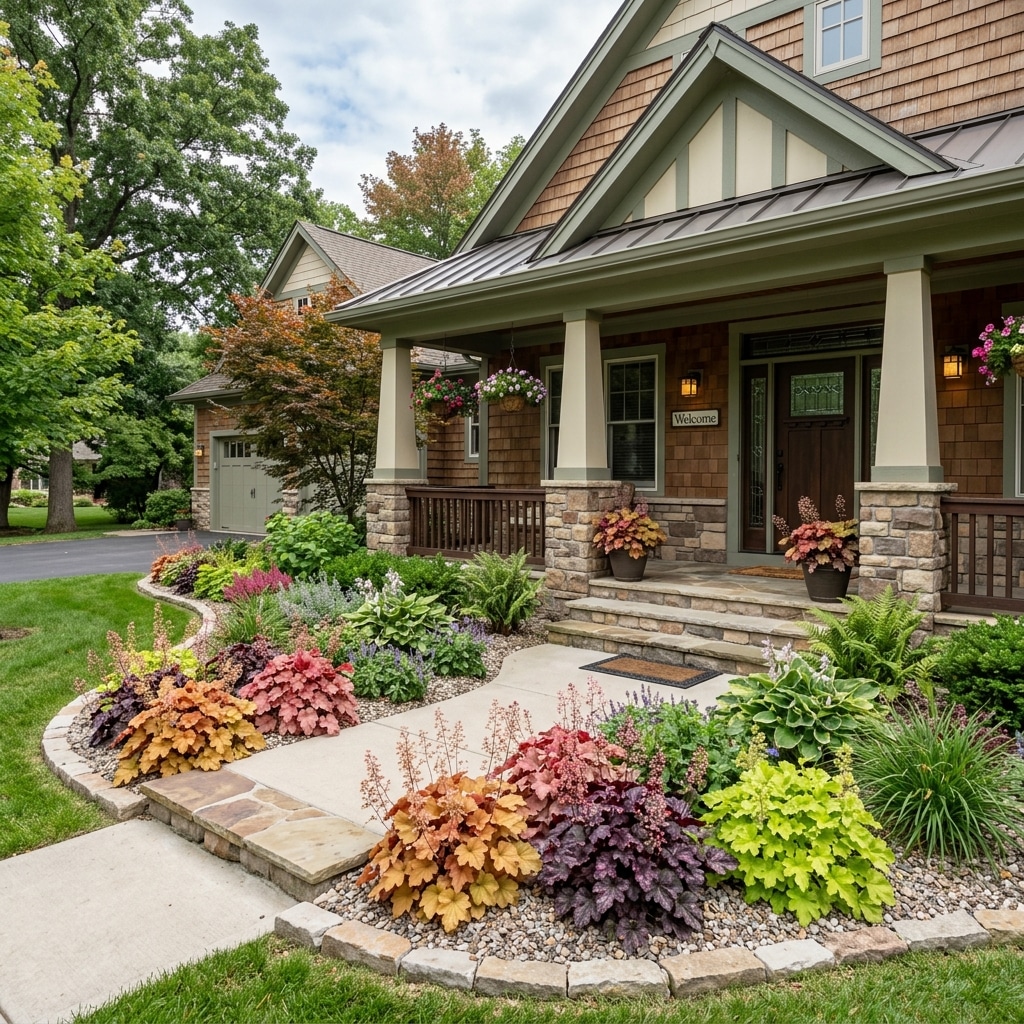
Zones
3–9 · 1–2 ft · Part shade · Foliage in burgundy, lime, peach, silver, near-black
Coral bells are grown for the leaves — the flowers are almost an afterthought.
Heuchera foliage comes in colors most plants can’t manage. The leaves stay good-looking from spring through fall, with some varieties holding color into winter.
It’s the perfect shade-bed filler when you’re tired of nothing but hostas.
Plant it in clumps near a front walkway where the leaf color can do its work. A mass of dark purple heuchera next to chartreuse hostas is the kind of contrast that stops people.
28. Catmint (Nepeta)
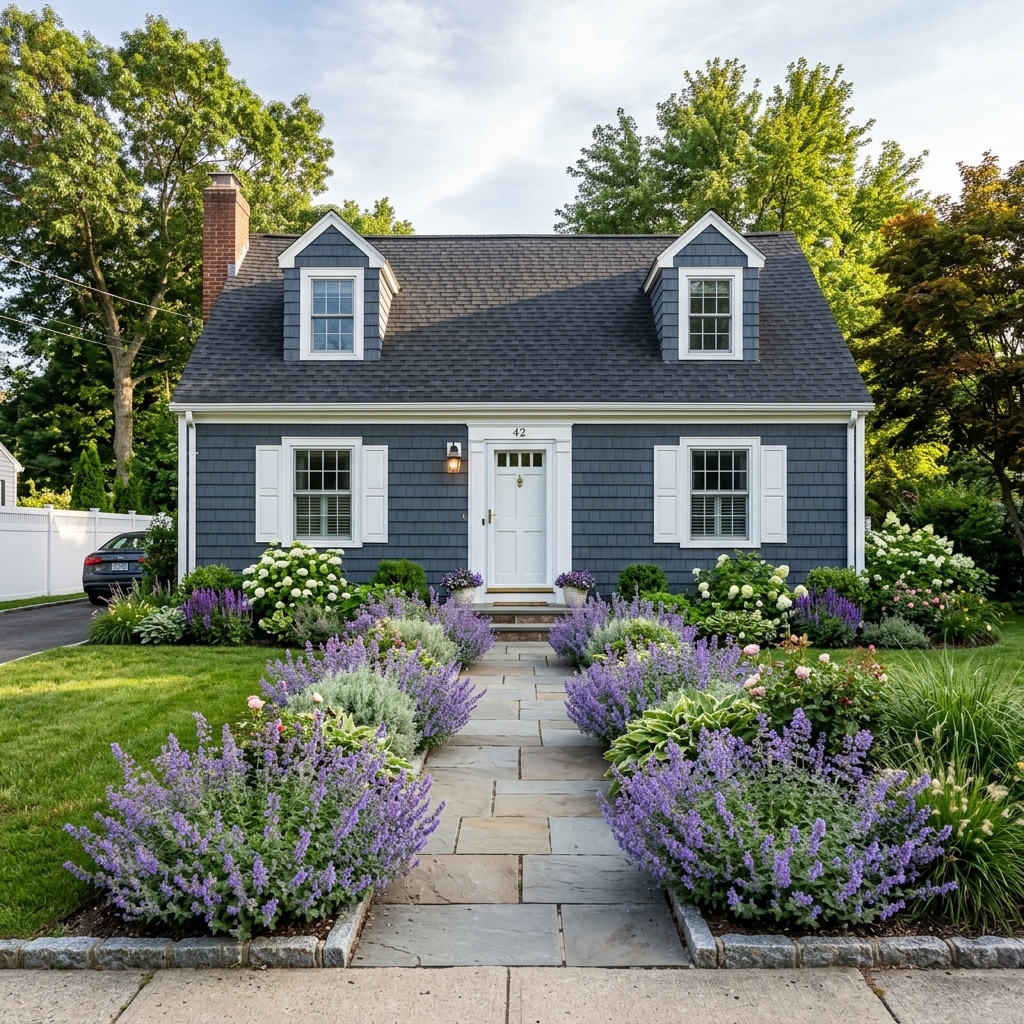
Zones
3–8 · 1–3 ft · Full sun · Blue-purple blooms late spring through fall
Lavender is fussy. Catmint just isn’t.
True lavender needs perfect drainage, alkaline soil, and dry summers. Most of the country can’t give it what it wants.
Catmint looks similar — silvery foliage, hazy blue-purple flower spikes — but grows almost anywhere. Cold winters, clay soil, humid summers. It shrugs all of it off.
Cut it back hard after the first flush of bloom. It returns within weeks for a second show that runs into fall.
A lazy gardener’s dream with a designer’s-eye look.
27. Colorado Blue Spruce
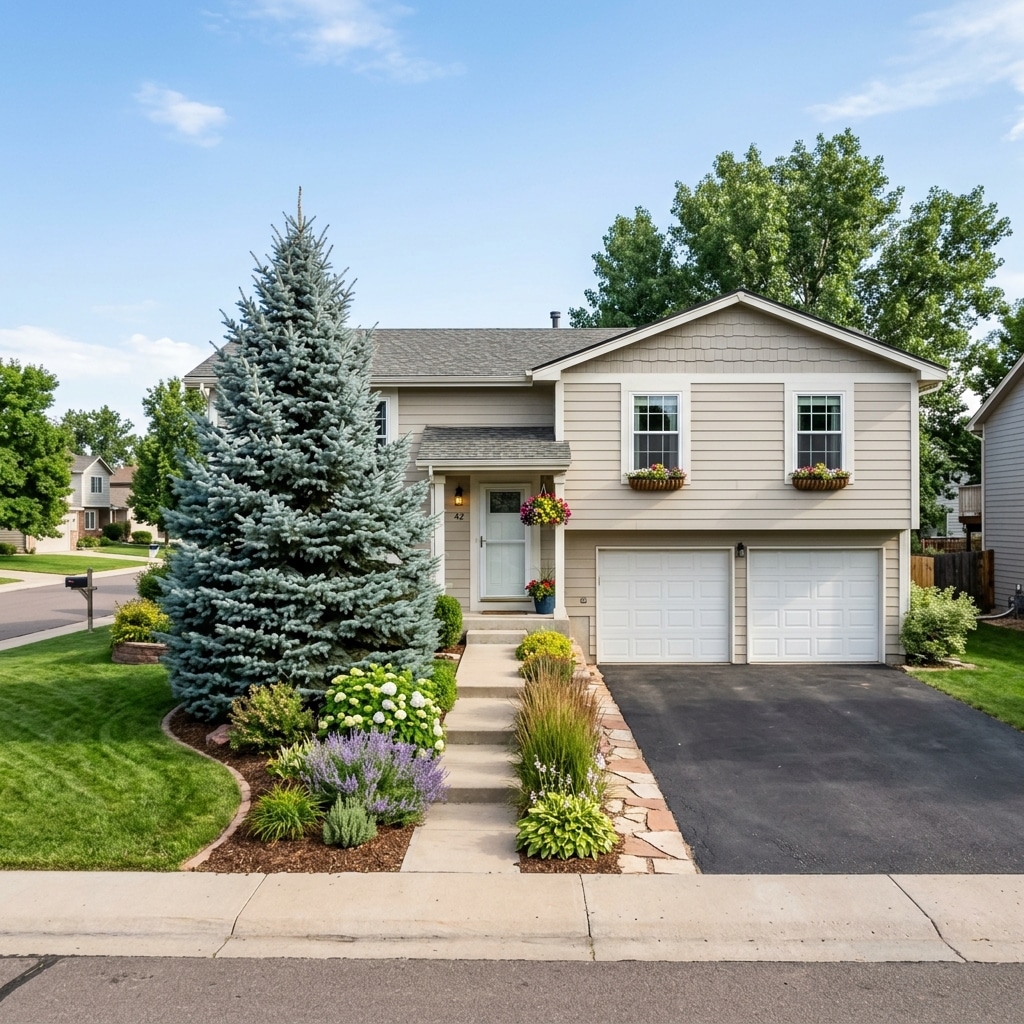
Zones
2–7 · 30–65 ft · Full sun · Evergreen, silver-blue needles
You can spot a Colorado blue spruce from down the street.
The needles really are blue — a powdery, almost frosted silver-blue that shows up against any background. Mature trees develop the classic pyramid shape that says “Christmas tree” to most people.
Plant it as a specimen, not in a group. One tree, properly placed, becomes the focal point of an entire front yard.
The catch: it gets big. Forty feet tall, sometimes wider than people expect. Pick a spot where it has room to spread out.
Underplant it with nothing.
26. American Holly
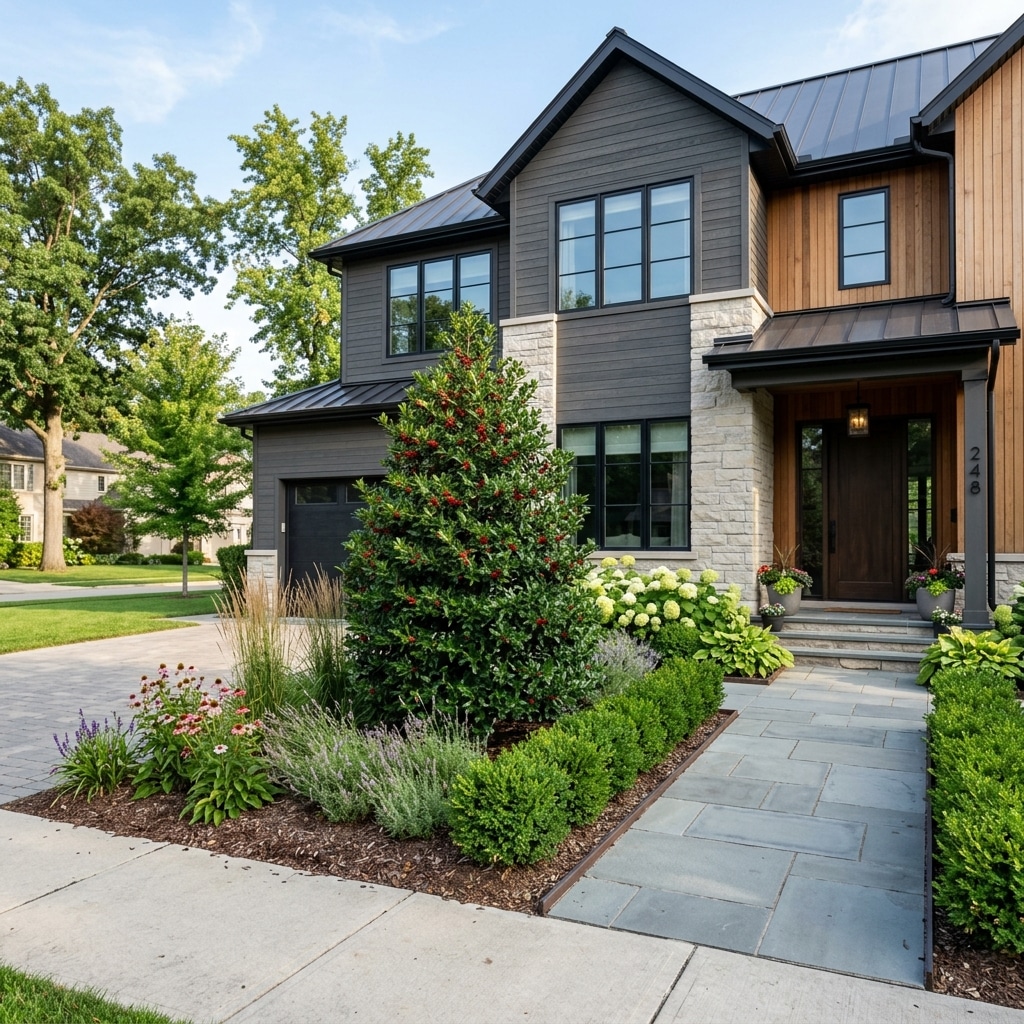
Zones
5–9 · 15–30 ft · Full sun to part shade · Evergreen, red winter berries
In December, when nothing else has color, American holly delivers red berries against dark green leaves — and that combination is gold.
It’s a native broadleaf evergreen that grows into a substantial tree over time — twenty to thirty feet tall, sometimes more. Glossy spiny leaves stay good year-round.
You need a male and a female plant for berries. The female does the work; the male just has to be nearby.
Use it as a specimen, a corner anchor, or a tall hedge. It reads as traditional, established, and quietly upscale.
25. River Birch
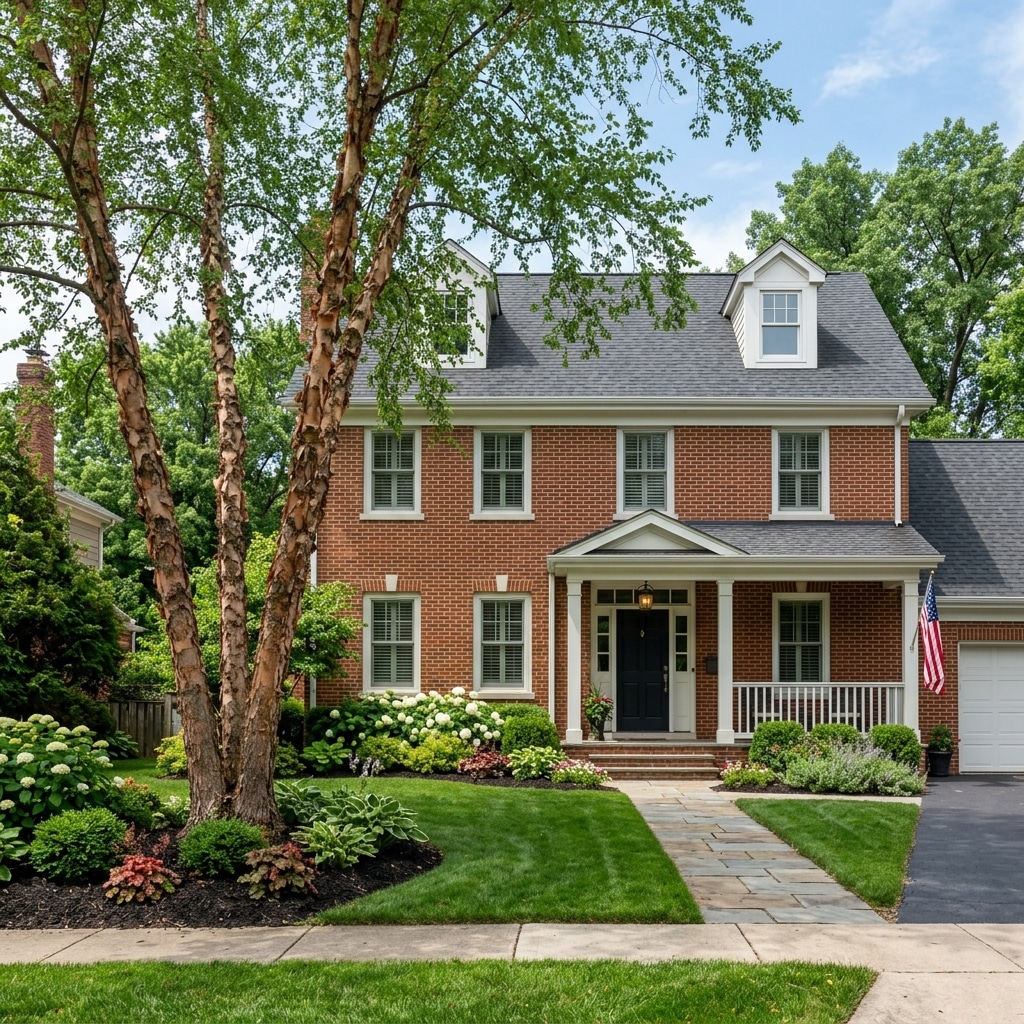
Zones
4–9 · 40–70 ft · Full sun to part shade · Peeling cinnamon bark
With river birch, the bark is the whole point.
The bark is cinnamon-colored and peels in papery sheets, revealing pale tan and pink underneath. It glows in low winter light. It photographs beautifully against snow.
The tree itself is fast-growing, often planted in a clump of three trunks to multiply the bark effect.
It tolerates wet soil that would kill most trees, making it useful for low spots near downspouts or in rain gardens.
Plant it where you can see it from the house in winter. That’s when it earns its keep.
24. Russian Sage
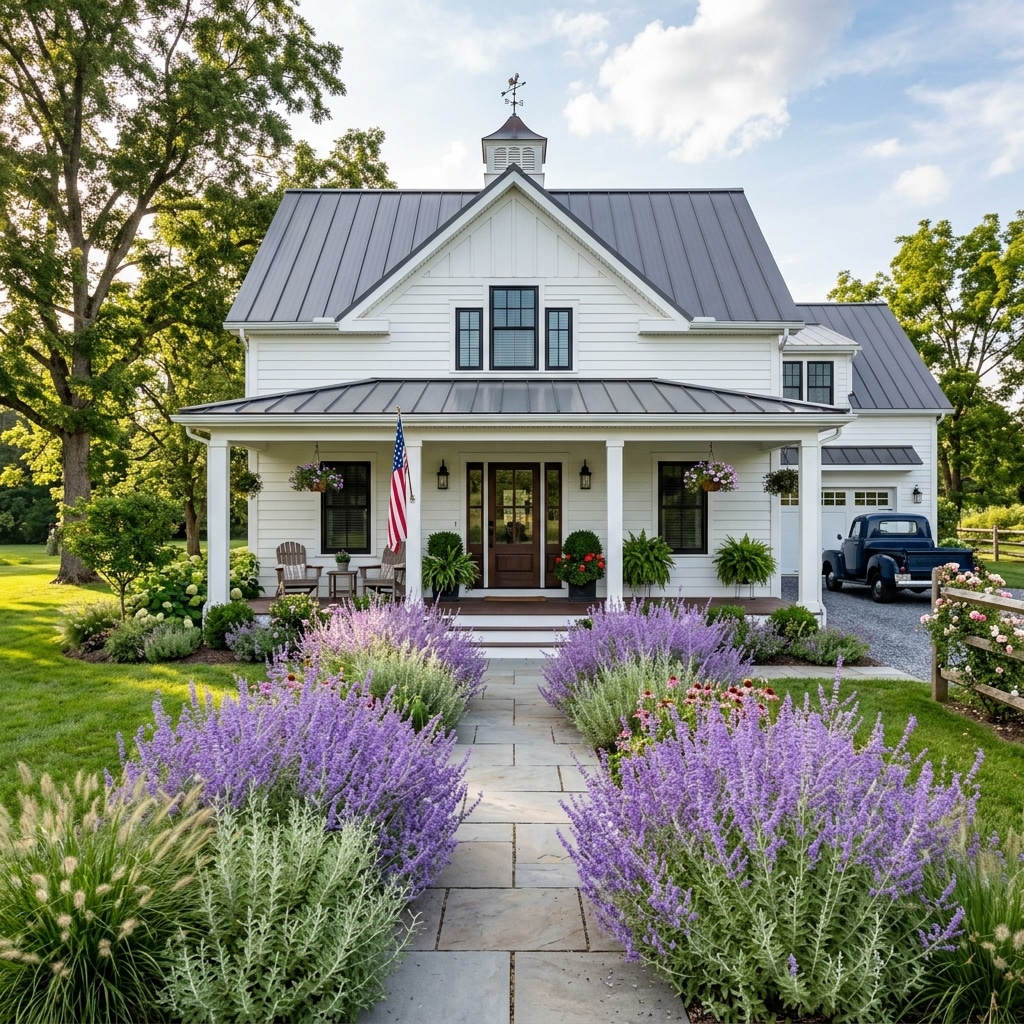
Zones
4–9 · 3–5 ft · Full sun · Lavender-blue blooms midsummer through fall
Russian sage looks expensive and costs almost nothing.
It produces clouds of lavender-blue flowers on silvery-white stems from midsummer to first frost — months of color when most perennials are exhausted.
It thrives on neglect. Drought, heat, poor soil, deer pressure — none of it bothers it. The more you ignore it, the better it looks.
A mass planting along a sunny foundation or driveway reads as a high-end garden. The structure, the color, the duration — all of it punches above its price.
Cut it back to a few inches every spring.
23. Ornamental Grasses
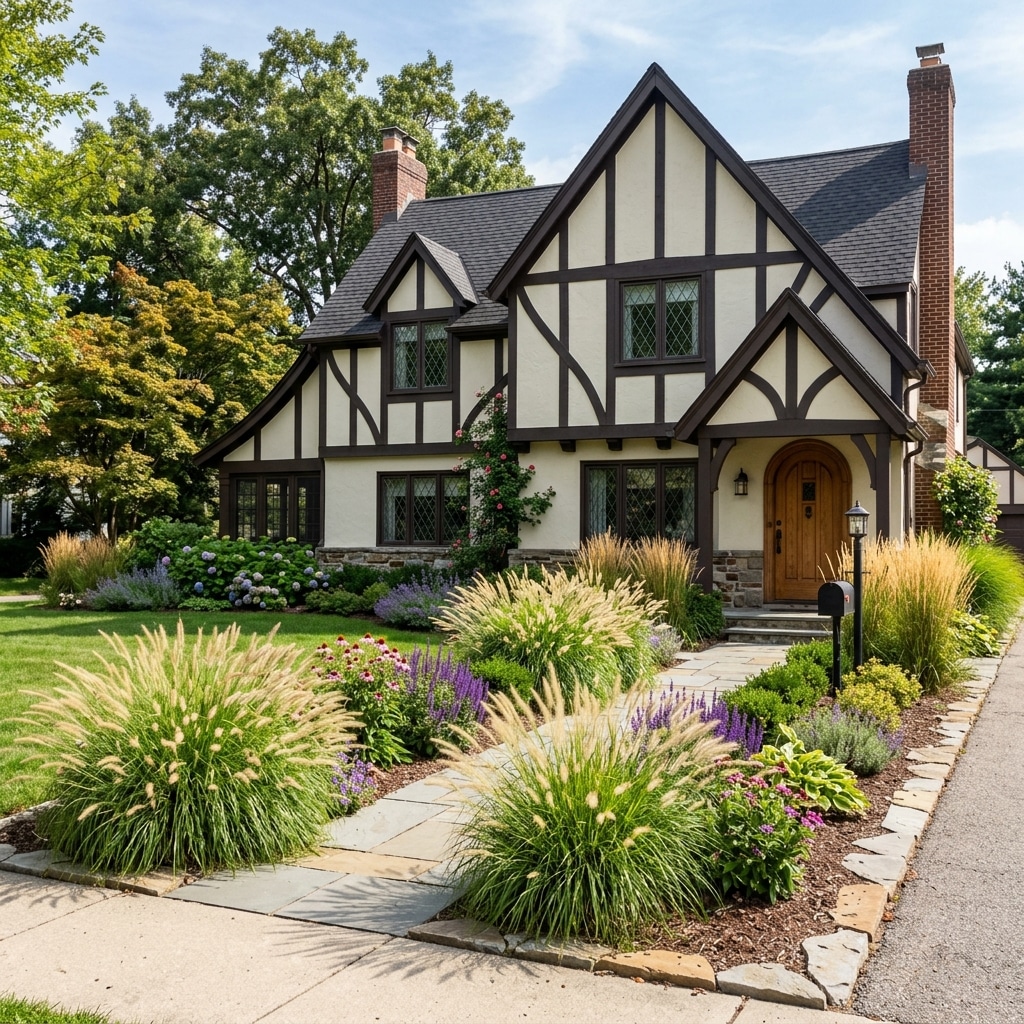
Zones
4–9 (varies) · 2–8 ft · Full sun · Plumes in late summer through winter
Before ornamental grasses, modern landscape design wasn’t really possible.
Karl Foerster feather reed, miscanthus, panicum, pennisetum — they bring movement that no other plant can. They sway in the wind. They catch low autumn light. They hold their shape through snow.
A single grass plant looks like a clump. Five plants in a row become a statement.
They’re the reason contemporary landscape design doesn’t feel sterile.
Plant them anywhere you want softness and motion. Cut them back once a year, in late winter, before new growth starts.
22. Clematis
Zones
4–9 · 6–20 ft vine · Sun on top, shade at roots · Spring or summer blooms
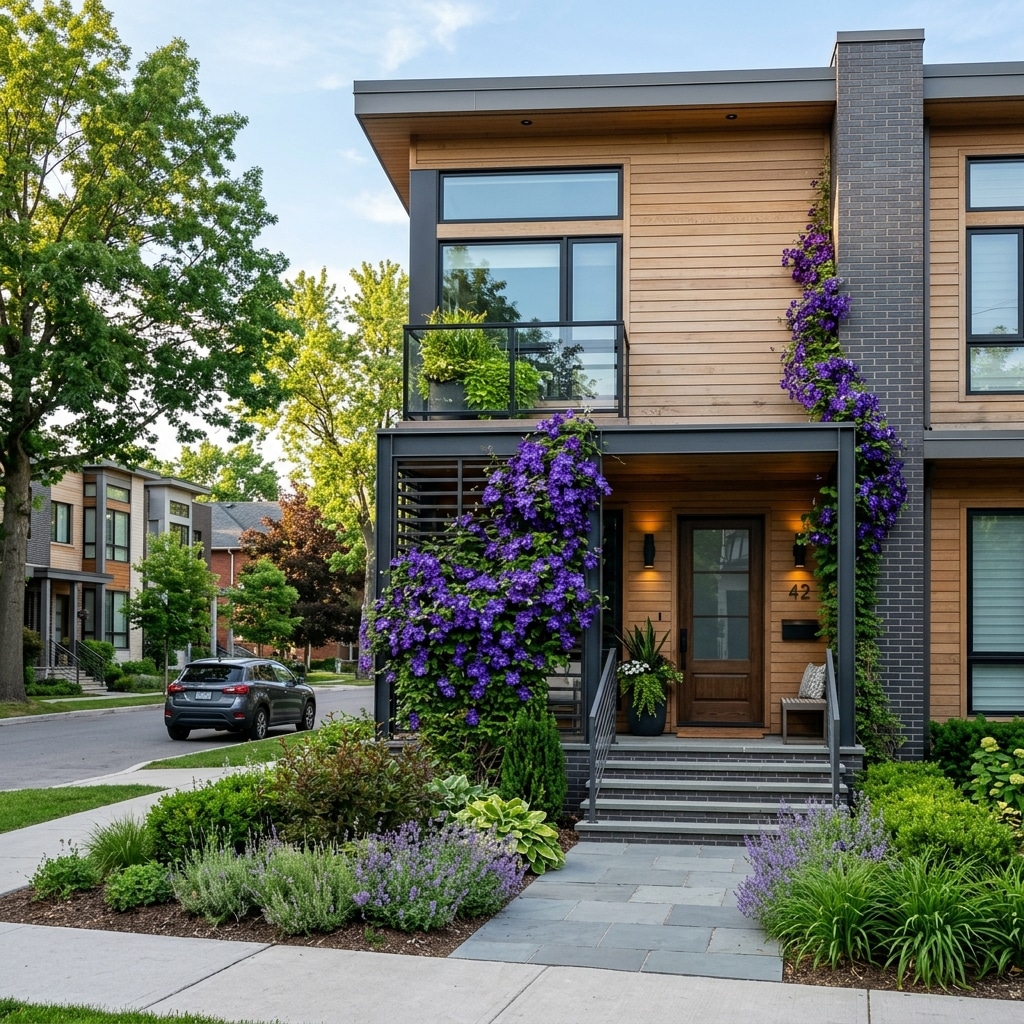
A flat wall becomes a feature the moment you train a clematis up it.
This vining perennial climbs lampposts, mailboxes, trellises, and porch posts, covering them with showy blooms in nearly every color — purples, pinks, whites, reds, blues. Some varieties have flowers the size of dinner plates.
The trick is the roots. Clematis wants cool, shaded roots and sunny shoots. Mulch the base and let the top of the plant reach for light.
One well-placed clematis on an entry trellis can change the whole face of a house.
21. Climbing Hydrangea
Zones
4–8 · 30–80 ft vine · Part shade · Lacy white blooms in summer
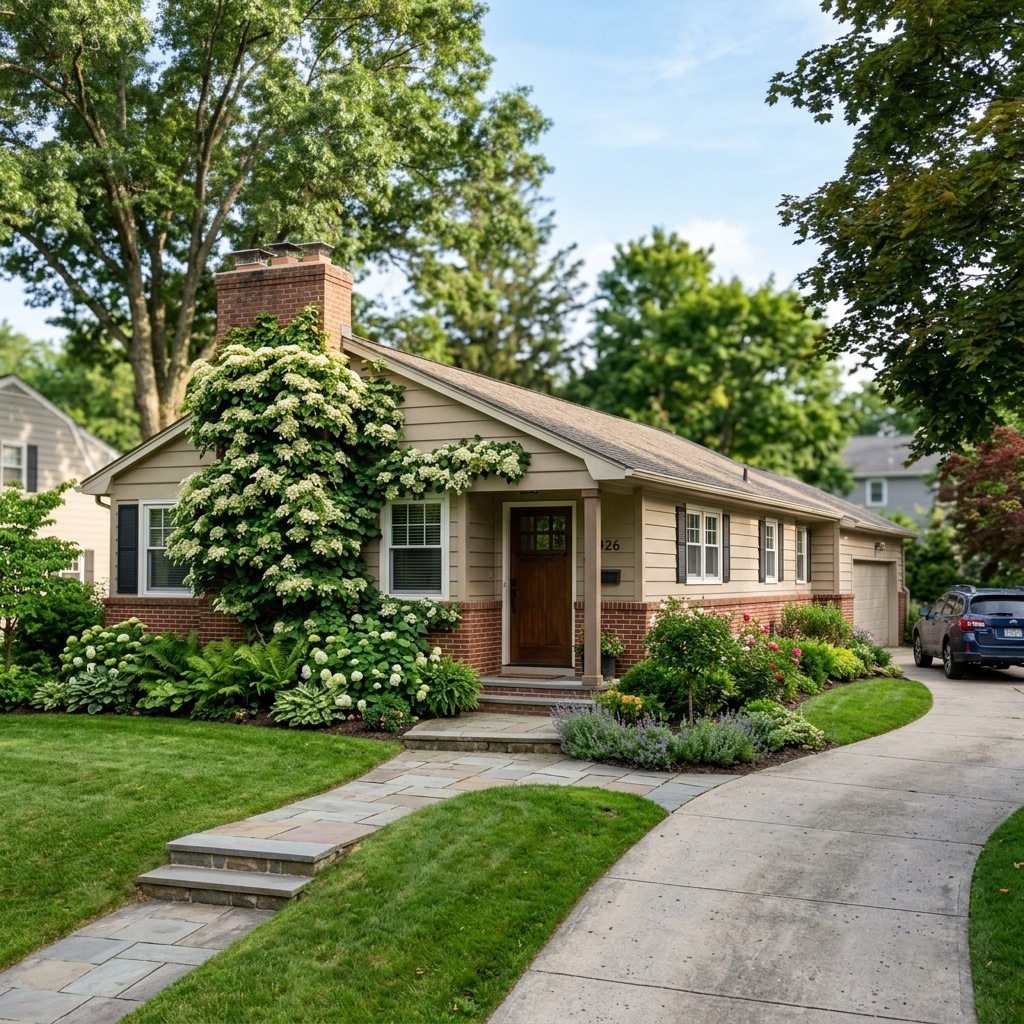
For three years, climbing hydrangea will look like a dud. Then it doesn’t.
It clings by aerial roots to walls, chimneys, or stone pillars, eventually covering them with lacy white blooms.
A mature climbing hydrangea looks like it’s been there for a century. It’s the kind of plant that makes a 1990s house look like a New England estate.
Plant it on a north or east wall. Be patient.
In ten years, you’ll have something most yards can’t buy at any price.
20. Weeping Cherry
Zones
5–8 · 15–25 ft · Full sun · Pink or white blooms in spring
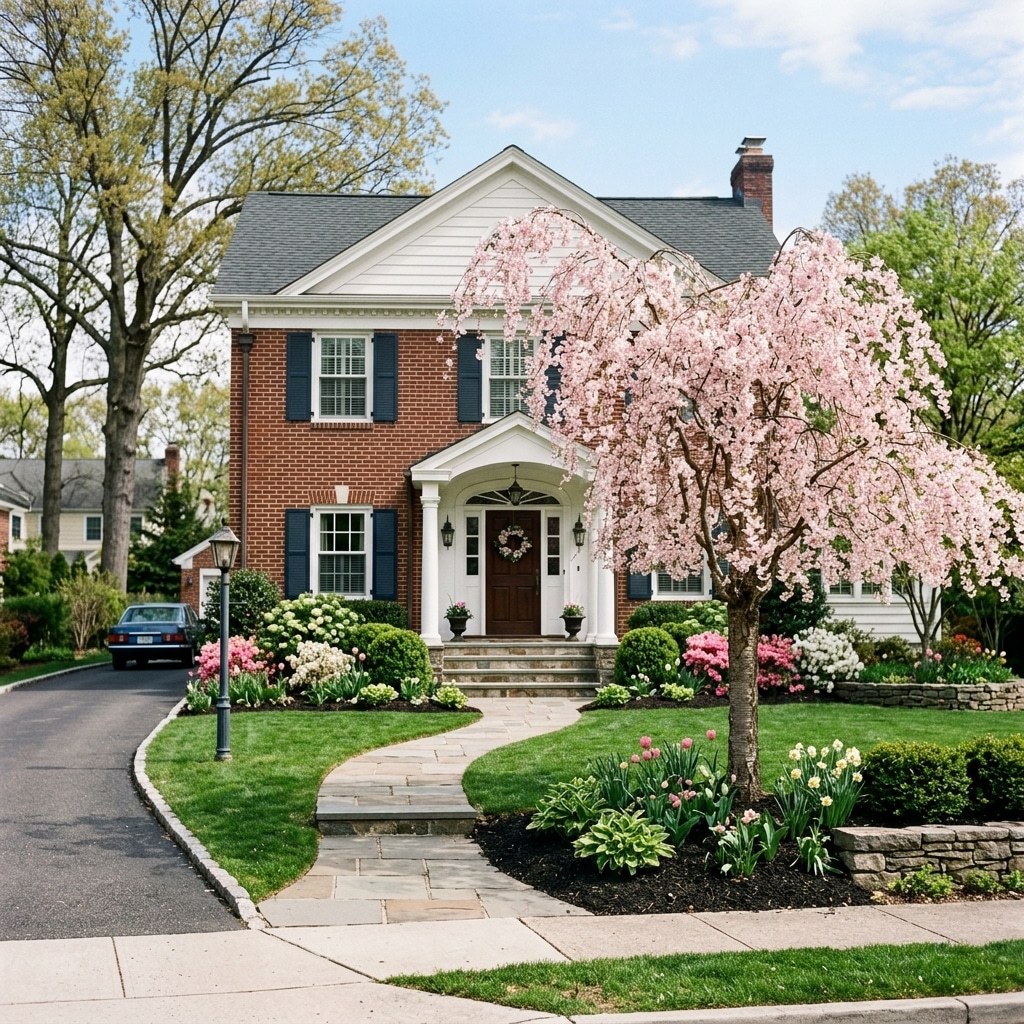
Every yard has one spot that deserves a weeping cherry.
It spends most of the year as a graceful cascade of bare or leafy branches, then erupts in pink or white blossoms every spring — flowers falling in curtains.
It stays small. Twenty feet, maybe twenty-five. Perfect for a front yard where a full-sized tree would feel overwhelming.
Plant it alone, on a slight rise if possible, where the weeping form can do its full drape from a distance.
We’re entering the top half. Every plant from this point can carry a property.
19. Rhododendron
Zones
4–8 · 4–10 ft · Part shade · Pink, purple, white, or red spring blooms
Rhododendrons make a big statement: big leaves, big flowers, big presence.
They’re the heavy hitters of the broadleaf evergreens — leathery, glossy leaves year-round, plus enormous clusters of spring flowers in pinks, purples, whites, and reds.
They want acidic soil and dappled shade. Get those right and a rhododendron will outlive the house.
A mature specimen is the kind of plant a real estate listing mentions by name. Old rhododendrons read as established wealth.
Plant them in groups. Single specimens get lost. Three or more command attention.
18. Azalea
Zones
5–9 · 2–6 ft · Part shade · Pink, white, orange, red, or coral spring blooms
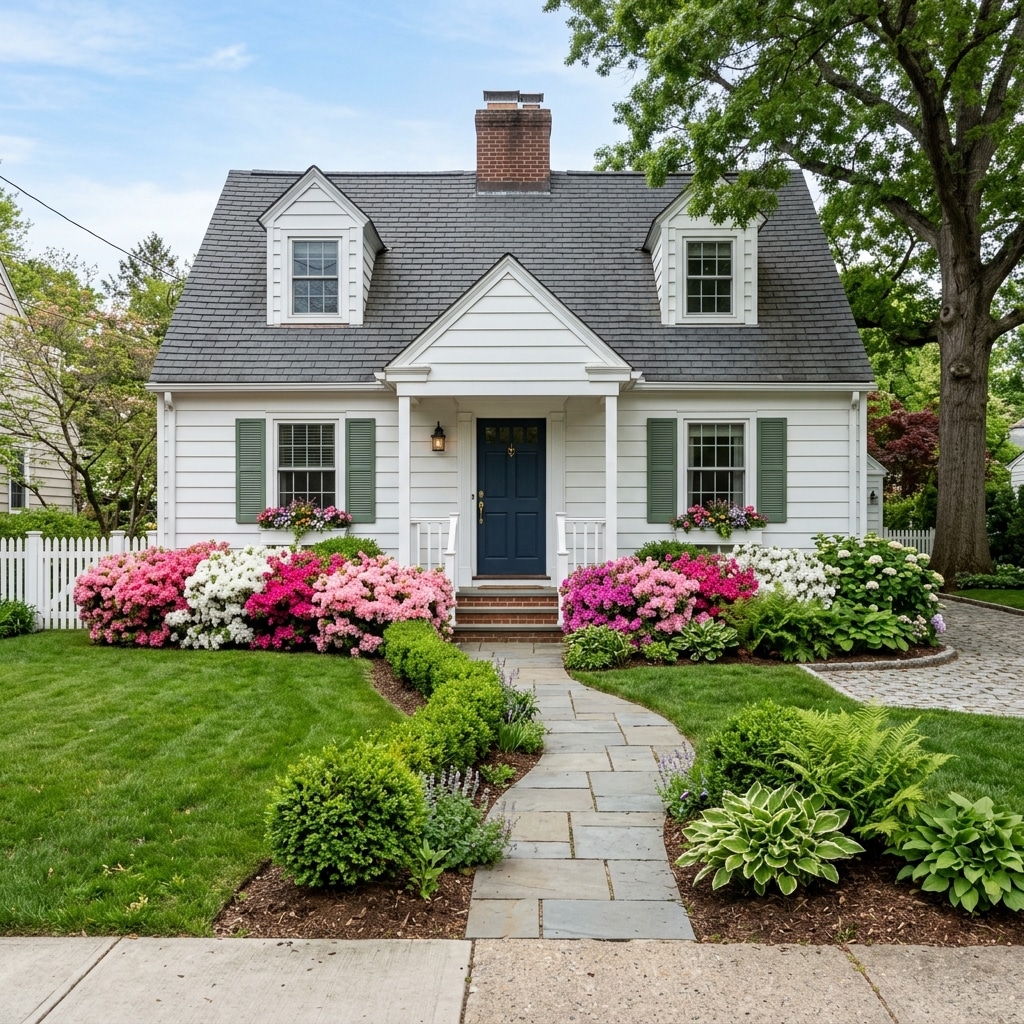
What the rhododendron does in the grand style, the azalea does at human scale.
They come in evergreen and deciduous varieties, both producing massive spring color in pinks, whites, oranges, reds, and corals. Some are knee-high. Others get six feet tall.
In the South, they’re nearly mandatory in front-yard plantings. Mature azalea displays draw weekend tourists.
They want acidic soil and afternoon shade. Mulch them well.
The Encore series blooms in spring and again in fall, doubling the show. Worth seeking out.
17. Eastern Redbud
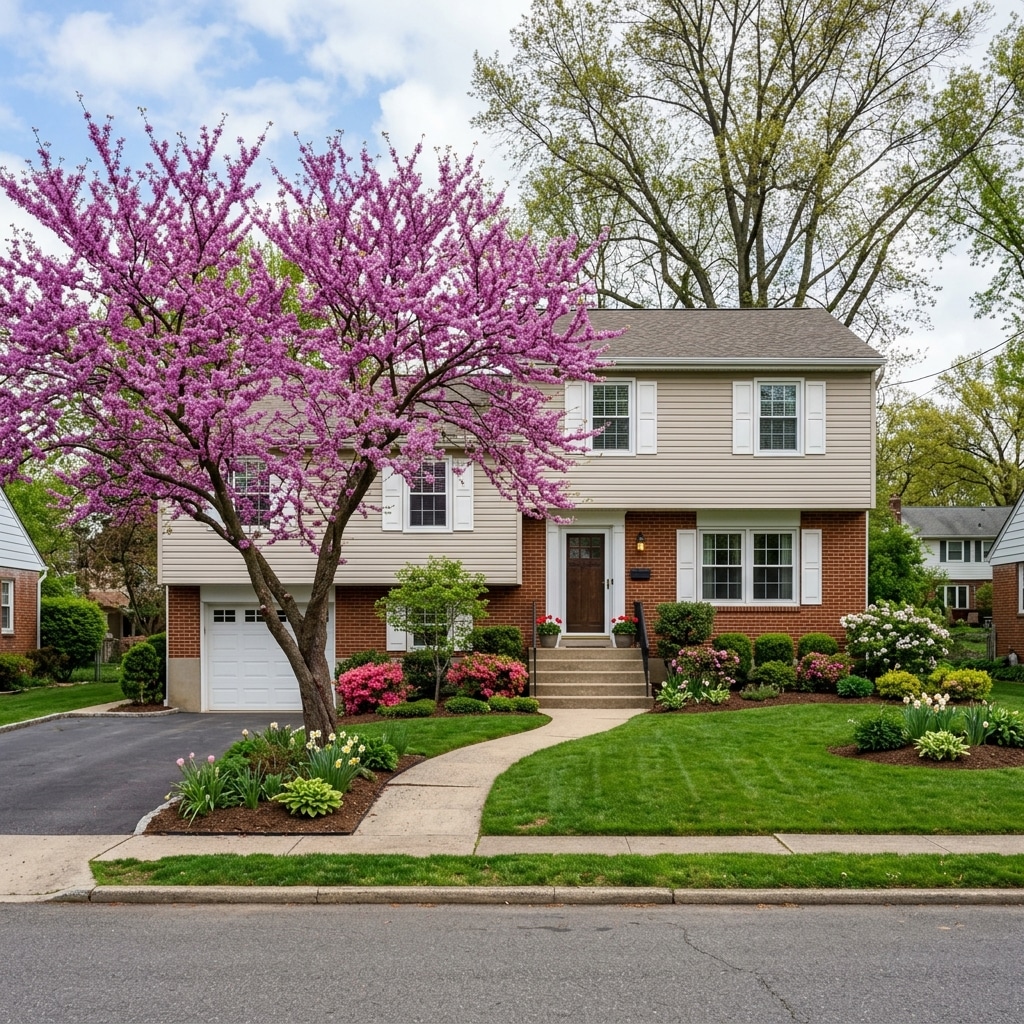
Zones
4–9 · 20–30 ft · Full sun to part shade · Magenta-pink blooms in early spring
The Eastern redbud erupts in pink flowers along bare branches every April — and it looks almost impossible.
The tree blooms before its leaves emerge, covering every twig with small magenta-pink flowers. The effect is unlike anything else in the spring landscape.
It’s a small tree — twenty to thirty feet — which makes it perfect for front yards where a full-sized shade tree would crowd the house.
The heart-shaped leaves are pretty all summer. Fall color is decent.
Native to most of the eastern U.S., and increasingly popular with landscape designers.
16. Arborvitae (Emerald Green)
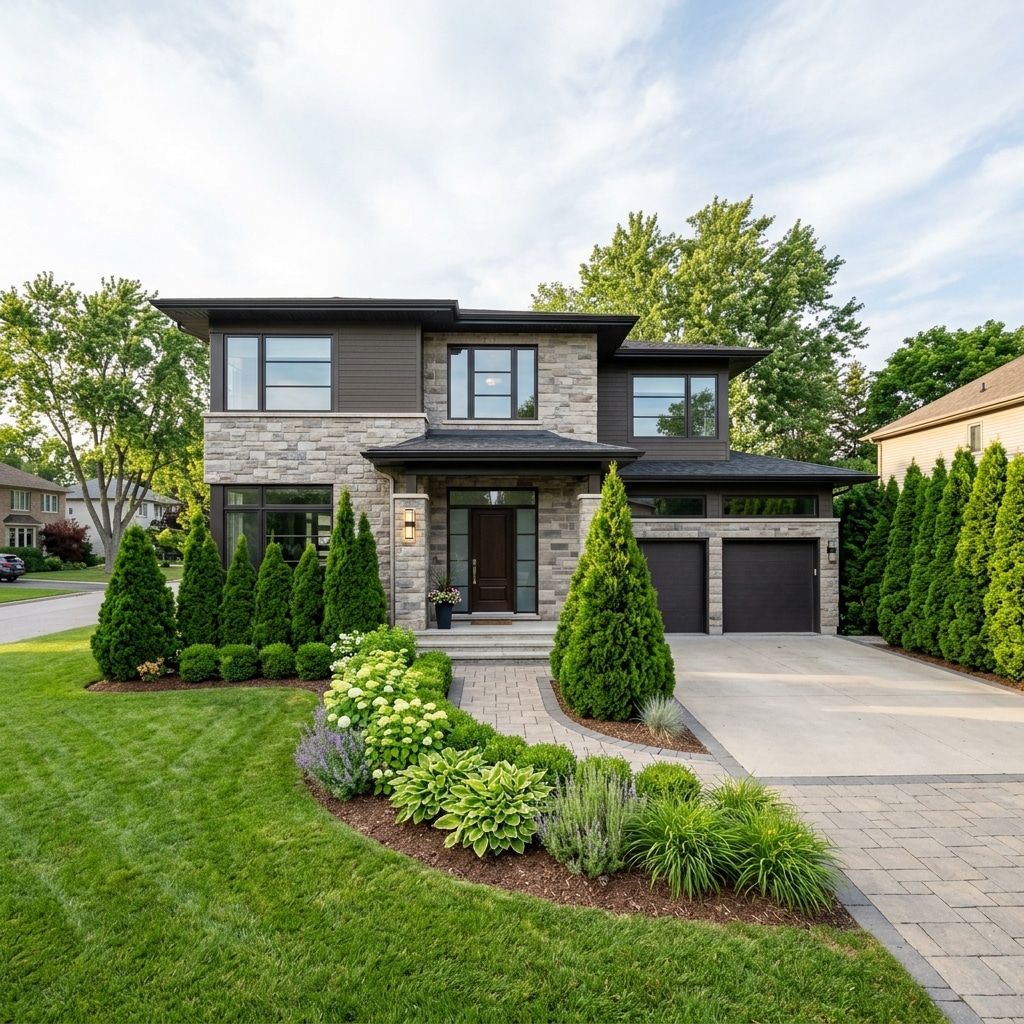
Zones
3–8 · 12–15 ft · Full sun · Evergreen
Got a neighbor’s eyesore in your sight line? Arborvitae fixes that in about three years.
The ‘Emerald Green’ cultivar in particular is the default privacy hedge for a reason. It grows fast. It stays narrow. It stays green all year. And it tolerates a wide range of conditions.
A row along a property line can hide just about anything within a few seasons.
Plant them three to four feet apart for a solid screen. Water deeply the first year, then let them go.
Deer love them. If you have deer, choose ‘Green Giant’ instead.
15. Lilac
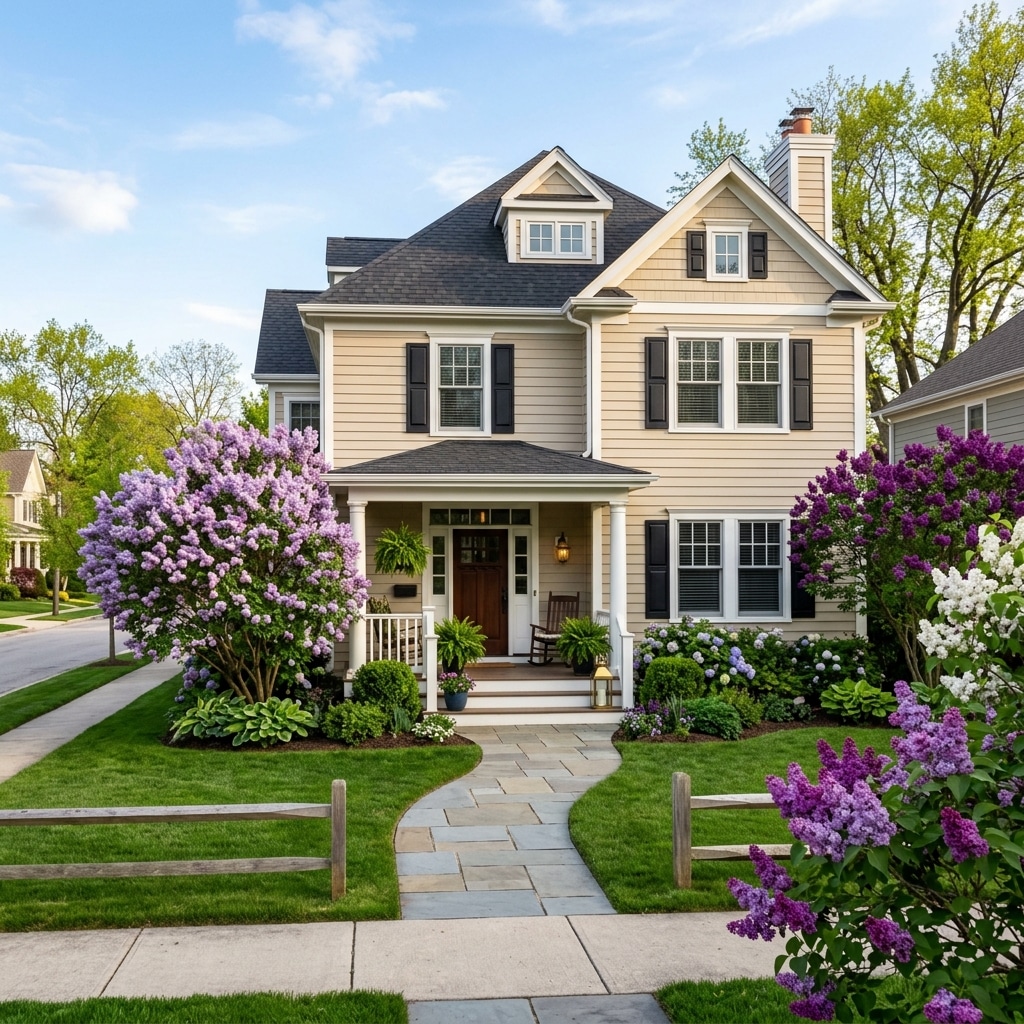
Zones
3–7 · 8–15 ft · Full sun · Purple, pink, white, or pale blue spring blooms
With lilac, the fragrance is the value.
A lilac in full bloom can be smelled from across the street. That single sensory detail is what makes this old-fashioned shrub stick in a buyer’s memory.
The flowers — purple, pink, white, or pale blue — only last about two weeks. But during those two weeks, everything else in the yard becomes secondary.
Plant lilacs near a window that opens, or beside a front walk. Put the fragrance where it’ll be encountered.
Old lilacs live for a hundred years. Few plants offer that kind of legacy.
14. Camellia
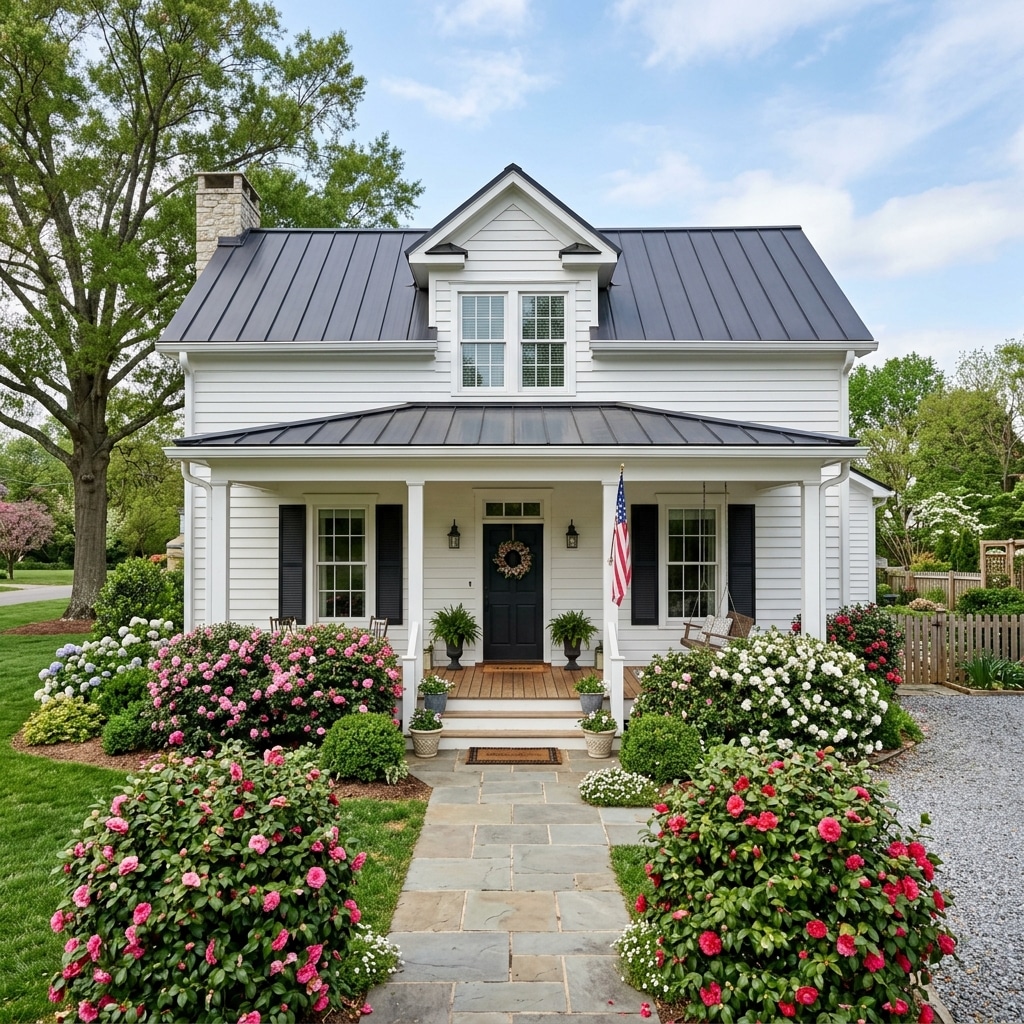
Zones
7–10 · 6–12 ft · Part shade · White, pink, or red blooms fall through spring
In January, when most Southern gardens are dormant, the camellia by the front door is in full bloom.
Camellias bloom when almost nothing else does — fall, winter, or early spring, depending on variety. Glossy dark-green leaves hold up year-round. Flowers come in white, pink, red, and elaborate striped patterns.
A mature camellia by the front door reads as a high-end Southern garden, instantly.
They want acidic soil and afternoon shade. Hot afternoon sun will scorch the leaves.
Where they’re happy, camellias live for generations.
13. Hosta
Zones
3–9 · 6 in to 3 ft · Shade to part shade · Foliage in green, blue, gold, variegated
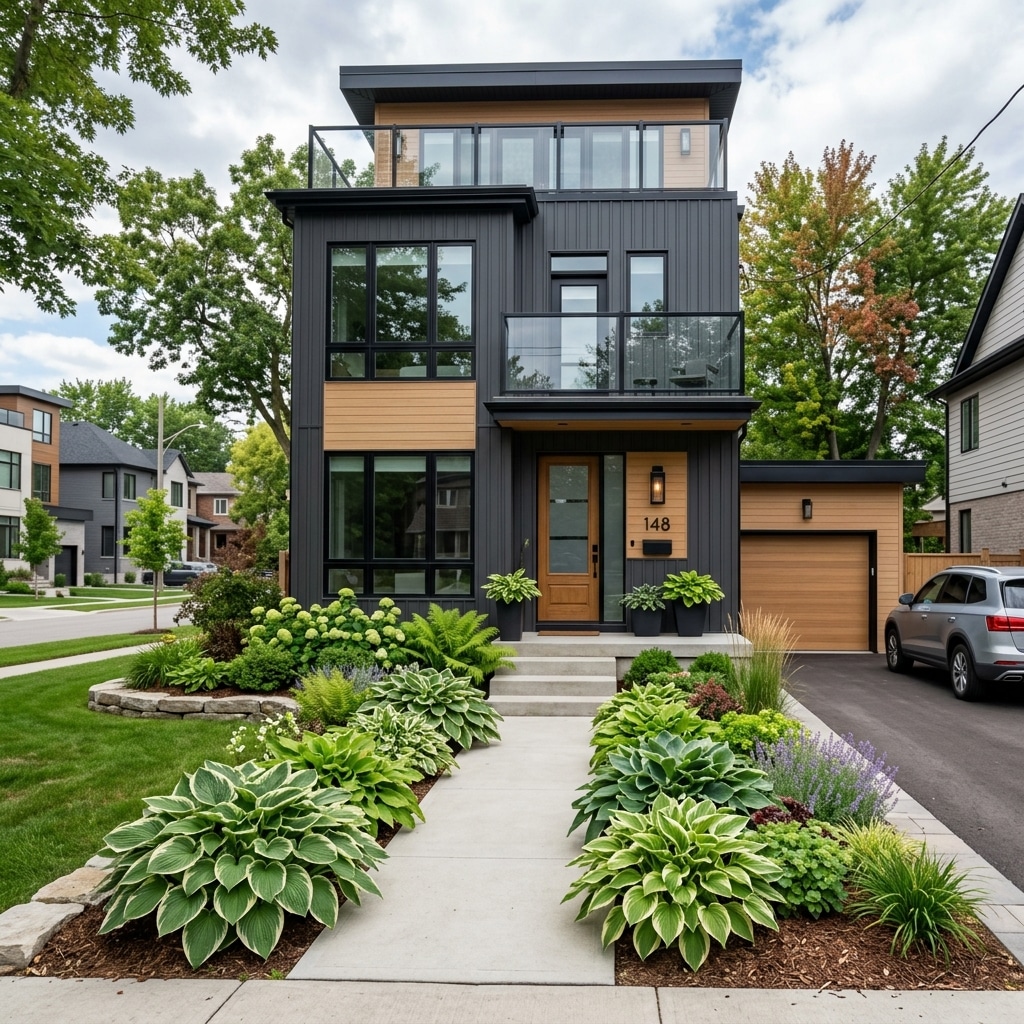
Every yard has a dark, awkward corner. That corner is where hostas live.
They solve the spots too dark for grass, too dry for impatiens, too awkward for anything to look intentional.
The leaves come in green, blue, gold, variegated, and combinations. Sizes range from tiny mounds to four-foot giants.
A mass planting of mature hostas under a front-yard tree looks lush, expensive, and effortless. None of which is hard to maintain — water during dry spells and that’s mostly it.
Deer love them. Plan around that if you have to.
12. Knockout Roses
Zones
5–11 · 3–4 ft · Full sun · Red, pink, yellow, or white blooms spring through frost
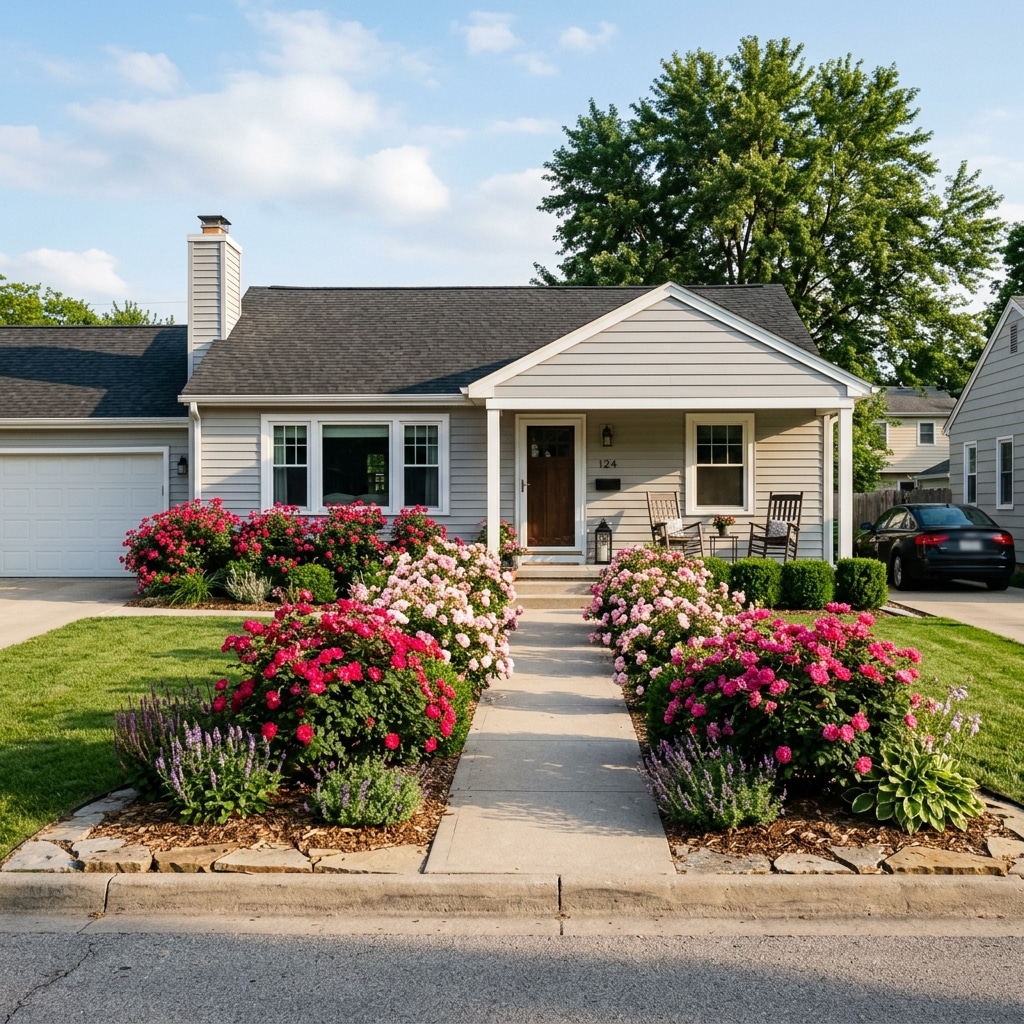
Knockout roses made growing roses simple for the first time.
Before they came along, growing roses meant spraying, pruning, dusting, and constant worry about disease. Knockouts changed everything. They’re disease-resistant, nearly thornless, and bloom from spring to frost without deadheading.
A row in front of a porch or along a walkway delivers continuous color for six straight months.
They come in red, pink, yellow, and white. The double-flower varieties look fuller.
Cut them back hard every spring. They reward you with more growth and a tidier shape.
11. Red Maple
Zones
3–9 · 40–60 ft · Full sun to part shade · Brilliant scarlet fall foliage
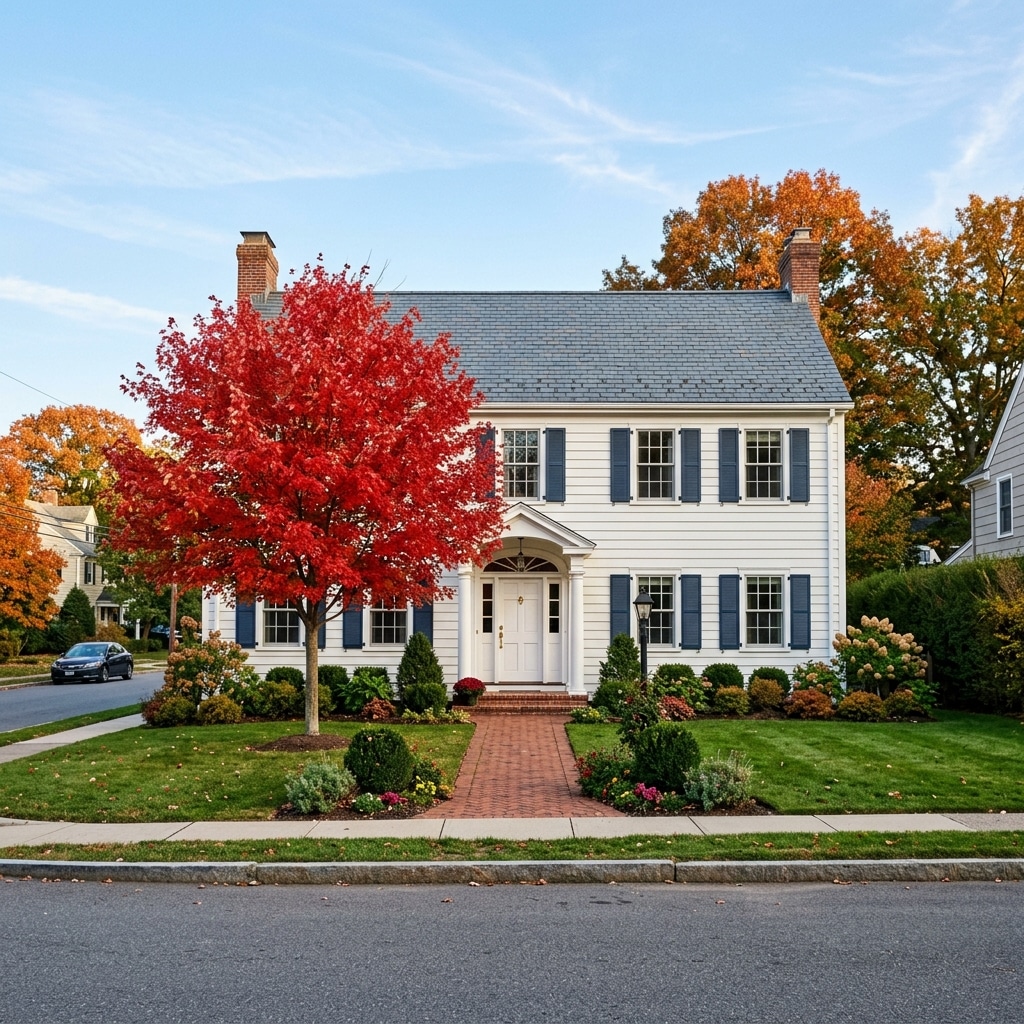
Plant a red maple this fall. In fifteen Octobers, it’ll be the reason people slow their cars.
Red maple handles wet soil, dry soil, urban conditions, and partial shade — few large trees are this flexible. Within ten to fifteen years, a young red maple becomes a real landscape feature.
The fall color is the payoff. Brilliant scarlet, sometimes orange, sometimes a mix. Cultivars like ‘October Glory’ and ‘Autumn Blaze’ are bred specifically for that color.
Plant it where it has room.
Top ten next. The stakes climb sharply from here.
10. Lavender
Zones
5–9 · 2–3 ft · Full sun · Purple blooms in summer
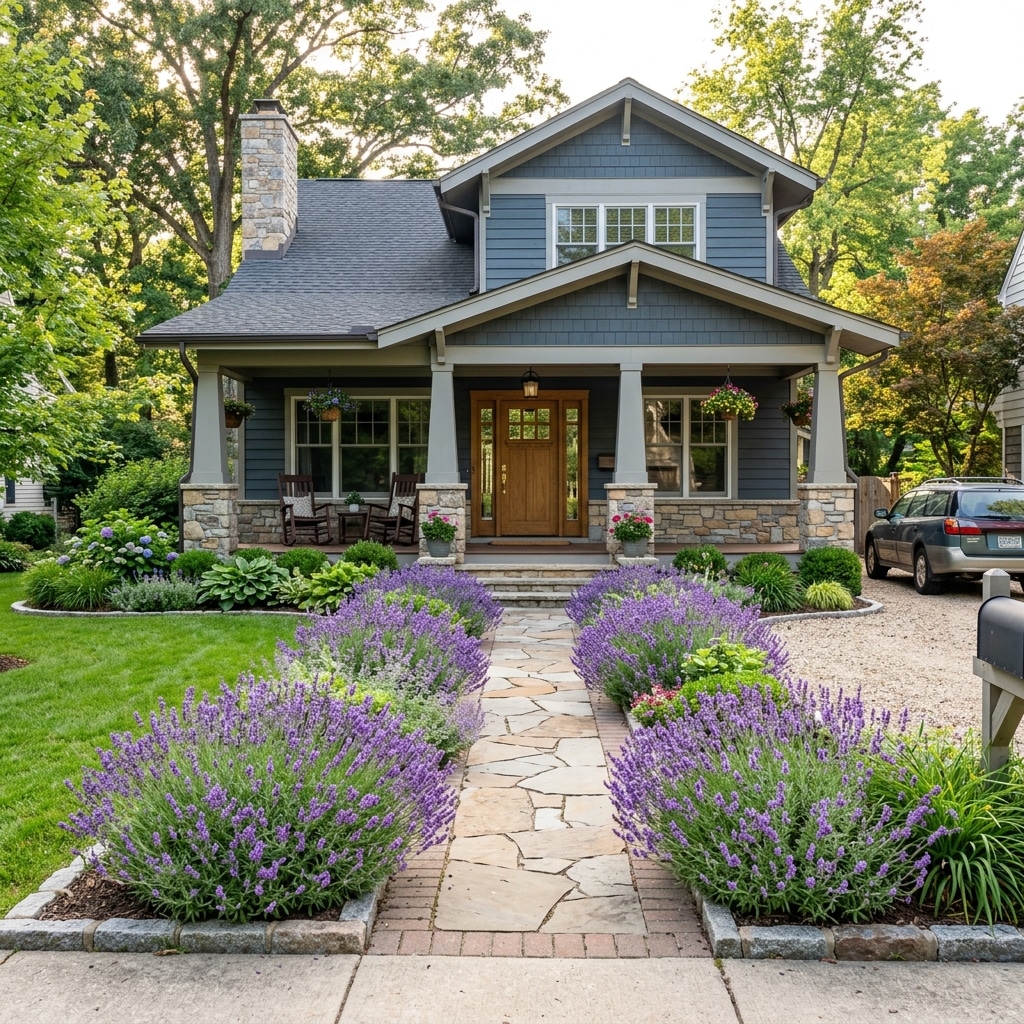
Brush past lavender once and you’ll remember it years later.
The silvery foliage. The architectural mounded form. The unmistakable scent that drifts when anyone walks by.
It signals “designed garden” even when the rest of the landscape is casual.
The catch: real lavender wants perfect drainage, full sun, and dry conditions. Plant it in heavy clay or shade and it sulks.
Where it’s happy, a row of lavender along a front walk is one of the most photographed garden features in real estate listings.
Worth getting the conditions right.
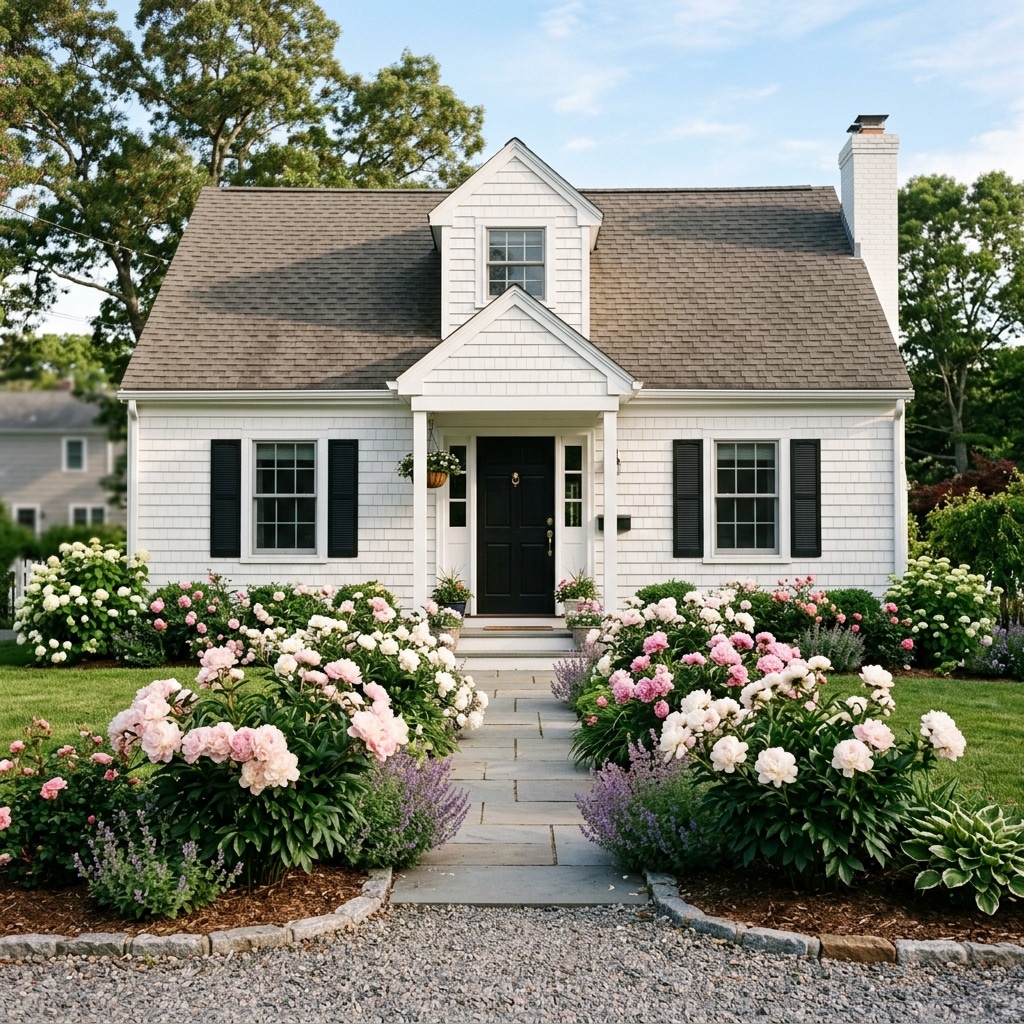
9. Peony
Zones
3–8 · 2–4 ft · Full sun · Pink, white, magenta, or coral blooms in late spring
Some peony plants are older than the houses they grow next to.
A well-established peony can live for a hundred years. It blooms reliably every spring with massive, fragrant flowers — soft pinks, whites, deep magentas, sometimes coral.
Once planted, peonies want to be left alone. They resent being moved. They don’t need fertilizer. They live for decades on neglect.
That heritage quality translates directly to property value. Mature peonies are an heirloom.
Plant them in full sun, with the eyes just below the soil surface. Then wait.
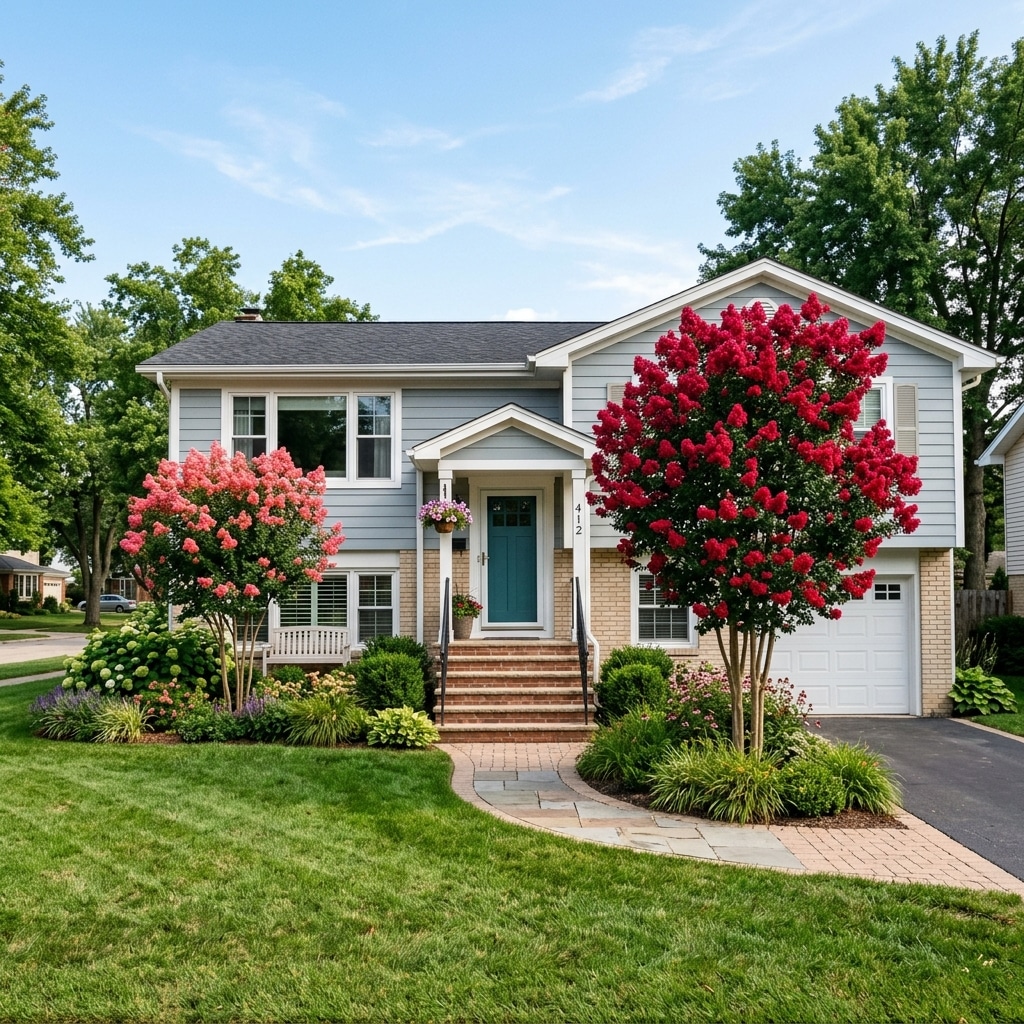
8. Crepe Myrtle
Zones
6–10 · 15–25 ft · Full sun · White, pink, lavender, or red summer blooms
If the dogwood owns spring in the South, the crepe myrtle owns summer.
It blooms for three months straight when most flowering trees are long done. The flowers come in white, pink, lavender, deep red, even watermelon.
The bark is a second feature. Smooth, mottled, peeling in patches of cinnamon and gray. It looks expensive all year.
A mature crepe myrtle becomes a defining piece of a Southern front yard.
Don’t over-prune. The trend of cutting them back to stubs every spring ruins the natural form.
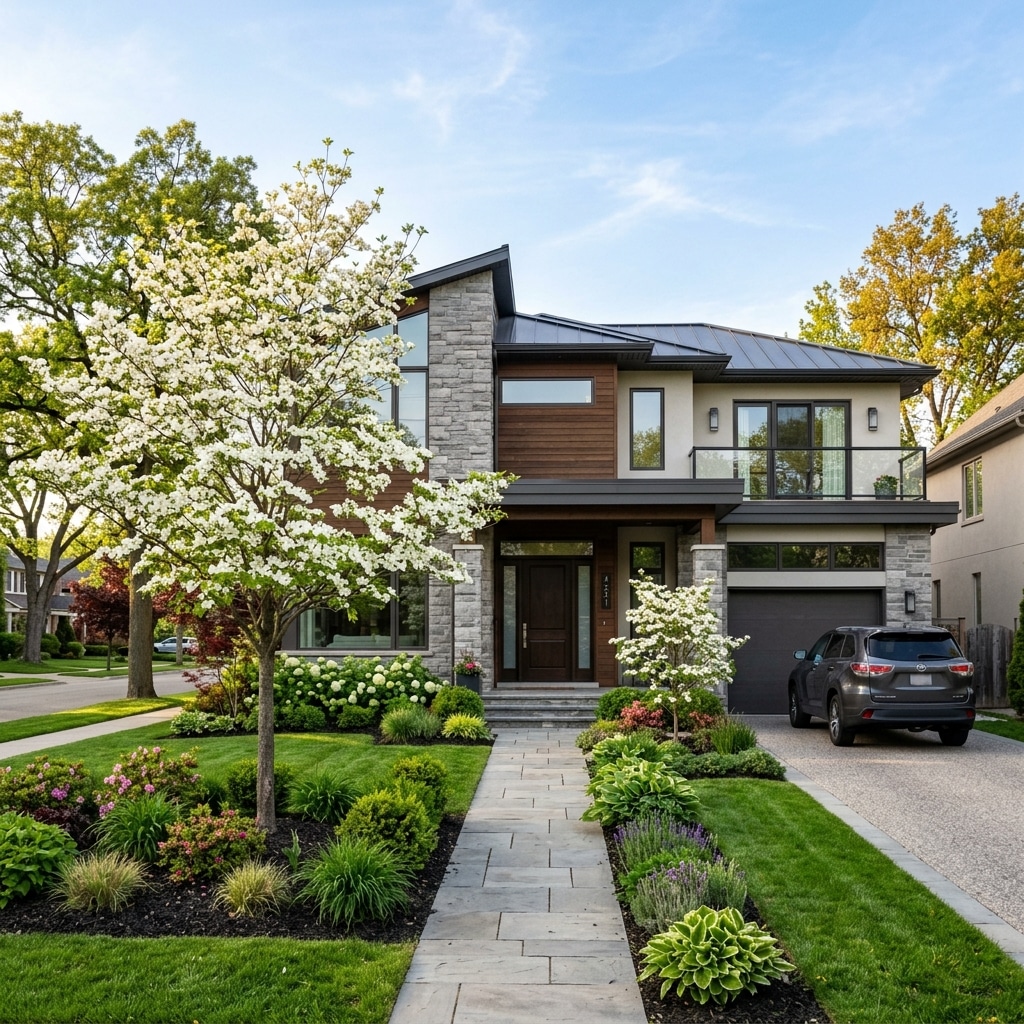
7. Flowering Dogwood
Zones
5–9 · 15–25 ft · Part shade · White or pink bracts in spring
Drive any American suburb in April and the dogwoods will tell you which yards have been loved.
Few trees pack as much into a small footprint. Spring brings white or pink flower bracts that float horizontally above the branches. Summer foliage is clean and dark green. Fall turns it scarlet. Winter shows off layered, sculpted branching.
It stays manageable — twenty to twenty-five feet — which suits a typical residential lot perfectly.
Real estate listings mention dogwoods by name. Buyers actively look for properties that have them.
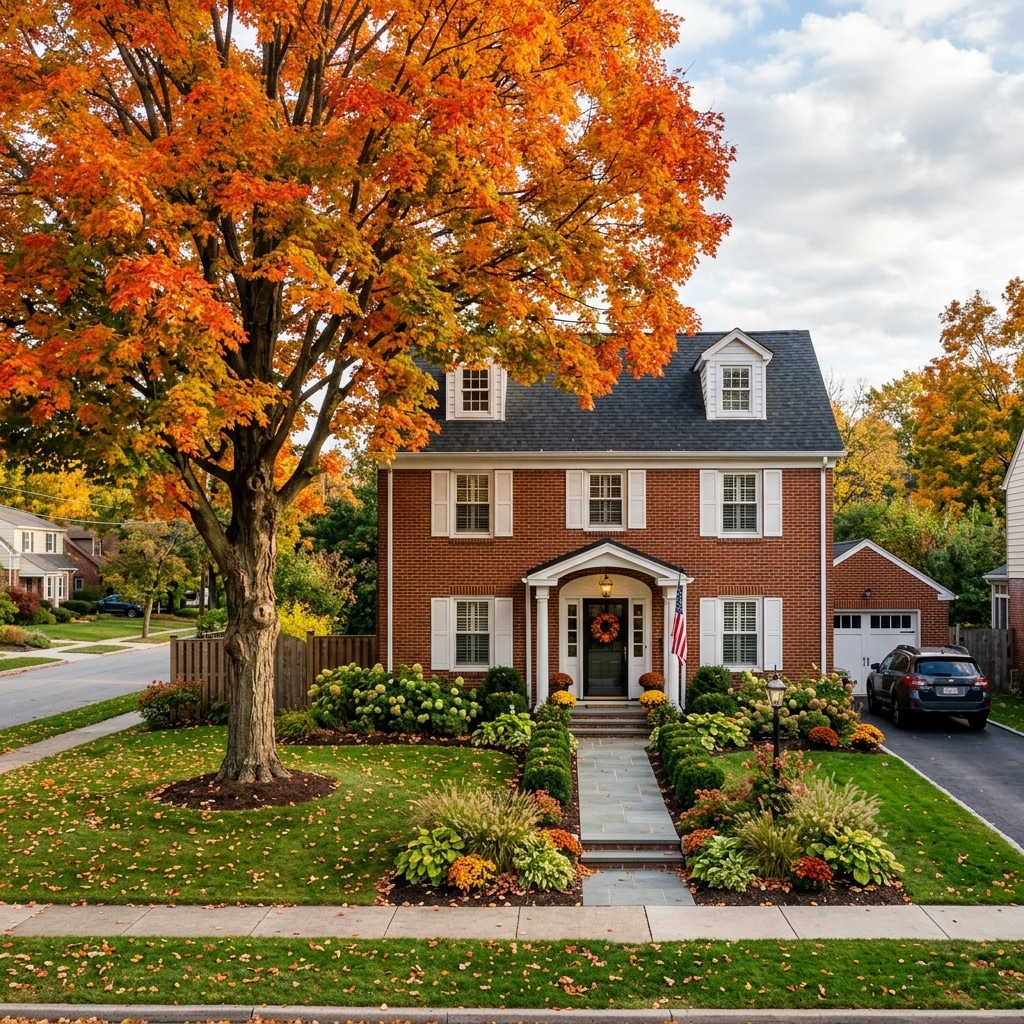
6. Sugar Maple
Zones
3–8 · 60–75 ft · Full sun to part shade · Orange/scarlet/yellow fall foliage
The sugar maple is the reason people drive to Vermont in October.
A mature sugar maple delivers a fall color show that no other tree can match — glowing orange, deep scarlet, brilliant yellow, sometimes all on the same tree.
The rest of the year, it’s a stately shade tree with strong structure and a dense canopy.
Sugar maples are slow. Plant one and you’re planting it for the next generation. But that’s exactly what makes it valuable.
Five plants left. These are the heavyweights.
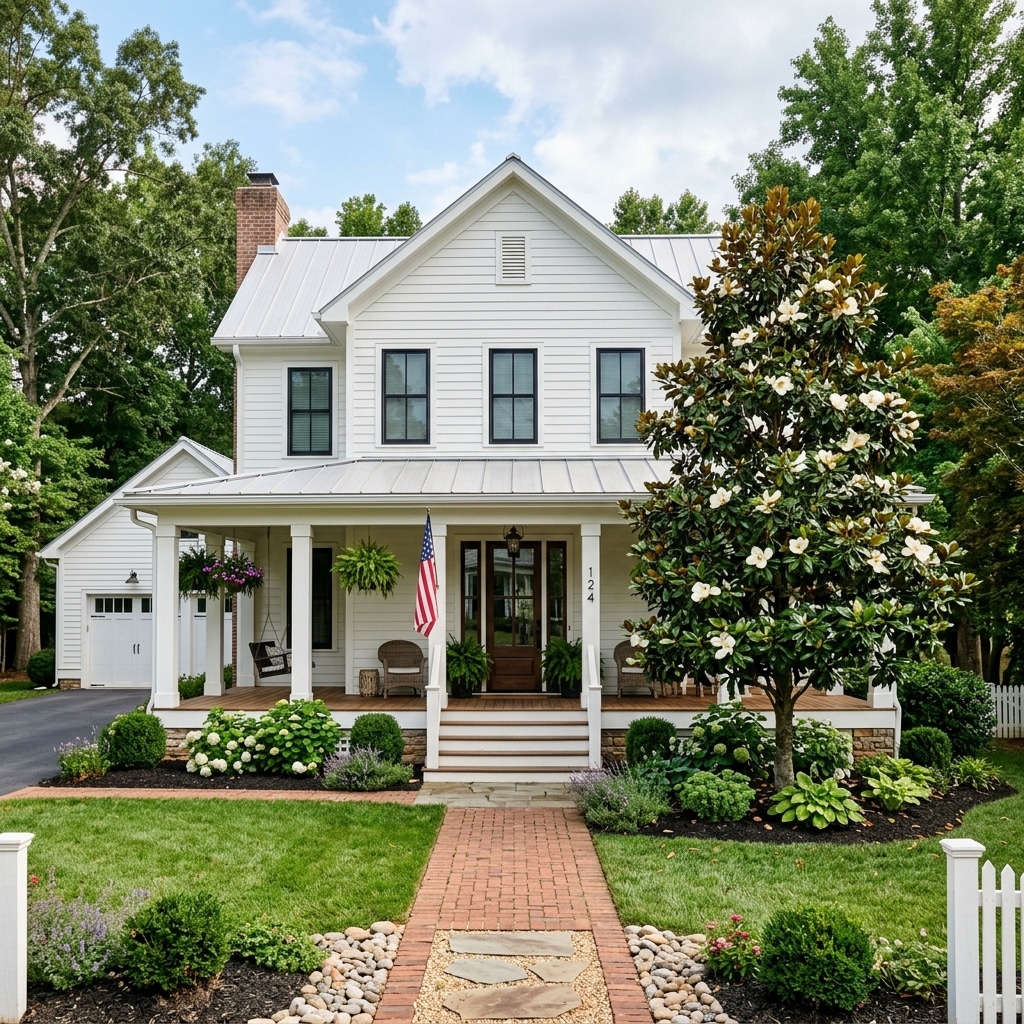
5. Southern Magnolia
Zones
6–10 · 60–80 ft · Full sun to part shade · Large white blooms in early summer
There are houses in Charleston and Savannah where the Southern magnolia in the front yard is older than the wiring inside.
Massive glossy leaves. Dinner-plate-sized white flowers that open in June with a faint lemony scent that drifts onto the porch.
The pyramidal form is stately — the kind of silhouette that anchors a property the way few trees can.
It signals permanence, tradition, and serious landscape investment. The visual shorthand for “old money” in Southern real estate.
In the Southeast, the right magnolia can add measurable value to a listing all on its own.
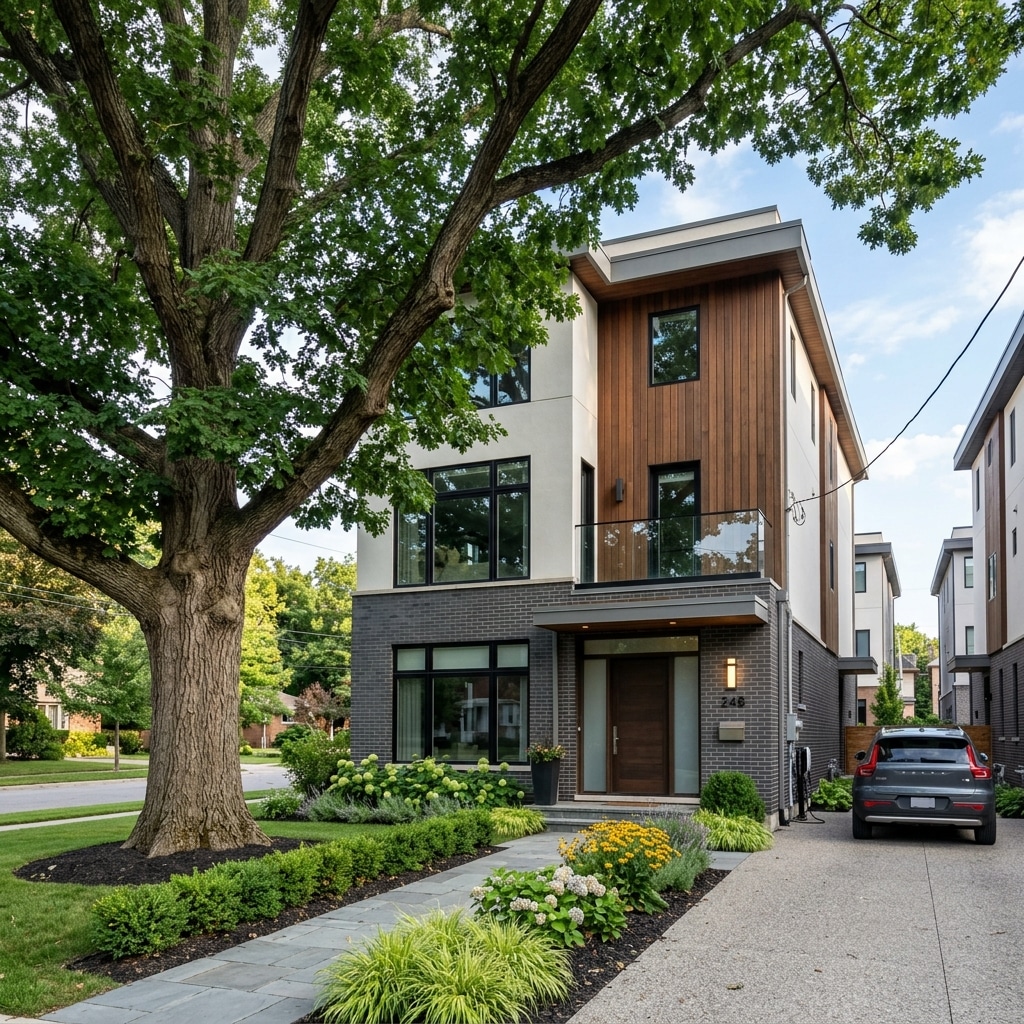
4. Oak
Zones
4–10 (varies by species) · 40–80 ft · Full sun · Long-lived shade tree
Arborists routinely value mature oaks at tens of thousands of dollars. Old live oaks with the right history get appraised individually at six figures.
These trees grow slowly into massive, sprawling presences that define entire properties. A single live oak can shade a whole front yard with limbs reaching further than the tree is tall.
You can’t fake an old oak. You either inherit one with the property, or you plant a sapling and wait forty years for the next owner.
That irreplaceability is the value. It’s the rare plant that shows up on the appraisal.
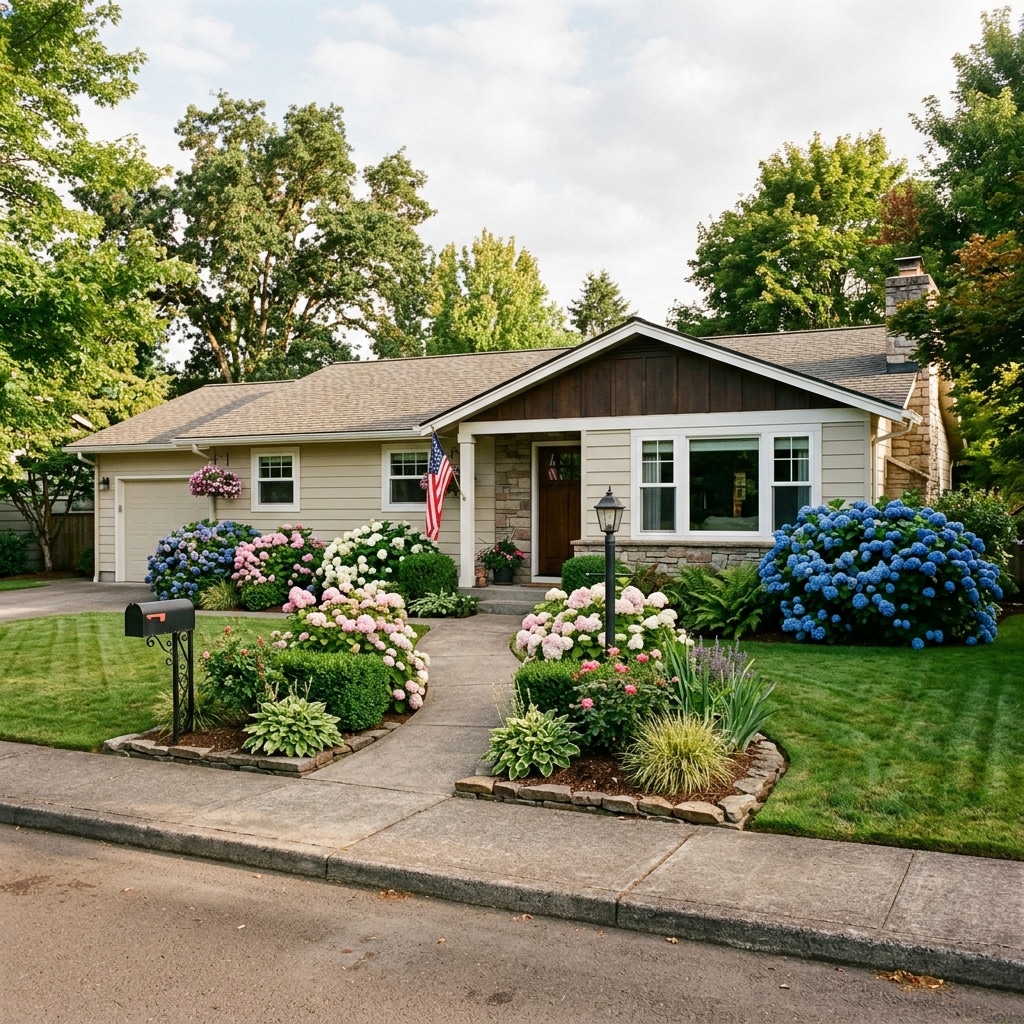
3. Hydrangea
Zones
3–9 · 3–10 ft · Full sun to part shade · Blue, pink, white, or purple summer blooms
Open Zillow. Open a real estate agent’s portfolio. The plant that appears more than any other is the hydrangea.
There’s a reason for that.
A mature bush blooms for months — massive mophead clusters of blue, pink, white, or purple that show up from the street and photograph beautifully in any light.
There are varieties for full sun (‘Limelight,’ ‘Vanilla Strawberry’) and varieties for shade (Bigleaf, Oakleaf). Almost no yard can’t grow one.
A mass planting along a front walk transforms an ordinary house into something that belongs in a magazine.
Easy to grow. Hard to overdo.
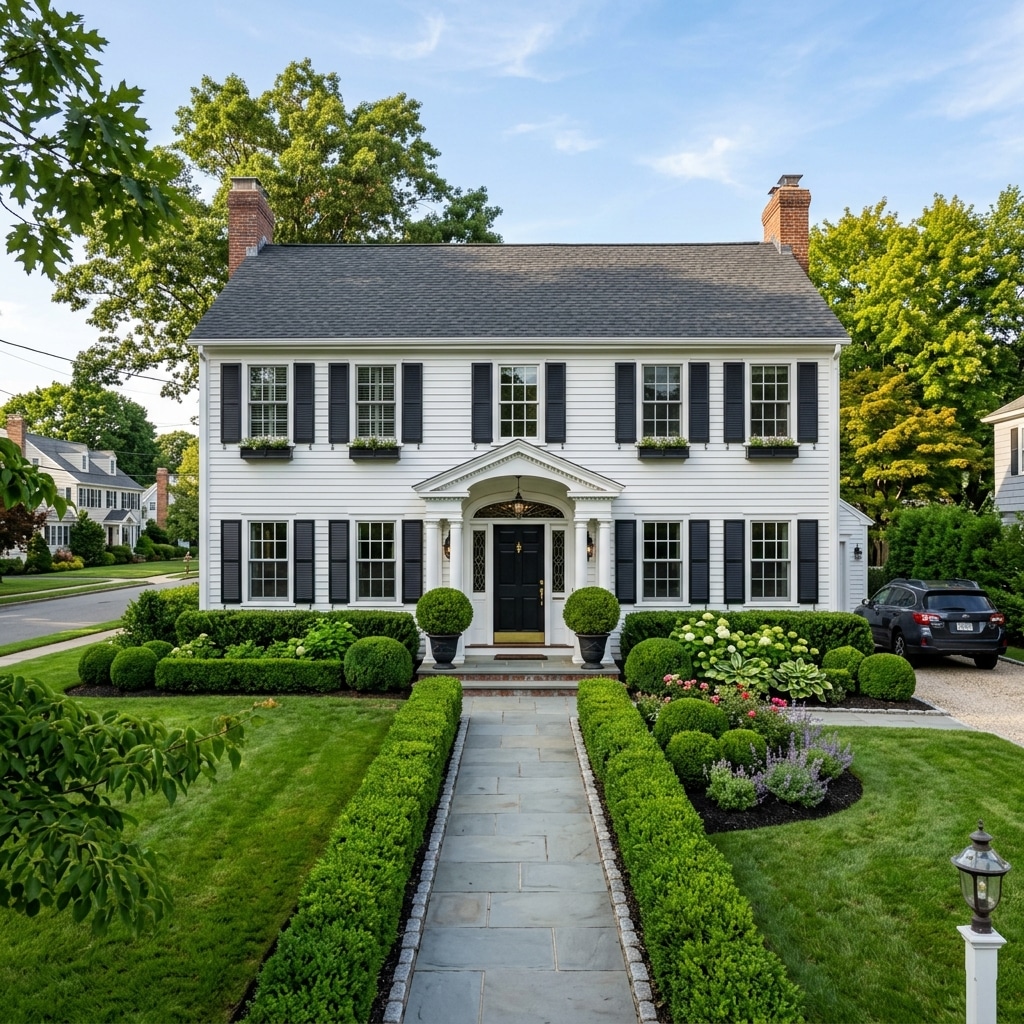
2. Boxwood
Zones
5–9 · 2–15 ft (varies) · Full sun to part shade · Evergreen
Walk past any seven-figure home and the boxwood is the first thing your eye registers — even if you don’t consciously notice it.
That’s the whole point.
Boxwood provides what designers call “the bones” of a landscape. The geometry that makes a yard look intentional rather than accidental.
In winter, when everything else is brown, boxwood holds the entire picture together.
One caveat: boxwood blight has been spreading since the late 2000s. Choose blight-resistant cultivars like ‘Green Velvet,’ or substitute inkberry holly where blight is established.
Still essential. Just plant smart.
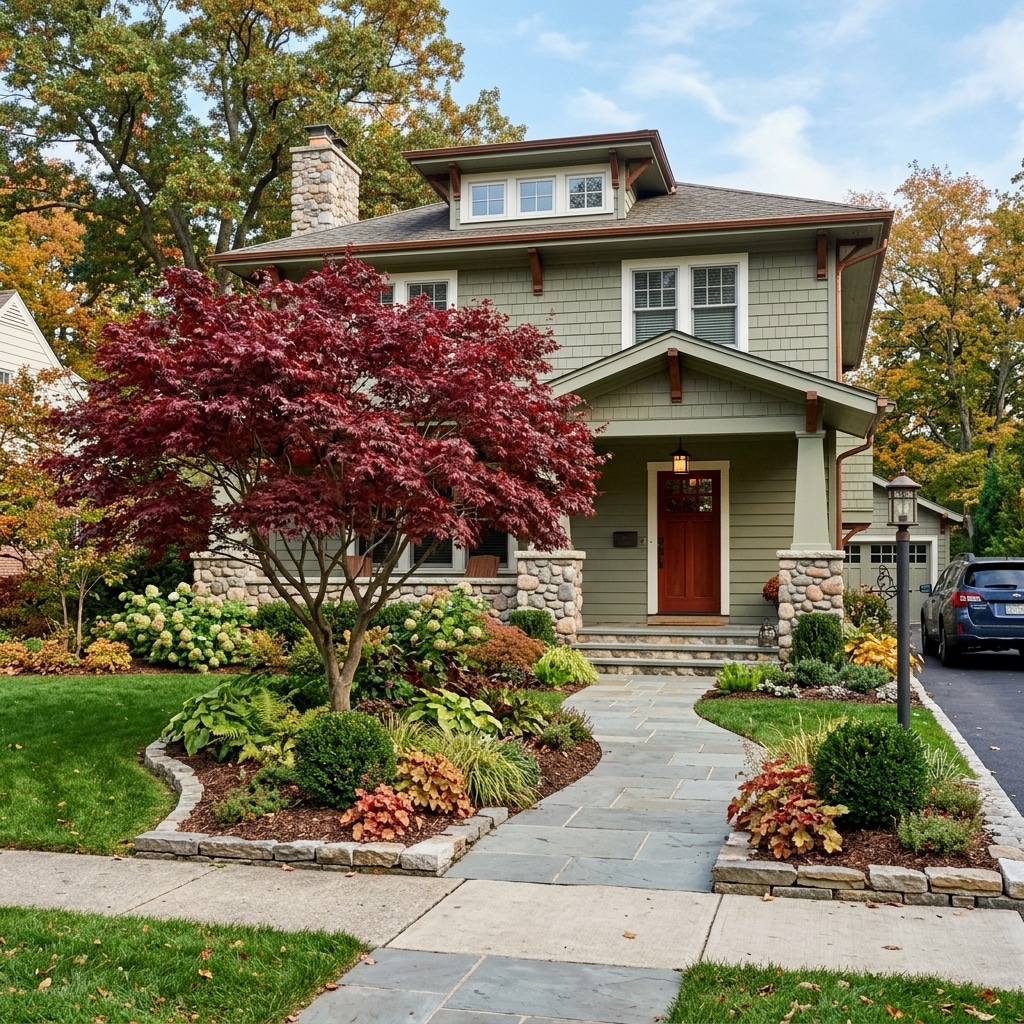
1. Japanese Maple
Zones
5–8 · 6–25 ft · Part shade to full sun · Sculptural foliage spring through fall
Nothing on this list does what a Japanese maple does.
The branching is sculptural, almost calligraphic. The leaves are impossibly fine-cut. The color holds court from April through October — burgundy, garnet, scarlet.
Real estate agents call them “house jewelry.” It’s a literal description. A well-placed specimen is the piece of the front yard the eye returns to. The thing photographed for the listing.
Most varieties top out at fifteen feet — small enough for any lot.
A mature Japanese maple in the right spot can be the difference between an offer at asking and one over asking.

I’m Chris and I run this website – a resource about symbolism, metaphors, idioms, and a whole lot more! Thanks for dropping by.