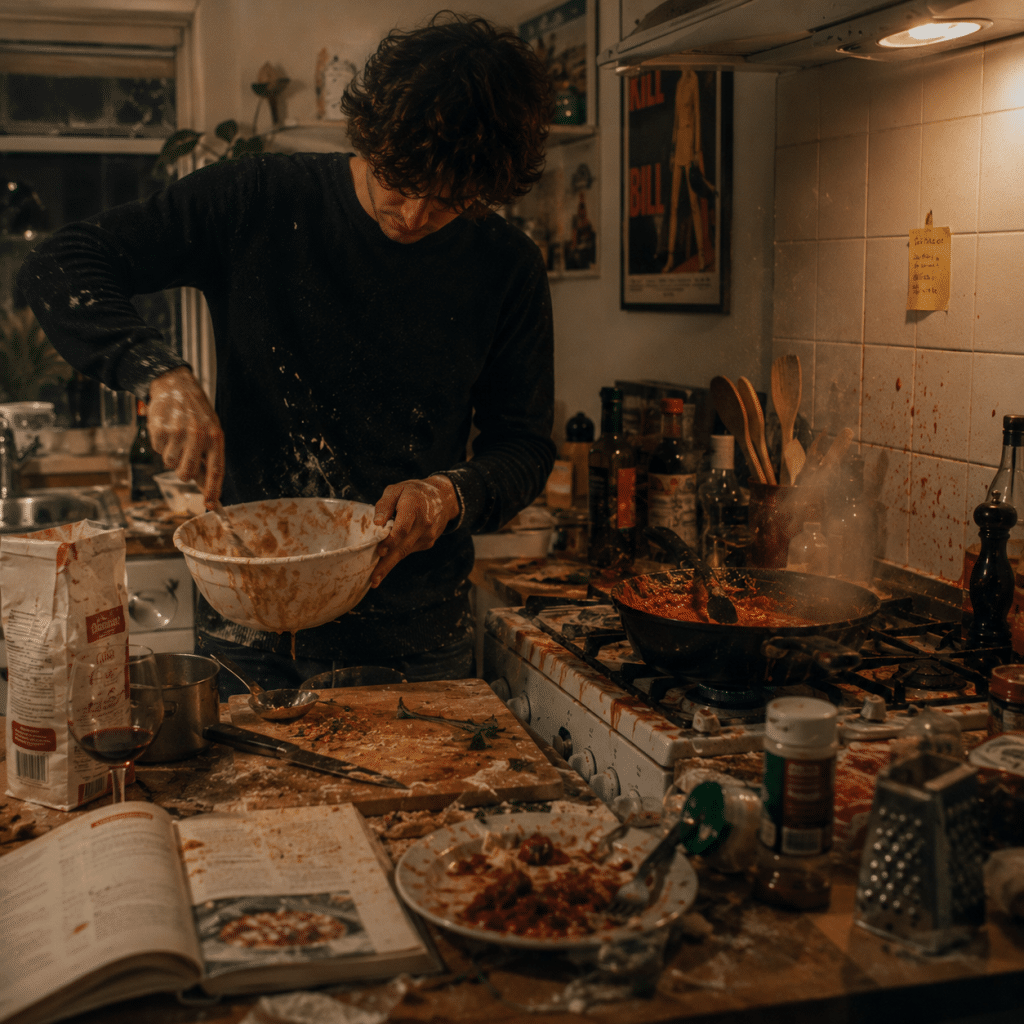
In the era of the “algorithmic kitchen,” we are besieged by the cult of perfection. Social media feeds are a relentless parade of glossy emulsions, perfectly cross-sectioned sourdough, and vibrant salads that look more like architecture than nourishment. We have been taught that cooking is a performance—a high-stakes pursuit of “mastery” where the goal is to replicate a professional result in a domestic space.
I would like to make the case for the opposite: the profound, subversive joy of cooking badly, and doing it with agonizing slowness.
I. The Tyranny of the Recipe
The modern cook is often a slave to the “method.” We follow instructions with a fearful rigidity, measuring spices to the milligram as if we are preparing a laboratory experiment rather than a meal.
When you cook “badly,” you liberate yourself from this tyranny. Cooking badly doesn’t mean making something inedible; it means cooking intuitively. It is the willingness to let the onions catch a little too much color, to over-season the broth and then have to figure out how to balance it with acid, to fail at the “correct” technique but succeed in creating something that tastes of a specific moment.
- The Beauty of the Burn: There is a flavor in the char that a timer will never give you.
- The Improvisational Spirit: A “bad” cook is often the most creative, forced to pivot when the sauce breaks or the herbs wilt. This is where true culinary intelligence is born—not in the following of a map, but in the getting lost.
II. The Resistance of Slowness
To cook slowly is an act of rebellion against a world that views dinner as a “task” to be optimized. We have been sold the lie of the “15-minute meal,” a concept that treats the kitchen as a pit stop rather than a sanctuary.
When you cook slowly, the “weight” of the city (to borrow a phrase) begins to lift.
- The Somatic Experience: There is a tactile meditation in the slow dicing of a carrot. It is the sound of the knife against the wood, the smell of the mirepoix hitting the oil, the way the steam softens the air in the room.
- The Temporal Shift: A stew that takes four hours to reach its zenith forces you to inhabit your home. You cannot be “productive” in the capitalist sense while you are waiting for a tough cut of meat to surrender to the heat. You are held hostage by the pot, and in that captivity, you find a rare, unhurried peace.
III. The Ego-Less Table
There is a specific kind of intimacy that occurs when you serve a meal that is imperfect. A perfect meal demands a certain posture from the guests—a hushed reverence, a clinical appreciation.
But a meal that is a bit “off”—the roast a little dry, the pasta slightly over-boiled, the presentation decidedly rustic—creates a space of radical vulnerability.
“A perfect meal is a monologue; a flawed, slow-cooked meal is a conversation.”
Serving “bad” food (in the sense of unpolished, homemade food) says to your guests: I care about you more than I care about my reputation as a host. It invites them to relax, to spill a little wine, to speak with their mouths full, and to recognize the human hand behind the heat.
IV. Conclusion: The Return to the Hearth
We have forgotten that for most of human history, cooking was a slow, messy, communal struggle against hunger. It was never about the “plating”; it was about the participation.
By choosing to cook badly and slowly, we reclaim the kitchen from the professionals and the influencers. We turn the stove back into a hearth—a place of warmth, trial, error, and genuine nourishment. So, let the sauce be a little thin. Let the prep work take all afternoon. In the slow, beautiful failure of a home-cooked meal, we find something far more delicious than perfection: we find ourselves.

I’m Chris and I run this website – a resource about symbolism, metaphors, idioms, and a whole lot more! Thanks for dropping by.